Showing posts with label series: library of america. Show all posts

12 August 2024

Hugos Side-Step: Flowers for Algernon by Daniel Keyes

American Science Fiction: Four Classic Novels 1960-1966: The High Crusade by Poul Anderson / Way Station by Clifford D. Simak / Flowers for Algernon by Daniel Keyes / ...And Call Me Conrad [This Immortal] by Roger Zelazny
edited by Gary K. Wolfe

I picked up this Library of America volume because it contained two winners of the Hugo Award for Best Novel; I decided to read the other two books it contained as part of my project to read winners of the Hugo Award for Best Novel I haven't already read—plus side-steps into other relevant books that interest me. The second of these was the novel version of Flowers for Algernon by Daniel Keyes.

Collection published: 2019
Novel originally published: 1966
Acquired: February 2022
Read: July 2024

"Flowers for Algernon" was originally a short story, which I have read at least twice before and remember really enjoying; it won the Hugo Award for Best Short Story in 1960. Keyes later expanded it into a novel. The novel was a finalist for Best Novel in 1967, but lost out to Heinlein's The Moon is a Harsh Mistress. (It did tie with Delany's Babel-17 for the Nebula, however. The notes in this LOA edition mistakenly state the two tied for the Hugo.)

I am sure there are lots of people who complain the novel loses the elegant simplicity and thus the power of the short story. It has been over fifteen years since I read the short story, so it's hard for me to do a direct comparison. But even without that, I am sure they are right; it's hard for me to imagine it could be otherwise. A good short story is a thing of power, and the premise of "Flowers for Algernon" is perfectly calibrated to make it a great one. 

And yet, I don't think that invalidates the novel. The novel doesn't replace the short story, after all, but exists alongside it. Based on my vague memories of the short story, I think what the novel adds is the material about Charlie's family, his "escape" from the experiment, and his different encounters with women. Though like a lot of 1960s sf, it comes at sex from an angle a bit disconcerting to a modern reader (we are more prudish now, I think), I otherwise found a lot of this material highly effective, particularly the stuff about his family. The flashbacks to his family trying to—not very well—deal with their low-IQ child was very interesting. The climax of this subplot, where Charlie goes to see his father (who doesn't recognize him) and his mother (who does but ultimately rejects him) were great, tough scenes.

The last twenty pages or so of the novel are some of the most emotionally charged writing I've ever read. Keyes very expertly shows you the disintegration of Charlie's intelligence in a way that only prose can manage. Because the first-person perspective puts you in the mind of Charlie, you experience the backslide of his intelligence firsthand—you lose your intelligence. My eyes got misty reading it.

If there's one thing that doesn't work for me, it's that Keyes seems to be pushing some kind of idea of intelligence and empathy, that intelligence makes it harder to have empathy. We see this with the various scientists working on Charlie, who treat him as an object not a person, and also with Charlie himself. I'm not totally convinced; the novel tries to make you think that the suspicion of other people Charlies acquires is some kind of tragedy... but people were awful to him. It's totally justified! Something I'd like to chew on at more length if I ever give the book another read.

There's a lot to like here. I'll be curious to see next year if The Moon is a Harsh Mistress really does exceed it for me.

I read an old winner of the Hugo Award for Best Novel every year, plus other Hugo-related books that interest me. Next up in sequence: The Collected Stories of Philip K. Dick, Volume 3

05 August 2024

Hugos 1966: …And Call Me Conrad by Roger Zelazny

American Science Fiction: Four Classic Novels 1960-1966: The High Crusade by Poul Anderson / Way Station by Clifford D. Simak / Flowers for Algernon by Daniel Keyes / ...And Call Me Conrad [This Immortal] by Roger Zelazny
edited by Gary K. Wolfe

In 1966, the Hugo Award for Best Novel was won by Frank Herbert's Dune, still a staggering titan of the genre that has cast a long shadow over science fiction. According to the voters of the 1966 Worldcon, however, there was another novel that was every bit as good as Dune: ...And Call Me Conrad, the debut novel of Roger Zelazny. Though Zelazny is an acclaimed writer, ...And Call Me Conrad is mostly remembered now as the novel that somewhat inexplicably tied with Dune.

(The novel was originally serialized in F&SF, cut down a little for length; it was later republished in full under the title of This Immortal as a standalone novel. I read it in an Library of America edition that reprints the full text, but reinstates the title of the serial, which Zelazny preferred. I do think the editor of the novel was right. While I don't think "This Immortal" is any great shakes, "...And Call Me Conrad" works as a title for a magazine story, but it's impossible for me to imagine a reader seeing it emblazoned on the cover of a novel and thinking it sounds intriguing. I might have gone with Zelazny's proposed subtitle, "The Reluctant Immortal." It was the serial publication that won the Hugo, technically.)

Collection published: 2019
Novel originally published: 1965
Acquired: February 2022
Read: July 2024

I'm reading it as part of my project to read winners of the Hugo Award for Best Novel I haven't already read—and I read Dune twenty years ago, back in high school, so I'll be skipping that. (I probably really ought to reread Dune, because I don't think I appreciated it at the time, but I must press on, no going back!) Despite that, it's hard not to wonder what the voters of 1966 were thinking, and hard not to compare it to Dune.

The thing about Dune that made it impactful and influential is its total immersion in an alien (future) way of life—it's lead to a style of sfnal storytelling we now totally take for granted. ...And Call Me Conrad is set in a future world, but on Earth. It's not quite as disorienting as Dune, but it's still light on exposition in its early stages; the reader isn't given a lot to go on from the beginning. The editor of F&SF made Zelazny add a page of exposition, which this Library of America edition includes in an end note; I read it where it was supposed to fit into the narrative but found it didn't really clarify anything at all! But it's not immersive in the way Dune is immersive; it didn't reinvent science fiction.

The novel has an interesting set-up; the Earth has become subjugated by the alien Vegans, not through militaristic conquest, but through economic domination. Most humans have emigrated to Vegan planets, Earth itself is owned by the Vegans, and Earth is largely dependent on Vegan tourism. There are some humans, however, who are resentful of Vegan control, and want humanity to return to its home. A book about forms of empire and domination and cultural imperialism and native uprisings and violent resistant to hegemonic power. So while it may not be told in the way Dune was told, it was very much interested in the same kinds of ideas as Dune. Something in the air in 1965! (This was the same year Kwame Nkrumah published his book Neo-Colonialism: The Last Stage of Imperialism.) In some ways, though, Call Me Conrad does something more interesting, in making Earth the "Africa" of its colonial allegory—it very much is in the War of the Worlds vein of "what if aliens did to Earth what the West is always doing to other countries?" (Jo Walton has an interesting take over on Tor.com, of course, but I particularly liked this comment by @relogical.)

It resonates with other novels I've read as part of this project. In its contemplative tone, it reminds me a lot of what Clifford D. Simak was doing in books like City (1944-73) and Way Station (1963). Indeed, like both of those novels its focuses on an emotionally isolated immortal! The somewhat pulpy depiction of the Vegans reminded me a lot of what Philip K. Dick was doing in novels like Now Wait for Last Year (1966), using old-school tropes to quickly sketch in a background of cosmic war but then telling the kinds of stories that went in much more interesting directions.

I would say that overall, I liked it but did not love it. Very well written, neat backstory, lots of keen moments of observation and insight. My favorite moment was probably the argument over what was being done to the Great Pyramid in Egypt, some excellent thoughtful satire there. But I never felt a strong interest in its protagonist; the idea of the world-weary immortal has probably been done better elsewhere. I've read some of his short fiction before, but this was my first novel by Roger Zelazny; I look forward to reading Lord of Light for the 1968 awards, which most people seem to consider his best work.

I read an old winner of the Hugo Award for Best Novel every year, plus other Hugo-related books that interest me. Next up in sequence: Flowers for Algernon by Daniel Keyes

03 July 2024

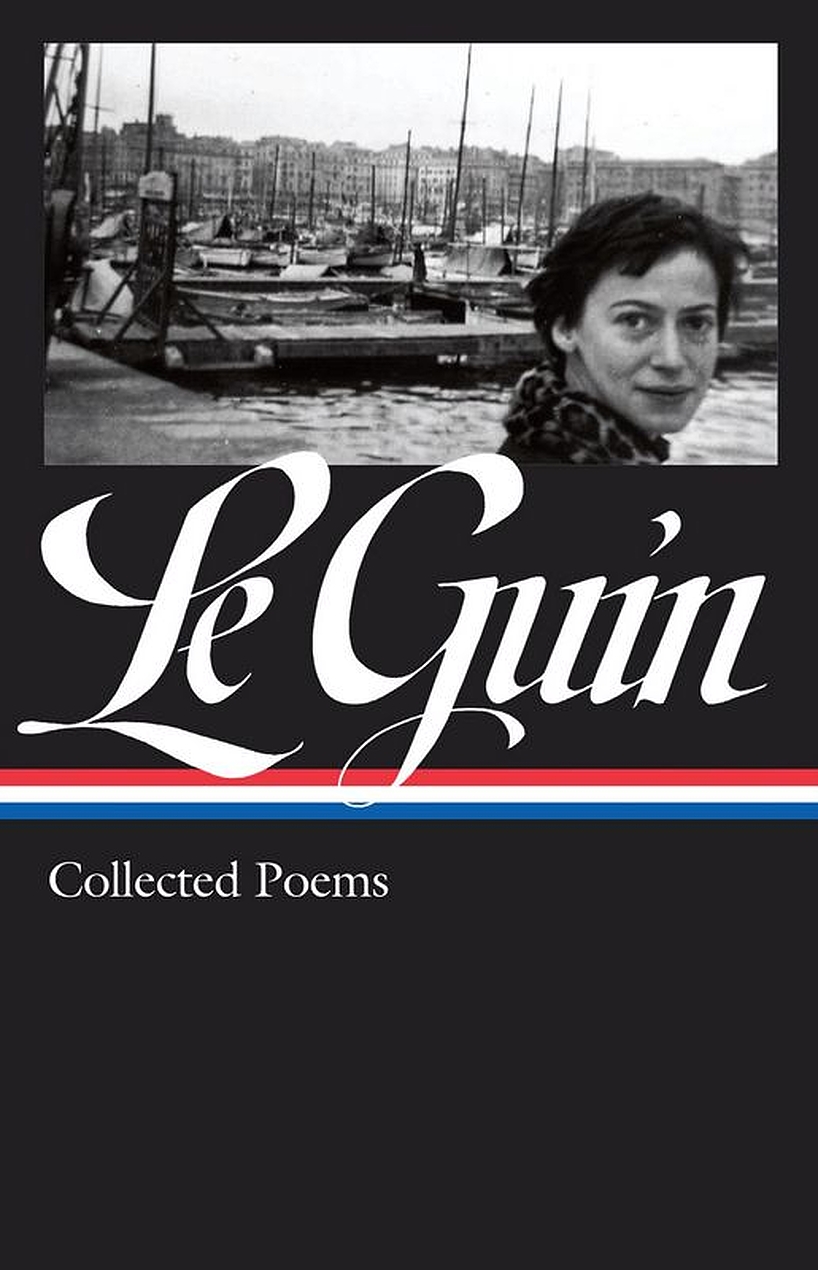
Library of America: The Collected Poems of Ursula K. Le Guin

Collected Poems by Ursula K. Le Guin
edited by Harold Bloom

It's one of my goals to own and have read everything Ursula K. Le Guin has ever written, but I have never read any of her poetry. Thus, the release of this Library of America edition was a big help; it contains all of her books of poetry, from 1975's Wild Angels to 2018's So Far So Good, as well as a number of previously uncollected poems and some prose writing about poetry (mostly her introductions to her own books, though in classic Library of America fashion, these are placed at the end for some reason, not where they ought to actually go). I don't think poetry benefits from sustainedly reading over seven hundred pages in one go, so for the past couple months I've dipped in and out of this between Hugo finalists.

Collection published: 2023
Contents originally published: 1960-2018
Acquired: December 2023
Read: May–June 2024

I would say I am largely not a poetry person, but I do have my likes, such as Anne Sexton and Christina Rossetti. Alas, Le Guin is not to my taste as much as either of them. Certainly she is not bad, but I just did not like a lot of what I read here—certainly not as much as Harold Bloom, whose praise in the introduction is enthusiastic but largely inscrutable as far as I was concerned

Still, a couple points I can make:

(Normally when reading books of poetry, I mark ones I enjoy and want to come back to later by dog-earing the page. However, I am not going to dog-ear a nice Library of America hardback! So in this case, I used my phone's camera to snap pictures of particularly enjoyable poems. The downside of this approach is that on occasions when reading without my phone nearby, I had no way to note those poems, so there are gaps in my coverage of the book. Also it's a plan that didn't occur to me until I was some way into my reading! In my comments below I will link to the poems I can find online, and excerpt in some cases, usually when I can't.)

Getting to read her poetry in order is interesting in a couple ways. One is that you see her development as a poet; she starts with largely free verse, but seems to experiment with more formal, well, forms as she goes. And maybe it's the Victorianist in me, but I found those much more to my taste.

You also get to see what an increasingly central role poetry played in her literary output. There are seven hundred pages of poems here; when you are on page 350, you might be halfway through her poetry, but she is over sixty years old. She produced more than half of her poetic output in the last two decades of her literary career. That said, this was at least partially because she couldn't write novels anymore as she got older; I remember her announcement that Lavinia (2008) would be her last because it was all she was capable of, even though she didn't die for another decade. She captured her sadness over this in her poem "The Old Novelist's Lament" (2018):

I miss the many that I was,
my lovers, my adventurers,
the women I went with to the Pole.
What was mine and what was theirs?
We were all rich. Now that I share
the cowardice of poverty,
I miss that courage of companionship.

Le Guin writes a lot about nature, which is not particularly to my taste. I get why she does this, there is a very good speech by her included here about the Anthropocene, arguing that attention to nature is a political project in an era where we largely see nature as a resource to be exploited. I agree with this in principle, but in practice, I find nature poems pretty boring. Still, not to be too much of a grump, I did like her cat poems, such as "Black Leonard in Negative Space" (1978):

All that surrounds the cat
is not the cat, is all
that is not the cast, is all,
is everything, except the animal.
It will rejoin without a seam
when he is dead. To know
that no-space is to know
what he does not, that time
is space for love and pain.
He does not need to know it.

As a parent who has read her picture book Cat Dreams aloud many times, I am not surprised she has a good grasp on cats. Though a cat poem is probably not a nature poem now that I think about it!

I was pleasantly surprised by her translation of the Tao Te Ching (1998). To be honest, I had not expected to get much out of this, expecting somewhat woo-woo life advice I guess, which seems a bit of a disservice to an important philosophical tradition now that I write this, but it was true. But there is genuinely good stuff to be found in here, stuff worth holding onto and remember. For example, take this stanza from "Proportion" (scroll down at the link to hear it read aloud):

You can't keep standing on tiptoe
or walk in leaps and bounds.
You can't shine by showing off
or get ahead by pushing.
Self-satisfied people do no good,
self-promoters never grow up.

I wouldn't claim it's groundbreaking, but it resonates. And of course as a literary studies academic, I found a lot to enjoy in Le Guin's accounting of her own method of translation and her footnotes about choices she made.

Le Guin is often at her best when she is angry. There is a lot to be angry about here; like I said above, over half the book comes from (relatively) late in her life, and it seems to me that 9/11 in particular was a key moment for her, with lots of poems from 2001 onwards about peace and war and liberty and injustice. I particularly liked "Peace Vigil, March, 2003" (2006), about a man who wanders into a peace vigil the speaker is attending:

Spring night in time of war. A big man
with a big ragged backpack
wandered into the circle and stood
looking around, till somebody
spoke to him, somebody gave him
a candle, somebody lighted the candle.
Then he sat down on the wet pavement
right in the empty center of the circle.
He sat huddled up over the candle,
holding it in one hand, and holding
the other hand over it to get warm, and then
he would change hands. . . .

Some of her translations of the Tao Te Ching capture the antiwar sentiment well, too, actually, even though they precede 9/11. Take this stanza from "Against war":

It is right that the murder of many people
is mourned and lamented.
It is right that a victor in war
be received with funeral ceremonies.

Additionally, I once read an interview with Le Guin where she said to the interviewer, "Thank you for noticing that some of my stories are funny. A great many critics never have." She can write funny poems, and those are often her best. There is a particularly goofy one, "On David Hensel's Submission to the Royal Academy of Art" (2006), about a real situation where an artist sent his sculpture of a human head and its plinth in for display separately—and the museum rejected the sculpture but mistook the plinth for a work of art and put it on display! Her "Found Poem" (1986) is funny enough that I read it aloud to my wife and she laughed too. But it's also kind of sublime and beautiful, a really clever moment captured in a few lines.

Perhaps her very best, then, are the ones where she is both funny and angry, combining absurdity and injustice into powerful statements. At its best, the book embodies Le Guin's own poem, "Read at the Award Dinner, May 1996" (1999):

Above all beware of honoring women artists.
For the housewife will fill the house with lions
and in with the grandmother
come bears, wild horses, great horned owls, coyotes.

I think if they were all like this, I would have loved this book. As it was, I liked it, but it certainly had many moment worth loving. But of course, seven hundred pages of poetry are never going to be one hundred percent to one person's taste, I imagine, least of all mine.

03 June 2024

Library of America: The Long Tomorrow by Leigh Brackett / The Shrinking Man by Richard Matheson

American Science Fiction: Four Classic Novels 1953-1956: The Space Merchants by Frederik Pohl and C. M. Kornbluth / More Than Human by Theodore Sturgeon / The Long Tomorrow by Leigh Brackett / The Shrinking Man by Richard Matheson
edited by Gary K. Wolfe

The last two novels in this Library of America edition are The Long Tomorrow (1955) by Leigh Brackett and The Shrinking Man (1956) by Richard Matheson. The former was, as far as I know, my first experience of the work of Leigh Brackett, a pioneering author of her era; The Long Tomorrow was a finalist for the 1965 Hugo Award for Best Novel, but lost out to Heinlein's Double Star (1956). I've read a few pieces by Matheson, including his 1975 novel Somewhere in Time.

Collection published: 2012
Novels originally published: 1955-56
Acquired: July 2023
Read: March 2024

What strikes me reading and writing them up together is that they are both concerned with what it means to be a man. The Long Tomorrow is a bildungsroman set in a postapocalyptic United States. It's not a novel of nuclear fallout or anything; what the novel focuses on is the fact that the U.S. government banned the establishment of communities of a certain size. No more cities, no more large buildings. This slows down technological redevelopment and prevents the creation of large targets for enemy nations. The main character is a boy, later young man, from an Amish-adjacent community in rural Ohio, who struggles as he runs up against the stipulations of his family and his village. Eventually, he goes on the run, traveling to a city on the Ohio River and then further west, in search of a mythical place where people can build cities and develop advanced technology once more.

The big conflict of the novel, though, is internal. How do you decide what values to adhere to, and what ones to ignore? Especially when these values seem to boil down to a form of fanaticism? But... what is there to replace them with other than a different form of fanaticism? I am a sucker for a good bildungsroman, and this is an excellent one, my favorite of the four novels collected in this volume. Lots of acutely observed, painful human psychology wedded to strong worldbuilding and atmospheric prose. I do really like Double Star, but if this had won the Hugo, I would have been quite pleased too.

But if The Long Tomorrow is a bildungsroman, the novel of the making of a man, then The Shrinking Man is the opposite—the novel of the unmaking of a man. I had thought going in from the cheesy title of the film based on the book (The Incredible Shrinking Man, which admittedly I have not seen) that this would be a cheesy story... but actually the title is very clever. Yes, the novel is about a shrinking man, but more specifically, it is about a shrinking man. As the protagonist shrinks, he loses his sense of masculinity and thus his sense of self, he diminishes in terms of being able to think of himself as a person who can do the kind of things men are supposed to be able to do: to provide for women and to desire and be desired by women, to exert physical authority over others. I can't say I loved this novel—Matheson takes you through his diminishment in a very methodical way that sometimes becomes plodding—but it was considerably more interesting than I expected it to be, and it paired nicely with The Long Tomorrow.

As a man can be built up by figuring out what he values, so too can he be torn down by having what he values taken away. Both of these novels showcase the ability of science fiction to defamiliarize the familiar, to get the reader to reconsider how their world operates by presenting a different one.

06 May 2024

Library of America: More Than Human by Theodore Sturgeon

American Science Fiction: Four Classic Novels 1953-1956: The Space Merchants by Frederik Pohl and C. M. Kornbluth / More Than Human by Theodore Sturgeon / The Long Tomorrow by Leigh Brackett / The Shrinking Man by Richard Matheson
edited by Gary K. Wolfe

More Than Human (1953) is the second novel collected in Gary K. Wolfe's American Science Fiction: Four Classic Novels 1953-1956. While three of the books in its companion volume, Five Classic Novels, 1956-1958, were Hugo winners, none of the books published here were, mostly because they come at the very beginning of the process. Though the first Hugos were given out in 1953, the second set was in 1955; the 1954 Worldcon didn't do any—and this is the year that More Than Human would have been eligible. The book was a finalist for the 1954 Retro Hugo (awarded in 2004), which was intended to fill that gap, though it lost to Ray Bradbury's Fahrenheit 451. And fair's fair, that book is a juggernaut. Even a very good book probably didn't stand a chance against it.

Collection published: 2012
Novel originally published: 1953
Acquired: July 2023
Read: March 2024

More Than Human is an expansion of Theodore Sturgeon's novella "Baby Is Three" (1952); the novella makes up the middle section of the novel, to which is added a first part, showing where all the main characters came from, and a third, showing where they all ended up. I had a vague inkling that I had read "Baby Is Three" though I remembered nothing about it, and when I finished More Than Human, I went and looked up "Baby Is Three" on ISFDB, which tells me I must have read it in The Science Fiction Hall of Fame, Volume Two A... which I remember as being my least favorite of the four SFWA "Hall of Fame" volumes that I have read! Sturgeon is someone I haven't read much by; as a Star Trek fan, I primarily know of him as one of the legit sf writers who was courted by Roddenberry and ended up contributing to the show; he wrote "Amok Time" and "Shore Leave," two of the second season's most significant episodes. (Trivia fans will note there is a character here named "Barrows," as well as in Sturgeon's "Shore Leave.")

Alas, the novel didn't do much for me. All science fiction is of course very much of its time, but there's a particular kind of science fiction that I feel like was popular in the middle of the twentieth century whose appeal has not really persisted, the story of (to steal a term from DC's "Captain Comet" comics) the "evolutionary throw-forward," the next phase in human evolution born ahead of time. Usually this entails precocious intelligence and psi powers. A lot of mid-century sf writers seem fascinated by this figure—but unfortunately I do not find it fascinating, and I rarely get anything out of such stories...* even if they are well told from a writing standpoint, which I must admit More Than Human was.

Sturgeon is a strong writer, with an above-average sense of voice and place for a 1950s sf author, and there were lots of little moments of characterization that shone strongly. Unfortunately, the actual story was one that largely failed to engage me. It's one of those cases where I can recognize the craft, but fundamentally the story is just doing something I don't care about.

That said, I am already a few chapters into the third novel in this anthology, Leigh Brackett's The Long Tomorrow, and it is much more my jam—and as different from the first two novels as they were from each other. It's a very diverse set of selections!

* One exception: I do remember really liking Wilmar Shiras's "In Hiding" (1948), which is collected in The Science Fiction Hall of Fame, Volume Two B. Maybe that's because, if I recall correctly, its precocious superchild was a Boy Scout!

01 May 2024

Library of America: The Space Merchants by Frederik Pohl and C. M. Kornbluth

American Science Fiction: Four Classic Novels 1953-1956: The Space Merchants by Frederik Pohl and C. M. Kornbluth / More Than Human by Theodore Sturgeon / The Long Tomorrow by Leigh Brackett / The Shrinking Man by Richard Matheson
edited by Gary K. Wolfe

At a certain point, I realized that I owned every Library of America science fiction release... except two. One, Five Classics Novels 1956-1958, contained five books that I already owned four of, so that seemed fair to skip, but the other had four new-to-me works, so I put it on my wish list and my wife got it for me for my birthday last year.

Collection published: 2012
Novel originally published: 1952
Acquired: July 2023
Read: March 2024

The first is The Space Merchants (1952), a novel that has long stuck in my head because Isaac Asimov briefly mentions it in his introduction to More Soviet Science Fiction under its alternate title of "Gravy Planet," which is, to be honest, a bit of a daft title, but certainly an evocative one. It is not about a planet of literal gravy, alas. It's also not about merchants flying through space, which is what I had imagined before reading it; it's about the people trying to sell the public on going to space, the people merchanting space.

Asimov cites it as an example of what he calls the "Stage Three-C" anti-utopian science fiction story: "It deals with a dreadfully overpopulated world in which advertising techniques have been made the only acceptable guide to human behavior. Its gambits are: 'If the population explosion goes on—' and 'If the theory that anything that is good for business is morally correct goes on—'" The former gambit has dated itself a bit, but the latter has held up, and if anything probably seems even more likely than it did back in 1952. Senators literally represent corporate interests, no form of advertising or corporate skulduggery is illegal—except where corporations infringe on each other, they can do whatever they like to people. The main character is an advertising executive put in charge of selling Venus to the American people, who suddenly finds himself on the outs when he had been on the top.

The actual story is what it is; I don't think it's terrible or anything, but it's not why you're reading the book. It's one of those sf books you read for the world. Pohl and Kornbluth have that 1950s sf obsession with advertising-as-science, which also appears in Alfred Bester's The Demolished Man (1952), Mark Clifton and Frank Riley's They'd Rather Be Right (1954), and Philip K. Dick's Ubik (1969), this belief that with the right combination of triggers, anyone can be sold anything. The advertising satire is one of the best parts of the book; the book definitely performs a Stage Three-C gambit with the ubiquity of advertising, and it's hard to imagine that Dick hadn't read The Space Merchants. The leap that Pohl and Kornbluth don't quite make (but are so close on) is that, as John Berger would highlight in Ways of Seeing (1972), advertising doesn't just sell you a product, it sells you the entire idea that the way to improve your life is through the purchase of product. What the novel does delve into, though, is how there's an invisible class divide when it comes to marketing—well, invisible to those on the top, anyway. Some people aren't even worth selling to!

It's a quick read and a fun one; Pohl and Kornbluth have an easy style and the protagonist has a strong narrative voice. This would be fun to teach in a class on early science fiction, or one in a class on advertising in sf.

I am only a little bit into the second novel, More Than Human, and so far it is a very different book! But more on that in a future post.

18 January 2023

Library of America: The Kairos Novels by Madeleine L'Engle: Many Waters / A House Like a Lotus / A Swiftly Tilting Planet / An Acceptable Time

The Kairos Novels by Madeleine L'Engle
The Wrinkle in Time Quartet
: A Wrinkle in Time / A Wind in the Door / A Swiftly Tilting Planet / Many Waters
The Polly O'Keefe Quartet: The Arm of the Starfish / Dragons in the Waters / A House Like a Lotus / An Acceptable Time

As stated in this earlier post, I spent some time last fall reading Madeleine L'Engle's so-called "Kairos novels." For the Murray novels, they were all rereads, but all the O'Keefe novels were new to me. I was reading them in publication order, so that I could get a sense of L'Engle's development, and so that I could intersperse familiar books with unfamiliar; the Murray and O'Keefe novels alternate in publication, even if all the O'Keefe ones take place a generation after the Murray ones.

That said, I decided to make an exception, and I swapped Many Waters with A Swiftly Tilting Planet. I had a couple reasons for this. For one, I read the original three Meg books many times as a kid and only discovered Many Waters much later, so having read them in publication order to begin with, I was curious how they would work in chronological order. Second, I remember not liking Many Waters very much, while Swiftly Tilting Planet was my favorite as a kid, and I preferred that my reading of the Murray novels would end on a high note.

Many Waters (1986)
Meg and/or Charles Wallace are the protagonists of the three original Murray novels; Many Waters focuses on Sandy and Dennys, the "ordinary" twins between Meg and Charles Wallace in age. They accidentally travel back in time to the age of Noah's Ark...

...and it is so so boring. Like, inexplicably so. Unlike all the other books, there's nothing at stake. There's no reason for Sandy and Dennys to travel back in time, either from a narrative standpoint (there's no threat they're alleviating) or a personal one (all the Meg/Charles Wallace novels have her learning and growing through her actions, but the twins are just there). You could write a book about them coming to terms with their (supposed) ordinariness, or about them coming of age sexually, but this book doesn't really give you those things, it just hints at them.

I also agree with Mari Ness that the book's past era just doesn't convince: "somehow, perhaps because of the language, or because this culture does not fit in with either the Bible or archaeological evidence of any early society (and not just because of the unicorns), it never manages to feel quite real. [...] [I]t [...] serve[s] to reduce any suspense the novel might have had. It’s not just that I know the flood is coming anyway, but that I can’t bring myself to care about the complete destruction of a place that never feels quite real."

Bizarrely, even though it has the least going on of any of the Murray novels, it's also the longest. So it just keeps on going and going and geeze louise was I bored.

Collection published: 2018
Novels originally published: 1984-89
Acquired: July 2021
Read: September–October 2022

A House Like a Lotus (1984)
In my last post, I talked about how the first two "Polly O'Keefe novels" are anything but; A House Like a Lotus is the real first Polly O'Keefe novel. Narrated in the first person, it tells two parallel stories, one about Polly's friendship with an older woman, and one set later in Greece, as Polly enters into a romance and tries to come to terms with what happened to her. I've seen some complaints that this isn't the same Polly that we got in earlier novels... but, you know, she was a preteen in those, and here she's in high school, with all the changes in confidence that can bring. (Especially when, like Polly, you've gone from being part of your weird family's homeschool enclave to American public high school.) Unlike all these other novels, it basically has no sfnal elements: it's a pretty realist coming-of-age story.

I enjoyed it. As she was with Meg in A Wind in the Door, L'Engle is good at capturing the difficulties of growing up. The use of the first person is effective. I think as a teenager, especially if I was a girl, I might have found this captivating, but it works well enough—probably my favorite of the four Polly novels.

I felt validated by my reading order when reading this, as Sandy and Dennys have decent roles here, in a way that picks up on what we learned about them in Many Waters. In that book, they wanted to be a doctor and a lawyer; here, they're successfully engaged in those careers.

Collection published: 2018
Novels originally published: 1978-86
Acquired: July 2021
Read: September 2022

A Swiftly Tilting Planet (1978)
The last Meg novel was my favorite as a kid. I guess I was a weird kid, because this is a weird book. Nuclear war is seemingly imminent on Christmas Eve, and Meg and Charles Wallace must stop it by using a unicorn to travel across time, untangling a family lineage that goes from Wales to Connecticut to South America with the help of a mystical Irish poem. While Meg remains in the present day, telepathically communicating with Charles Wallace, he subsumes his personality into historical figures to better understand what's going on and give the occasional nudge.

Rereading it as an adult, I was less into the time travel shenanigans—much more familiar to me as someone who has watched too much Steven Moffat Doctor Who—and a bit metaphysically bothered by the novel's idea that families could be doomed across time. But the book has some captivating chapters, in its vignettes across the years. The story of Calvin's mother is darkly tragic stuff.

The poem L'Engle uses to unify the narrative isn't her own composition, but is used in an utterly captivating way. Rereading it all these years later, I found it still contained the power I first found in it as a child. On the whole, I liked Wind in the Door more this time through, but I still found a lot to like here. Like L'Engle's best work, it hints at a strange cosmology beyond our comprehension, but also a universe where the most powerful force is ultimately our ability to listen to one another.

Also it's interesting to note that a big part of this book is a legend about a Welsh prince who came to North America before Columbus, and a year before this book came out, there was a historical novel about that same topic: Madoc, Prince of America by Bernard Knight. Now seemingly forgotten, but did L'Engle read it and get inspired?

An Acceptable Time (1989)
In some editions, An Acceptable Time is published as the fifth "Time Quintet" novel. This is clearly a bogus attempt to market the book by tying it into the more popular Meg novels;* though it returns to their setting and includes some of their features and characters, it's a Polly novel through and through, following up on the events of House Like a Lotus. Why would anyone care about this book without that one? I have read a lot of reviews from people who bounced off it, and definitely part of the reason is that the publishers try to get you to read it without the three books that come before it!

Anyway, this is a lot like Many Waters in that it's slow and dull and nothing much seems to be at stake for Polly. I feel like the return of Polly to the location of the Meg novels ought to feel significant, but it doesn't really. The "series," such as it was, ends with a fizzle.

Also note that the book refers to the present day of Polly as the twentieth century, but as I discussed in my last post, the evidence would seem to indicate that A Wind in the Door and A Swiftly Tilting Planet are set in the twenty-first century, much less this book a generation later!

* That said, my wife's edition of An Acceptable Time (Laurel-Leaf, with a Cliff Nielsen cover) has a 1997 introduction by L'Engle where she calls it part of the "Time Quartet." Was she counting Acceptable Time but not counting Many Waters? I've never seen that particular configuration anywhere else. It does seem so, because when she lists the characters, she focuses on Meg, Charles Wallace, Polly, and Zachary, but doesn't mention Sandy and Dennys.

12 December 2022

Library of America: The Kairos Novels by Madeleine L'Engle: A Wrinkle in Time / The Arm of the Starfish / A Wind in the Door / Dragons in the Waters

The Kairos Novels by Madeleine L'Engle
The Wrinkle in Time Quartet
: A Wrinkle in Time / A Wind in the Door / A Swiftly Tilting Planet / Many Waters
The Polly O'Keefe Quartet: The Arm of the Starfish / Dragons in the Waters / A House Like a Lotus / An Acceptable Time

As a child, I was a big fan of Madeleine L'Engle's Wrinkle in Time trilogy, as I thought of it. I didn't learn about the existence of the fourth book of the so-called "Time Quartet" until high school, and I had a dim awareness that there were books about Meg and Calvin's children (I think I had a cousin who owned Arm of the Starfish), but never read them. At some point as an adult, I became aware that L'Engle actually wrote a massive amount of interconnected fiction, and I even wrote out a chronology, but I have never gotten around to reading them.

Collection published: 2018
Novels originally published: 1962-73
Acquired: July 2021
Read: August–September 2022

I've become a bit obsessed with Library of America editions of classic science fiction and fantasy. I got into them with Philip K. Dick and Ursula K. Le Guin, but now I get basically every one that comes out; when I realized there was a Library of America box set that contained all four Meg novels and all four novels about her daughter, Polly, I put it on my birthday list, and my wife was kind enough to buy it for me. (I assume this was put out to capitalize on the Disney film, which I've never seen. It would be nice if LOA put out another volume with the Austin family novels, but I assume that will never come to pass at this point.)

Something I hadn't realized until I sat down to read these was that L'Engle actually wrote the Polly books concurrently with the Meg one, essentially alternating, even though the Polly ones take place a generation later. Thus, I decided to read through the series in (mostly) publication order, so I could see how L'Engle developed her ideas over time; that would also break up the novels I'd already read. Here on the blog, I'm going to review them in two chunks.

A Wrinkle in Time (1962)
The original novel seems to be most people's favorite, and certainly I had fond memories of it from when I was a kid. It's filled with great concepts: Mrs Who, Mrs Which, and Mrs Whatsit; the Happy Medium; the tesseract; the dystopia of Camazotz including IT the giant brain and the CENTRAL Central Intelligence building. Meg is a great character, and Calvin is basically the best boyfriend in all literature as far as I'm concerned. 

I found myself somewhat unmoved this time. I liked the early stuff in the book, about Meg, Calvin, Charles Wallace, the family in general. Meg's a great character for capturing what it is to feel weird and alone and unaccomplished. (That said, one scene I remembered really liking turned out to actually be from A Wind in the Door.) Once the characters move into traveling through space/time, though, it felt like a succession of events more than a story: oh now they're here, oh now they're here. And I don't think it's a fault of L'Engle, but Camazotz was frightening and fascinating to me as a kid, but a lifetime of reading dystopian fiction later, and I felt like I'd seen it before, even if L'Engle was one of the first. I like that Meg saves the day by embracing her own faults, but eh, I dunno. When I got to the end, my reaction was, "I can see why I liked this as a kid, and I can definitely imagine giving it to my own kid, but I didn't find much to get out of this as an adult."

The notes here by editor Leonard S. Marcus are interesting: he has a lot to say about the varied manuscripts of Wrinkle, and also there are some good cultural insights. In particular, the fact that the CENTRAL Central Intelligence building is a comment on the CIA had never occurred to me. Clearly it would be easy to read Camazotz as a Cold War–era commentary on communism, but L'Engle was also criticizing her own country's actions.

The Arm of the Starfish (1965)
Though I never would have read it otherwise, I think packing this novel as part of "The Polly O'Keefe Quartet" does it a disservice, because it is not remotely a Polly O'Keefe novel. This was clearly not intended as the start of a series about Polly, nor even really thought of as a continuation of a series about Meg and Calvin.

Rather, I feel like L'Engle wanted to write about book about a boy named Adam Eddington and needed a marine biologist character, and thought to herself, "What if the marine biologist was Calvin from my other book? It would be neat to see what Calvin and Meg were up to." So it's more like a fun cameo for people who read A Wrinkle in Time than anything else. (I can't find it now, but while reading these books I came across a tweet that went something like, "Forget the MCU, I only want the MLCU: The Madeleine L'Engle Cinematic Universe." Her books really do use that modern comic book–style of storytelling where it's like, why invent a new character when you can cross things over by including an old one?)

If you approach Arm of the Starfish that way, it's a fine book if not a great one. I really like the beginning, actually. Adam is a young man discovering himself and the world when he's thrust into a complicated situation beyond his control. While Wrinkle in Time is science fantasy, Arm of the Starfish is sf thriller: the maguffin is the idea that human could regenerate limbs akin to starfish, but that's not directly relevant to the story. The story, rather, is about learning how to do the right thing even when the right thing is difficult and dangerous. L'Engle keeps you on your toes at first, but I did find that as the novel went out, it slowed down for me. The thriller elements begin to feel a bit contrived, and Adam's uncertainty becomes harder to believe in.

As I read these novels, I read Mari Ness's thoughts at the Madeleine L'Engle Reread over on Tor.com; she was particularly helpful for discussing the many other L'Engle novels that connect to the so-called "Kairos" ones. I really enjoy Ness's thoughts on the Oz novels (that I am reading with my son), but found her thoughts on Arm of the Starfish a bit frustrating. I can see that Arm would be an annoying book if you read it as the next novel after A Swiftly Tilting Planet: Polly isn't really a focal character, Meg isn't even directly called "Meg." But in its original context, that's clearly just not what it's trying to be. Ness even acknowledges this, but it still seems to taint her reading of the book. She complains that Polly is not a good protagonist character... but Polly clearly was not designed to be a protagonist character. Despite the collection I read this in, it's not a Polly O'Keefe novel, it's an Adam Eddington novel with a supporting character named Polly O'Keefe.

Similarly, Ness complains, "This book contains no hint that two of its major adult characters traveled through time and space." But this is typical for L'Engle, and for the era—we're long, long before YA series become de rigeur, and each of L'Engle's Murray/O'Keefe books, especially the earlier ones, is clearly designed to work as a standalone, to the extent that they are all possible to read and not know that other books about these characters even exist. Yes, there's no hint of what Meg and Calvin did here... but there's also no hint that they previously traveled through time and space in A Wind in the Door, the second book in their actual series!

Something that came to fascinate me about these books is the (very wonky) chronology. I think A Wrinkle in Time has nothing that would lead us to believe it's not set when it was written, in the 1960s. Arm of the Starfish must be set a generation later, and indeed, there's a small comment from Calvin (highlighted by editor Leonard Marcus) about how back in the 1960s scientists created human fetuses in a test tube, but "their development went awry" and they became deformed monstrosities. Marcus points out that there were no "test tube babies" when this book was published; IVF first succeeded in 1978. Other than that, there's no attempt at futurism from L'Engle here, but the book must take place sometime after the 1960s.

A Wind in the Door (1973)
Something I hadn't realized reading these books as a kid is the long time period they were released over. This came out over a decade after A Wrinkle in Time. No wonder there are no direct references to Wrinkle in it, not even very obvious ones (surely the Echthroi are somehow related to the Black Thing?); anyone who had read Wrinkle in Time as a kid when it was released would have been an adult by the time of A Wind in the Door. She would have been chasing a whole new audience!

As a kid, this was always my least favorite of the original three novels. Other than the story about Calvin's plant and his home life, it did nothing for me at all; in particular, I found all the stuff about the farandolae inside Charles Wallace's mitochondrion tedious in the extreme.

To my surprise, this was my favorite of all eight Kairos novels. As an adult, the challenge of Meg figuring out who was the real version of her obnoxious high school principal, and who was the Echthroi impersonator, resonated much more with me. I really liked the idea of Naming, that to Name someone is to love someone, and therefore in order to Name Mr. Jenkins, Meg needed to figure out a way to love him. I liked the way this headed in the climax of the story, which features a particular audacious act of Naming—and thus of loving—from Meg. As someone who takes his responsibilities seriously (I hope, anyway), I liked that the villains were merely beings who wanted to avoid theirs. It was a natural but tragic path.

Above all else, I liked this conversation between Meg's parents. Mrs. Murry is despairing about both the state of her son Charles Wallace and the state of American society in general:

[H]er father reach[ed] across the table for her mother's hand. “My dear, this is not like you. With my intellect, I see cause for nothing but pessimism and even despair. But I can’t settle for what my intellect tells me. That's not all of it.”
     “What else is there?” Mrs. Murry’s voice was low and anguished.
     “There are still stars which move in ordered and beautiful rhythm. There are still people in this world who keep promises. Even little ones, like your cooking stew over your Bunsen burner. You may be in the middle of an experiment, but you still remember to feed your family. That's enough to keep my heart optimistic, no matter how pessimistic my mind. And you and I have good enough minds to know how very limited and finite they really are. The naked intellect is an extraordinarily inaccurate instrument.”

In a time where it feels very easy to give into despair, I found here a little bit of hope to cling onto, and that's the real power of this book—for all her fault, Meg can save the world through love.

This is the first book to indicate that the Murray novels take place sometime in the future. Meg's mother is old enough to remember the moon landing... but young enough that another character thinks she might not remember the moon landing. So born in the early 1960s? (My parents were born in 1963 and '64, and my father remembers the moon landing but my mother does not.) I don't think we ever get a specific age for Dr. Kate Murry, but given she's old enough to have a teenage daughter, that would seem to put these novels in the late 1990s at the earliest, probably the early 2000s. (If the Murrays are about the same age as my own parents, it makes me want to think of Meg as the same age as me, which would put this book in the year 2000. If the Murrays waited longer to have children, then it takes place even later.) There's also a reference to humans landing on Mars. Similarly, the Wall Street Journal article that teaches Calvin about the emotional lives of plants is said to be very old (it's wrapping up china in the O'Keefe attic), but it's a real article that actually came out in 1972, the year before the novel.

Collection published: 2018
Novels originally published: 1965-76
Acquired: July 2021
Read: September 2022

Dragons in the Waters (1976)
Like Arm of the Starfish, this is not a Polly O'Keefe book, just a book that has Polly O'Keefe in it, even if she does get some viewpoint scenes, and we also learn a bit about her little brother Charles, too.

It's a Simon Renier novel. Simon is, like Adam, a young man on the cusp of adulthood trying to figure out his place in the world. The novel has a somewhat complicated plot; it takes place on a freighter heading to Venezuela, which has taken on passengers that include Simon, his cousin, Calvin and his two oldest kids, a pair older women academics, and some others besides. There are shenanigans on board (a missing portrait, an attempted murder, and eventually an actual murder), and we follow mostly Simon.

What I liked was the tone. Simon is young but has lived a melancholy life; he's an orphan who grew up with an elderly great-aunt in a decaying house. That sense of melancholy pervades the novel. We occasionally cut to the other characters, and they all have their reasons to feel melancholy.

On the other hand, though, the novel eventually begins to enter a holding pattern. The cuts to those characters start to feel repetitive. Yes, they all feel sad about their lives, I get it. The plot on the ship seems to move as slowly as the ship itself. Eventually, it gets where they are going, and things heat up again, but as Simon embraces his destiny among the natives of Venezuela, it gets a bit wacky. Yes, it's a book about dealing with and accounting for past mistakes, but I'm not persuaded that this needed to happen generationally. This is a theme L'Engle will come back to in her next book, though. More on that when I get around to covering the last four Kairos novels...

05 December 2022

Hugos Side-Step: The High Crusade by Poul Anderson

American Science Fiction: Four Classic Novels 1960-1966: The High Crusade by Poul Anderson / Way Station by Clifford D. Simak / Flowers for Algernon by Daniel Keyes / ...And Call Me Conrad [This Immortal] by Roger Zelazny
edited by Gary K. Wolfe

I read the Hugo Award for Best Novel winner for 1964, Clifford Simak's Way Station, in a Library of America collection of "four classic novels" of American sf. One of the other books in the volume was also a Hugo winner, This Immortal by Roger Zelazny, so I'll get around to that in a couple more years. If I was reading half of the book, I might as well go all the way, so I decided to follow Way Station up with Poul Anderson's The High Crusade (1960). The High Crusade was a Hugo finalist itself in 1961, but lost to A Canticle for Leibowitz by Walter M. Miller, Jr. (This I did not read and review as part of this project, because I had read it already.)

Collection published: 2019
Novel originally published: 1960
Acquired: February 2022
Read: September 2022

Poul Anderson isn't an author I have much experience with, but I did love his time travel fantasy There Will Be Time (1972), which I read many times as a kid. But on the other hand, my copy was part of a Signet double with The Dancer from Atlantis (1971), which I never even got through the first chapter of despite several attempts! LibraryThing tells me I own many anthologies with his stories in them, but most of the time I don't mention his contributions in my reviews, so I must not have found them notably good or bad. Thus, I was very curious how I would take this book.

It turns out that I took it very well! The High Crusade opens in medieval England, where an alien spaceship lands in a country village, ready to frighten the locals. However, guile, brutality, and sheer luck lead to an upset when the villagers manage to slaughter all of the aliens bar one and take over the ship. The local baron loads most of his village's population onto the massive ship. He intends to fly the ship to the Holy Land and "liberate" it, but the surviving alien tricks him and engages the autopilot, taking the ship back to the alien colony from whence it came, with no reference coordinates to enable a return to Earth.

It's hilarious and charming. The humans are outclassed and outgunned, but keep going anyway. The baron doesn't even know how to use a napkin, but manages to outwit aliens who have hand-held nuclear weapons through superior strategy and a propensity to bluff outrageously. The novel is narrated by a monk named Brother Parvus. Would the novel's plausibility hold up to strict scrutiny? Perhaps not, but it's such a joy to read that you won't want to hold it up to strict scrutiny. It zips along (only 140 pages long in this edition) and doesn't outwear its welcome, as it continuously escalates. Soon the baron is organizing an interstellar alliance against the invading aliens and converting other aliens to Christianity! Jo Walton has a great tribute to the novel here, and says it better than I can.

It is a bit funny that this lost to A Canticle for Leibowitz, also a science fiction novel about a Catholic monk (or monks) recording information for posterity. Must have been something in the air in 1960! I think it would be pretty difficult to argue that Canticle wasn't the right choice—it's certainly the one of the finalists I would have voted for—but this is a worthy finalist for sure, and well worth reading, and I'm glad editor Gary K. Wolfe included it in this Library of America anthology of 1960s sf. Poul Anderson was a finalist for Best Novel seven times, but never won, which means I won't read much more of his work as part of my Hugo journey, but I do feel it would be nice to seek it out otherwise. (He did win many times in the various short fiction categories, however: twice in Best Novella, thrice in Best Novelette, and twice in Best Short Story.)

I read an old winner of the Hugo Award for Best Novel every year, plus other Hugo-related books that interest me. Next up in sequence: City by Clifford D. Simak

28 November 2022

Hugos 1964: Way Station by Clifford D. Simak

American Science Fiction: Four Classic Novels 1960-1966: The High Crusade by Poul Anderson / Way Station by Clifford D. Simak / Flowers for Algernon by Daniel Keyes / ...And Call Me Conrad [This Immortal] by Roger Zelazny
edited by Gary K. Wolfe

Every year, after I vote in the Hugo Awards, I then read the oldest book to win the Hugo Award for Best Novel I haven't previously read. In 1964, the award was given to Clifford Simak's Way Station. Simak is an author I haven't read much of; last year, I read his 1967 novel Why Call Them Back from Heaven?, but other than that it's just pieces of scattered short fiction in anthologies like The Science Fiction Hall of Fame. (I do remember liking his story "Immigrant" in Galactic Empires, Volume I.)

Collection published: 2019
Novel originally published: 1963
Acquired: February 2022
Read: September 2022

Way Station is an odd book: after the American Civil War, a Union soldier named Enoch returns home to Wisconsin and is recruited to operate a "way station" for Galactic Central, a place where aliens can materialize and rest on their way to destinations further out in the spiral arm. For this, he is essentially granted immortality. At the time the book takes place (much of it is told in flashback), four things converge: the CIA discovers and takes an interest in this immortal man, a political faction in Galactic Central wants to close the way station on Earth by any means necessary, Enoch takes a woman into his home when she's abused by her father, causing the locals to end their longstanding policy of ignoring him, and an important peace conference is breaking down, meaning the Cold War may be about to turn hot.

Like Fritz Lieber's The Big Time (1958), also a Hugo winner from this era, it has big ideas, but takes a subdued, personal, perhaps even slow approach to them. That said, many like to point to Simak's style as "pastoral sf." (Searching "pastoral, science fiction" as a tagmash on LibraryThing brings up sixty-nine works, though only the top dozen would really seem to count. Simak is its top practitioner with his 1965 novel All Flesh Is Grass, and Way Station itself comes in sixth.) It's a defense I buy: I imagine that even in 1963, this felt like a story from another era. Simak's style captures the emotions Enoch must feel as a man out of his own time and the tone really communicates his isolation without slipping into being maudlin. The flashbacks we go into about Enoch's life over the years, encounters he's had with various aliens especially, are effective and Simak manages to evoke a world that is beyond Enoch's comprehension (and ours) but tantalizing and promising. Probably one of the most admirable parts of the novel is the way Simak communicates Enoch's orientation toward the universe, one of wonder and hope.

Given that even good contemporary sf often seems to want to emulate streaming television programs rather than play to the strengths of prose, I appreciated how different this book was. (Oddly, a Netflix film adaptation of this book was announced in 2019, though nothing has been heard since.) That said, I occasionally found myself wanting to skim—the pacing is a bit too languid from time to time!

There is, in the end, a lot going on here, and at the novel's conclusion, all those things kind of collide. Simak handles this very effectively, as elements of different plots and strands cross with one another in unexpected ways. But there's not just a unity of plot but also one of theme. People these days like to talk about "hopepunk" (thanks, I hate it), but sf has always provided us with hope. In Way Station, hope comes from caring: Enoch cares of course, but so does the woman Enoch rescues, and so do many of the various aliens Enoch meets, and so does Enoch's postman, and even the CIA agent assigned to shadow Enoch does, and without all of these people caring about things, the ending would have gone much differently. Near the end, Enoch thinks this:

A million years ago there had been no river here and in a million years to come there might be no river—but in a million years from now there would be, if not Man, at least a caring thing. And that was the secret of the universe, Enoch told himself—a thing that went on caring.

It's a sentiment worth awarding.

(I read this in a Library of America edition, collected with three other early 1960s sf novels, all of which were Hugo finalists, and one other of which also won. More on that in the next post in this sequence.)

I read an old winner of the Hugo Award for Best Novel every year, plus other Hugo-related books that interest me. Next up in sequence: The High Crusade by Poul Anderson

21 November 2022

Hugos Side-Step: The VALIS Trilogy by Philip K. Dick

VALIS and Later Novels by Philip K. Dick: A Maze of Death / VALIS / The Divine Invasion / The Transmigration of Timothy Archer
edited by Jonathan Lethem

So every time I vote in the Hugo Awards, I read the oldest Hugo-winning novel I haven't already read. If I like it, I tend to pick up other stuff in the same series or by the same author. Hence, my reading of The Man in the High Castle (winner for 1963) has caused me to spend the year working my way through every single Philip K. Dick novel that was republished by the Library of America. So after eight months and thirteen novels, these three stories finally draw my Dick journey to a close.

Collection published: 2009
Novels originally published: 1981-82
Acquired: August 2014
Read: August 2022

The so-called "VALIS trilogy" is more of a duology plus a third book with thematic links to the first two. VALIS (1981) and The Divine Invasion (1981) are both science fiction novels where people have encounters with pink laser beams that impart to them the existence of God, and where the existence of the movie-within-a-book, VALIS, is discussed. On the other hand, The Transmigration of Timothy Archer (1982) is a non-sf novel about an Episcopal bishop trying to find proof of the existence of God. But in terms of how the novels work, I think VALIS and Transmigration are closer together, and Divine Invasion is the outlier.

VALIS and Transmigration are both about the search for God and the search for meaning. VALIS begins with a story about the science fiction author Horselover Fat, but the first-person narrator quickly admits that Fat is him, it's just that these events are too painful to recount directly. But as you keep reading, it seems that the narrator must be a separate person from Fat because they have conversations, and then you realize that the first person narrator is Dick himself! But eventually all this is explained (well, as much as anything is explained in a Dick novel), and I really enjoyed the play with narration. I also just really enjoyed the story in general: Fat is someone with marriage issues, with drug issues, but most of all, with meaningfulness issues. He's chasing after meaning, and maybe he finds it in VALIS... but then there are aspects of VALIS that turn out to be disappointing. Like the best Dick novels, it balances trippiness with ordinariness, and it's definitely in the top tier of his work.

The Transmigration of Timothy Archer is very similar to VALIS in many ways: it's about our desperate search for religious truth and our disappointment when we think we've found it. It is also, like VALIS, told in the first person—maybe I am forgetting something, but I think these are the only two Dick novels to be? If so, it's a real shame, because it's highly effective here. The narrator here is Angel Archer, the daughter-in-law of Timothy Archer, a radical bishop who soon becomes involved in a sexual relationship, a discovery of the origins of Christianity that might disprove the divinity of Christ, and supposed communications from the spirits of dead loved ones. What do we chose to believe in, and what do we not? Angel is a great narrator, with the strong sense of personality and voice; the events of the novel are tragic but often kept at a remove, in a way that feels very emotionally honest. There are lots of great bits: I really liked a conversation between the bishop and a car enthusiast about making the link between cause and effect; I liked how Angel (who was an English major in college) continually reflected on the way that literature gave her something to believe in, how it served as a sort of substitute religion—but also how that substitute keeps her at a remove from reality. As an English major (and, now, English professor), I can empathize, and I find the critique interesting. The last bit of the novel is really great.

Dick believed himself to have experienced a divine revelation in reality, but you wouldn't know it from these two novels. They're both about the limitations of belief in a way that I found very interesting. VALIS is technically sf, but I felt you could probably read it as a realist novel if you wanted to; on the other hand, there is the possibility that something supernatural actually did happen in Transmigration. (Angel doesn't think so, though, and neither did I.) Though they grapple with similar themes to much of his early work, I had a real sense that Dick had "leveled up" as a writer.

The Divine Invasion is different from the other two, because instead of being about belief, it's about the things one might believe in. It's also more like Dick's earlier novels, being set in the future, about colonists on other planets. A space colonist has to marry a woman who's undergoing a virgin birth; the child is God apparently. The child undergoes an experience much like the Temptation of Christ, though Dick puts a nice little spin on it. This book had its moments. Probably my favorite is that much of the novel is a flashback that the colonist has while he's in cryogenic suspension, only a malfunction in the mechanism means that his tube is picking up a radio station broadcasting string versions of music from Fiddler on the Roof. So the whole time the story is unfolding, he keeps asking other characters if they can hear the music. Which means we never see how things "actually" went! (If you believe Dick's VALIS cosmology, though, I think everything happens all at once, so there is no difference between the actual events and the recalled events.)

I liked all the stuff about the colonist; it was solid, mid-tier Dick, about an ordinary guy trying to stay afloat, work through a bad marriage, and deal with extraordinary things happening to him. A lot like, say Martian Time-Slip (1964) or Now Wait for Last Year (1966), both favorite novels by Dick. On the other hand, the religious discussions between the kid and other characters were frequently dull. I prefer reading about someone searching for truth, I guess, to hearing what Dick's supposed truth actually was. VALIS and Transmigration are skeptical in a way that Divine Invasion is not. So a decent work, but clearly (to me anyway) the weakest of the three.

Dick died after he wrote Transmigration but before it was published. It's a real shame for any number of reasons, but particularly because you have the impression Dick was about to kick into a third phase of his literary career. After the early write-tons-of-novels-and-some-will-be-great-and-some-will-not phase (1955-70) and the drugs-have-slowed-me-down phase (1970-77), he was picking up the speed again, and also developing his technique and talent in ways he had not done before. Alas, the final phase consists only of these three novels. I would have loved more sf novels like VALIS and more realist novels like Transmigration.

I've really enjoyed this journey... but I also have the vague sense that even though Dick published some thirty-plus novels while he was alive (and several more were published posthumously), that in these thirteen I've read the best of what he has to offer, and I'd be better off not chasing down, say, Time Out of Joint (1959) or The Penultimate Truth (1964). But if anyone thinks there's some Dick novel I haven't read that I really ought to, let me know! On the other hand, I've never read any of his short fiction except "The Minority Report," and it's been collected in its totality in five volumes, so I will be going through it. Not immediately, though; I need to take a break and tackle (now that I've voted in the 2022 Hugos), the Hugo-winning novel for 1964...

I read an old winner of the Hugo Award for Best Novel every year, plus other Hugo-related books that interest me. Next up in sequence: Way Station by Clifford D. Simak

02 November 2022

Hugos Side-Step: A Maze of Death by Philip K. Dick

VALIS and Later Novels by Philip K. Dick: A Maze of Death / VALIS / The Divine Invasion / The Transmigration of Timothy Archer
edited by Jonathan Lethem

My continuing journey through the Philip K. Dick Library of America collections is nearing its end; the final one collects his "VALIS novels" from the 1980s... but despite the "later novels" subtitle, throws in also A Maze of Death, which was published in 1970 and thus chronologically goes back between Ubik (1969) and Flow My Tears, the Policeman Said (1974). It comes from the very end of what I think of as his early period (1955-70), when he publishing two or three novels most years.

Collection published: 2009
Novel originally published: 1970
Acquired: August 2014
Read: August 2022

It also feels like one of those early period novels; it clearly predates the shift that came with Flow My Years and A Scanner Darkly (1977). It's about ordinary people on another planet; a discontented group of space colonists have all been resettled on the uninhabited planet of Delmak-O... only they don't know why, because the message that's supposed to tell them this is damaged. You can see how this comes out of the same sort of area as, say, Martian Time-Slip (1964), though it's the first of Dick's novels that I've read where interstellar travel is in the foreground, not just interplanetary. (Certainly interstellar travel is an element in many of his other novels, but this is the first I've read where the narrative predominantly takes place outside of Earth's solar system.)

So it's clearly early Dick... and it's clearly also weaker Dick. It starts promisingly enough, and there's a bit of a trippy twist... but then there's another and another, and it felt more like a formula than something disconcerting. Like, Dick knew what people liked about his books was reality being upended, and so dutifully wrote a book that did it, but didn't put the work into making the reader feel upended. None of those moments here land the way similar ones did in Martian Time-Slip, Do Androids Dream of Electric Sheep? (1968), or Ubik (1969). I don't know that I could tell you why without digging more deeply into A Maze of Death than I really feel motivated to do, but there it is.

So, I'm left a bit baffled as to why Library of America included this here. As I write this, I'm not quite done with VALIS, but I've read enough of it to know that what Dick is doing here, stylistically and thematically, is not really what he was doing in A Maze of Death at all. I guess they wanted the volume to be a bit longer, and A Maze of Death does have an attempt at creating an original religion in it. But honestly I wonder if a short volume omitting it would have been preferable; definitely weakest of the ten Dick novels I've read thus far.

Side note: once character is said to wear a "peek-n-squeeze bra." Other than the text of the novel itself, the only Google hit for this is a guy on Twitter wondering what a "peek-n-squeeze bra" is, and a bunch of people replying to him who also googled it and found him to be the only hit, going back to 2014! One commenter: "Every couple of years I get a notification in this thread - it’s like being in a bookclub for the most baffling phrase in science fiction." I think, though, that it might be a different term for a "peek-a-boo bra," where there's a cut-out for the nipples. It would make sense in context. I spent way too much time researching this (though it is mentioned at least twice in the text), and probably should have done it in private browsing! Who knows where Dick got the term from.

I read an old winner of the Hugo Award for Best Novel every year, plus other Hugo-related books that interest me. Next up in sequence: VALIS / The Divine Invasion / The Transmigration of Timothy Archer by Philip K. Dick

05 September 2022

Hugos Side-Step: Flow My Tears, the Policeman Said / A Scanner Darkly by Philip K. Dick

Five Novels of the 1960s & 70s by Philip K. Dick: Martian Time-Slip / Dr. Bloodmoney / Now Wait for Last Year / Flow My Tears, the Policeman Said / A Scanner Darkly
edited by Jonathan Lethem

The second half of the second volume of the Philip K. Dick Library of America editions takes us out of Dick's shockingly prolific 1960s period into the 1970s, with Flow My Tears, the Policeman Said (1974) and A Scanner Darkly (1977). (As this is part of my series about books that won the Hugo, and books related to books that won the Hugo, I should note that Flow My Tears was a finalist for Best Novel in 1975, Dick's third and final Hugo nomination.* It lost to The Dispossessed.) Both of these books are about drugs. Not that Dick hadn't tackled drug use before (drugs that alter reality played key roles in The Three Stigmata of Palmer Eldritch, Martian Time-Slip, and Now Wait for Last Year), but A Scanner Darkly in particular represents his deepest engagement with the reality of drug use.

Collection published: 2008
Novels originally published: 1974-77
Acquired: August 2014
Read: June 2022

Flow My Tears is good, solid, minor Dick. It's a lot like, say, Ubik, in that it starts great but ends up petering out once the explanations arrive. A television celebrity (there are a lot of variety show hosts in Dick's novels; their continued cultural relevance is one of his predictions that did not really pan out) wakes up one day to find that he doesn't exist and never has. How does he navigate such a world? Especially considering that the United States has become a police state where being without papers is a crime. Jason Taverner moves from encounter to encounter with people who don't know who he is... and as he goes on, it seems that his original reality is breaking through. It's a great idea, but I didn't find the ultimate "explanation" of what had happened very interesting or convincing. It might have been better to just not explain it!

The paratext here indicates Dick's goal was to write a novel about different kinds of love, inspired by a drug trip Dick had where he experienced pure love. To be honest, I would not have picked up on this theme myself, but upon being told about it, it's a fascinating one: we see selfish love, sexual love, self-less love, animal love, incestual love, delusional love. What doesn't quite work, for the theme or the novel as a whole, is that I didn't really find that Taverner had a meaningful revelation about love himself. The revelation in Now Wait for Last Year, for example, was better handled.

A Scanner Darkly, on the other hand, was a very different treatment of drugs. (I actually have read it before, back in 2007. Like all of the Dick I read before this year, I read it because of the movie... but I never actually got around to watching the movie!) While most of Dick's drug novels focus on an idea that drugs can literally alter reality, even sending you through time, A Scanner Darkly focuses on perceptual reality. Maybe that should be a comedown, since that's the things drugs actually can do, but Dick handles it well here. So well you maybe don't even need the drugs, actually!

A Scanner Darkly is about an undercover drug cop who becomes an absolute master at segregating his two identities: Fred the cop and Bob Arctor the dealer. This is because one of the drugs he's own is separating the two hemispheres of his brain... but it also feels like a riff on the idea that we are different things to different people, and you don't need any drugs to be that. Those are the best parts of the book, Fred hearing about Bob and having to pretend he's not Bob, and in a sense, not pretending he's not Bob, because Bob is someone else, and Fred's reality slowly begins to crack. But overall there's a lot to like here; as usual for Dick, the characters maybe are types, but they feel like real people, and the imagery is vivid. There's a lot of dialogue here, and it's excellent stuff, it feels like real people talking. I have no way of knowing how accurate the glimpse into 1970s drug culture is—or, indeed, drug culture of any era—but it feels real to me. The twists and turns are good, there are good jokes (the one about the Planet of the Apes films is hilarious), the ending for Donna is haunting, the author's note at the end is very well put. A lot of Dick novels start well but don't really stick the landing. This one does.

So, as I continue to enjoy them, I am on to the third and final LOA Dick, which collects his infamous VALIS trilogy plus one other volume, though I'll take a bit of a pause to read some other stuff first...

I read an old winner of the Hugo Award for Best Novel every year, plus other Hugo-related books that interest me. Next up in sequence: A Maze of Death by Philip K. Dick

* In addition to winning Best Novel for The Man in the High Castle, Dick was a finalist for "Faith of Our Fathers" in Best Novelette in 1968.