Showing posts with label creator: sarah pinsker. Show all posts

31 July 2026

Hugo Awards 2026: Ballots for Best Novella, Best Novelette, and Best Short Story

Since June, I have been writing up reviews for 2026 Hugo Award finalists that I have purchased; my usual practice is to do this for every Best Novel finalist and any finalist in other categories by authors who particularly interest me. Today, I begin posting my complete ballots with the short fiction categories: Best Novella, Novelette, and Short Story. 


Best Novella

7. Automatic Noodle by Annalee Newitz
The good news was that contracts were like anyone else: with a few shadowy exceptions, they wanted to survive.

This novella is about a bunch of robots in a future California that has seceded from the U.S. and given AIs citizenship, albeit with more limited rights than human beings. They end up deciding to open a noodle bar.

Many commenters have described this book as "cozy" (combine all the variants together, and it's the book's most popular tag on LibraryThing other than "science fiction," "fiction," "novella," and "2025"); others have objected that a book where the main characters all have past traumas (many of them were military robots) and are discriminated against can hardly be described as "cozy." To me, this indicates a fundamental misunderstanding of the genre of cozy fiction (as it currently exists), which I think primarily has two components. The first is that though there may be some kind of traumatic backstory, all conflicts in the present day of the story are resolved with breezy ease. Oh, are you being review bombed? Well, it was trivially easy to get the website to take them down, and besides, you don't even need that website anyway. Is it after a complete environmental disaster? Well sure but people still eat out at fancy restaurants. The second is that there must be some kind of "found family"... and because even writers trying to imagine alternatives to capitalism can't escape the constraints of our contemporary consumerist culture, the only place you can find family or gain meaning in life is in the workplace. As you might intuit from all of this commentary, this book was bad in all the ways that the current seed of the genre, Legends & Lattes, is also bad.

It's also bad in new and different ways. I acknowledge that science fiction has a long and productive history of using robots as stand-ins to metaphorically explore issues of discrimination and personhood; there are a bunch of Next Generation episodes that do this with Data, for example. Automatic Noodle is very obviously doing this—the robots are sort of trans people and immigrants. But the thing about science fiction is that it works on two levels: the metaphorical and the literal. And on the literal level, this is a book about AIs literally taking over what is a human artistic activity! Like, man, I don't need to read this in 2026. Who would ever want to? There is a subplot, as I mentioned above, about robophobia, but the robophobic people are depicted as right-wing trolls secretly funded by the capitalist U.S. government. Oh yeah, it's definitely the capitalist right wing who are worried about AI and employment. I thought this take on the dynamics of AI, artistic expression, and employment was boneheadedly dumb. I can't believe Newitz wrote it, and I can't believe Tordotcom published it. This book about AIs being trained to do human jobs literally has a note in it saying the text of the book can't be used to train AIs! The AIs of the book are, of course, nothing like contemporary LLMs... but that's the problem, it doesn't work on a literal level at all, because in the year 2026, this isn't how anyone thinks about AI. They are no longer cute friends, they're a tool of capitalists who want to extract all the value they can from human intellectual endeavor. I very much do not need to read a book that renders that into something "cute"!

6. No Award

Reader, I hated it.

5. The River Has Roots by Amal El-Mohtar

"Ysabel," she said quietly, "do you... fancy that man?"
     She shrugged. "He's not so bad."
     "Bel, he's like a bit of bread that's been dropped in a pond!"

I barely remember what this was about even though I just read it a couple weeks ago (as of when I am writing this up). It's some kind of fairytale thing about two sisters. I don't really care about fairytale things usually (though I do remember liking El-Mohtar's "Seasons of Glass and Iron"), but at least it's not actively offensive like Automatic Noodle. (If you own the ebook edition, note that fully a third of its supposed 130 pages is really a preview for a short story collection by El-Mohtar.)

4. Murder by Memory by Olivia Waite

"There's no call to go embarrassing a fellow by telling his aunt his actual feelings."

I really wanted to like this: it's an sf murder mystery set on a generation ship where inhabitants can reload their memories from backups when they die... and even transfer between bodies. Neat premise, and the main detective seems like a fun character. Unfortunately, I found the actual mystery pretty confusing; it felt to me like Dorothy wandered around a bit and then suddenly had the whole thing solved.

3. What Stalks the Deep by T. Kingfisher 

Ursula Vernon's third "Sword Soldier" novella (as my linked review notes) is better than the second, but not as good as the first. I don't think I would have nominated this... but even so, it has a level of fun and competence of premise that is lacking from Murder by Memory, so here it goes in the middle tier of this year's finalists.

2. The Summer War by Naomi Novik

My full review is also linked to above. Like a lot of fiction on the ballot this year (see also: The River Has RootsCinder HouseThe Everlasting), it self-consciously uses fairy tale tropes to make a broader point about the way that stories can serve as straitjackets on how we imagine ourselves as people. It's an idea I'm broadly sympathetic to and interested in, but feel like I am encountering a bit too much... which isn't really any one author's fault, but still. Given that, though, I found this an enjoyable read that I would gladly see win—clearly in a tier above Murder by Memory et al. Like Cinder House, I felt like the end of The Summer War got convoluted in its use fairy tale strictures and magic rules, and Novik is the better writer, but I found Cinder House's premise more immediately engaging, so I gave it a very slight edge here.

1. Cinder House by Freya Marske

[S]he sensed it for the first time: the downhill road between a house with a ghost and a true haunted house.
     A house was made to have people in it. It wanted them there, even if it hated them.

This was the fourth novella I read, but the first I actually enjoyed. It's a Cinderella riff, but the idea here is that when the evil stepmother kills Ella's father, Ella dies too, so she becomes a ghost haunting the house—one obligated to do work for the house's inhabitants. It makes so much sense you'd almost think it was designed that way! From that premise, the story goes off in some interesting directions, some expected (Ella gets a fairy to help her attend a ball with the prince), some less so (did not really expect a lot of what actually happened with the prince). I feel like the magic got a bit convoluted, but overall I thought this was a good story about belonging and expectations.


Best Novelette

“My sense of security is always false.”
(Yes, that's how the title is rendered on the title page.) This story is set in the world of The Murderbot Diaries, which I assume is why it got nominated, because otherwise there is absolutely nothing interesting or noteworthy about it. It's about the crew of Perihelion going on a mission; I dimly recollected that Perihelion is the real name of "Asshole Research Transport" from the novellas. Murderbot themself is not actually in this story. The rescue mission is a side thing, though, the story is actually about Peri's crew recognizing that it's kind of crotchety and then finding out that's because it's in a new relationship. That's it, that's the story. Way too long compared to what of significance actually happens here.
 
6. No Award
 
I'm being crotchety here. Sue me. But seriously, I agree with the redditor who said of "Rapport," "I suspect everyone who nominated it of not otherwise reading short stories."
 
5. "Kaiju Agonistes" by Scott Lynch
“Comrade Minister of Medium Machine Building, if these were the bad old days, now would be the point at which I note that Siberia is lovely at this time of your life. Fortunately we have all recently stumbled into a more forgiving world.” 
This is an alternate history story about kaiju; basically, the idea seems to be "what would the political ramifications be if Godzilla was real?" But also it's supposed to be funny. I guess it is moderately so, but it goes on way too long, and the longer it goes on, the more implausible I found it. Fine, but sort of a baffling thing to consider one of the six best novelettes of the year. Still, clearly more enjoyable than "Rapport" but not trying to do anything as interesting as anything else on the ballot.
 
4. "The Girl That My Mother Is Leaving Me For" by Cameron Reed

She really fell in love.

I don’t know why she would do something so stupid.  

This is a kind of complicated story, about a woman who was supposed to be the recipient of her mother's brain, now being raised alongside the woman who her mother will transfer her brain into instead, but then they fall in love, and then the compound they live in is attacked. I thought there was a lot going here, probably a tad too much, but it was decent.

3. "When He Calls Your Name" by Catherynne M. Valente
“Anybody in that village could’ve ended up Johnny, because everybody’s Johnny when they want more than they got. And everyone wants more than they’ve got.”

Except when she's in "twee" mode, I always enjoy how Catherynne Valente writes, and this story is no exception. It's about a woman whose husband gets involved with a seductive vampire, and the vampire comes to her house, and she has to defend this husband who had an affair against this woman who doesn't really want him for any reason other than self-interest. As she often does, Valente plunges into the depths of how humans think and their best and their worst.

2. "The Millay Illusion" by Sarah Pinsker

“Nobody is born to play a single role. Nobody is meant to do the same act forever.”

A female illusionist in an early-century travel show meets another one who yearns for bigger things, but can't obtain them because of her gender. For most of the story, I thought this was fairly middling Pinsker—magic as metaphor for our attempts to build ourselves in a hostile world, ground she's covered before in "The Court Magician" and "A Better Way of Saying"—though middling Pinsker still ranks among the best of contemporary short sf&f. But then the ending came along and she paid it all off beautifully and unsettlingly. So more than middling Pinsker for sure.

1. "Never Eaten Vegetables" by H. H. Pak

Their species has lasted for hundreds of thousands of years; surely they must have solved such conundrums from unbirth to birth.

I have never read anything by H. H. Pak before, but to me, this was the clear and obvious standout in this category, a weird but fascinating sf story about a sentient spaceship carrying a bunch of embryos to a prospective colony planet, but a malfunction causes the embryos to be born ahead of schedule, and the spaceship must care for them itself; the story alternates between these events and one of the babies, now an adult, trying to reconstruct what happened. I wasn't totally convinced by the resolution to the latter plotline, but overall, I thought this was well written, dark and plausible, with some weird but well thought through worldbuilding.


Best Short Story


7. "Laser Eyes Ain't Everything" by Effie Seiberg
They still hadn’t built a ramp, and meetings were in-person, so I joined the union meeting by video. The HR rep made a big deal about making a “special exception” for me since I “didn’t really need this accommodation” because “someone could always carry me in like before.” I managed to keep my smile plastered on my face.
A superhero who used a wheelchair discovers that even when you are "super-abled" you can still experience ableism. I'm sure this was satisfying to write, and I'm sure everything in it accurately reflects the lived experience of people with disabilities, but what was going on was very obvious from the first page, and nothing ever complicates it, and a lot of the dialogue didn't read like real human beings.
6. "Six People to Revise You" by J. R. Dawson

“Everyone changes through life, even if they don’t have a revision.”

This has a very interesting premise, and is well told. People can undergo a process called "revision" where they are literally remade into better people—"better" here is based on collecting forms from friends, family, and acquaintances where they describe what would improve you. The story is mostly the protagonist talking to people as she collects the forms. I thought there was some really interesting stuff to explore here... but the outcome of the story is the protagonist decides not to do it because of bunch of characters we've never seen before write her notes about how she's great as she is. All the interesting questions raised are answered in the least interesting way possible. Bleh.


5. No Award

This is going to be mean, but when I read both "Laser Eyes" and "Six People," I couldn't shake the feeling that these were therapy sessions, not stories... and surely there's nothing less interesting than someone else's therapy session? Keep it to yourself, don't publish it, and certainly don't give it an award.

4. "10 Visions of the Future; or, Self-Care for the End of Days" by Samantha Mills

It’s the elderly couple from next door, Marilyn and Ted. They remember the country’s last stretch of eldritch horror, when the doomsday cultists first unmasked themselves and their century-long search for a hellgate, and they have a plan for neighborhood defense.

At the time I am writing this part of the post, this is the sixth short fiction finalist I am writing up, and the fifth published in Uncanny, and the fourth of those by someone who has previously been a Hugo finalist for short fiction. Wow, don't work too hard on casting a wide net, guys. Despite that, I enjoyed this; it's about a bunch of different timelines where the apocalypse is happening (or not). It's funny and hopeful and pessimistic all at once. The title and the first couple vignettes made me think it was going to be twee (it may have been the apocalypse, but at least we all found community!) but Mills is a better writer than that.

3. "In My Country" by Thomas Ha

The problem with ambiguity is that it demands interpretation. The demand for interpretation welcomes a different magnitude of contemplation and unanticipated dispute. 

This is a horror-tinged sf&f story about a country where art critical of the the regime is permitted... but art containing ambiguity is not. Interesting premise, very well written, very well done overall. I would gladly see it win; I gave the edge to "Missing Helen" mostly based on my overall preference for clear sf over stuff that's less clearly so. 

2. "Missing Helen" by Tia Tashiro

“We all have baggage,” I say. “I think he’s just more comfortable with mine.” 

Okay, just above this, I complained about there being too many Uncanny stories, but on the other hand, there are four Clarkesworld stories on the short fiction ballots this year... and all four are better than everything else in their categories, so there's no such thing as too many Clarkesworld stories. I enjoyed this a lot: a woman discovers that after her divorce, her ex-husband began dating her clone! Truly what I love in sf: a weird concept that works both literally and metaphorically, and strong, character-based writing.

1. "Wire Mother" by Isabel J. Kim

Like most neurodivergences, it was only diagnosed when the condition became aggravating to those around her, which, in Cassie’s case, was when she stopped listening to her mother and began saying that she wasn’t real.

This story takes place in a future where AI companionship has become ubiquitous: why marry a real woman, when you can marry an AI one who will be more obliging and never age? The protagonist is a young woman who has a neurodiverse condition that causes her to be unable to see these AIs as people—and thus she begins to despise her AI mother. Like every Isabel J. Kim story I've read, it's very well-observed, but it also makes some astute commentary on our contemporary society. I would love to teach it. As soon as I read it, it was hard for me to imagine I would read a better piece of short fiction in any Hugo category. I was right.


Overall Thoughts

Another year, another bunch of complaints about the lack of finalist diversity. Best Novella is all but one Tor; in the other categories, it's all all Tor, Clarkesworld, and Uncanny with one exception. Though even though Clarkesworld takes up four of those twelve slots, I ranked them above any non-Clarkesworld finalists in all categories, and the one story from outside the usual suspects, I ranked below No Award! So perhaps "finalist diversity" is a red herring and the real complaint is "many Hugo nominators do not value what I value in short fiction." I am pretty bummed to once again see a shutout for Asimov's, as I think that's usually much more to my taste. I hope that Neil Clarke's Best Science Fiction of the Year anthologies get going again, so I can see what good sf I have missed from these years!

I'm not very plugged into the discourse this year, and I'm in general pretty bad at predicting winners in the short fiction categories, so I'm not going to try. (The r/Fantasy posters largely agree with me... but I don't think they are very representative!) I dread to think that Automatic Noodle will probably win, though.

27 June 2025

Hugos 2025: Ballots for Best Novella, Best Novelette, and Best Short Story

Here is the first post in my customary sequence describing my rankings for the Hugo Awards ballot. 

Hugo votes are due July 23, but before that was announced I worked out my reading schedule assuming a slightly tighter due date of July 16; after the announcement, I decided that was doable and so stuck with it. I typically read the finalists in a totally random order, but shuffle things around a little based on availability; this year, that meant saving three big books (Track Changes, A Sorceress Comes to CallService Model) until the end. And then, this year one finalist withdrew their book from contention after the ballot was announced, meaning I would actually finish all my reading by July 10 if I stuck with my original pace.

The net effect of these three things together was that I finished my reading for the short fiction categories quite early, on June 20. I don't know that I have ever been done with three categories* over a month before the deadline!

I'm trying to remember if I nominated anything in any of these categories. (Unfortunately, I didn't save my nominating ballot. Maybe I don't have one because I didn't nominate anything at all?) If I did nominate something, it was "Why Don't We Just Kill the Kid In the Omelas Hole" by Isabel J. Kim, and it did make the final ballot.
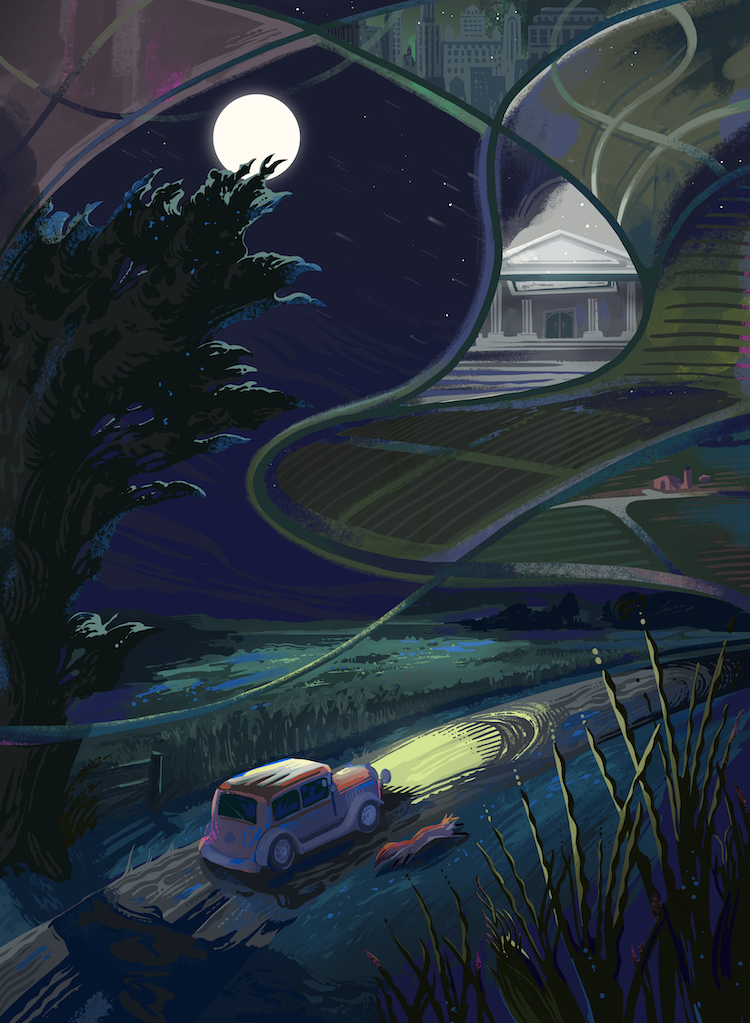
Anyway, here's my rankings and notes. As always, I've linked to longer reviews I've already done when relevant, or to the finalist itself when freely available online.


Best Novella

7. The Brides of High Hill by Nghi Vo
"I'm only a silly girl," Nhung said gravely. "Aren't I a child until I get married, when I shall magically become the lady of the house?"
This is the fifth novella in the "Singing Hills" cycle, about a traveling monk collecting stories; it is the fourth to be a Hugo finalist. Having read four of these now, I wish I found them more interesting. The premises always seem good but there's something too languid about them, they never really get off the ground or engage. This has some interesting twists, but largely at a point where I'd stopped caring. I don't actually a have strong opinion about whether this is better or worse than Navigational Entanglements, I found them about equally dull, but I guess I'll give the edge to something that's not an installment in a series that's been nominated three times already.

6. Navigational Entanglements by Aliette de Bodard

No, she hated herself for allowing herself to hope. To believe that it could ever be different. [...] [T]hat she'd unlock the ever-shifting and incomprehensible set of rules that allowed her to make sense of other people.

In a science fiction world, navigating between star systems is dangerous because of carnivorous entities that feed on consciousness (akin to "The Game of Rat and Dragon" by Cordwainer Smith). One of those entities escapes into the real world, and so the clans that handle navigation need to assemble a team to hunt it down. They must overcome their differences and mistrust as well as a larger conspiracy in order to solve the problem. This is the sixth Hugo finalist by Aliette de Bodard I've read since 2017, and while obviously she has her fans, whatever she's doing just doesn't work for me. I felt there were too many characters who I didn't particularly care about, or even care to tell apart, and without that, the book just doesn't work. Like a lot of recent Tordotcom novellas, there's a sapphic romance, but like a lot of recent Tordotcom novellas it seems to happen instantaneously for not really much of a reason.

5. The Butcher of the Forest by Premee Mohamed

A monster who begat monsters, and I walk with them now; little tyrants. 

I felt this started quite promisingly: a tyrant loses his children in magical woods from which no one ever returns; he comes to the one woman who ever entered the woods and returned with whoever was lost and demands she recovers his children. At first it's spooky and weird, but—and it feels weird to say this about a novella—it's too long. There's some interesting stuff in here but not enough compared to the length of the book. There's only so much "bargaining with spooky tricky wood creatures" I can find interesting. Still, I was interested at first, so above Navigational Entanglements it goes.

4. What Feasts at Night by T. Kingfisher

If you read my full review of this, you'll see I was quite tepid about it—both in the sense I'm not sure What Moves the Dead needed a sequel, and in the sense that it doesn't seem very Hugo-worthy. So that I've placed it here is more a testament to the weakness of the rest of the novella shortlist than anything else. Even if I don't really see the reason for this, you can count on T. Kingfisher to be interesting and amusing all the way through.

3. No Award

Once again, we have a year of entirely Tor novellas, all specifically Tordotcom except What Moves at Night, which comes from a different Tor imprint, Nightfire. Are they all terrible or something? No, they're fine. But is this award doing what I want it do? Not really. People are always proposing new Hugo categories; maybe I'll submit a motion to the Worldcon Business Meeting to split the category into Best Tor Novella and Best Novella by Literally Anyone Else. Anyway, putting "No Award" here is more my protest at the lack of imagination demonstrated by the nominators than anything else; in my mind, there's a huge gap between What Feasts at Night and what comes next.

2. The Practice, the Horizon, and the Chain by Sofia Samatar 

Once, he said, on ancient Earth, there was a Horizon, and to gaze on it was to look neither up nor down. Look out...

This is an sf story (it is no coincidence that sf stories took up my top two spots) about a generation ship and the people on it who have never known anything else. Those are a dime a dozen in science fiction, of course, but Samatar focuses on the class divide in the ship, and academia's role in both upending and upholding systems of oppression—it's a unique angle on an old sf staple, and of course totally played to my own interests.

1. The Tusks of Extinction by Ray Nayler

"[H]e was a man like you."
     "Like me?"
     "Yes. A man who thought he could pass the good on to his son without the bad."
     There was silence in the tent, for a moment.
     Then one of the other men said, "He's right, Mitya. All our fathers were the same."
     "Well, let's drink to our fathers then. They wanted the best, but it turned out the same as always."

This is going to be a bit mean, but this is so good it's hard to believe it's a Tordotcom novella. Unlike most of what they publish, it's not a fantasy story that feels like a pilot for a streaming show; this isn't aimed at people who watch a lot of tv and movies, but it's a clever, inventive piece of sf that wouldn't be out of place in Clarkesworld or Asimov's. The basic premise is that in the near future, elephants have gone extinct but woolly mammoths have been revived through cloning, so ivory poachers have turned to mammoths as a new source. It's beautifully written, full of interesting ideas, as a bunch of different plotlines intersect. Disorienting in the way the best sf is, with lots to say about the world we live in now and the world we will live in. The first novella I read for the Hugos, but I instantly knew it would be the one to beat.


Best Novelette

6. "By Salt, By Sea, By Light of Stars" by Premee Mohamed

[S]he could also see that he was staring at something over her shoulder: the three framed certificates on the wall, busy with gilt and illumincation, B.Wiz, M.Wiz, Ph.W all in a row. Not in envy or awe, she thought, but a doorway, open, beckoning: Here is how you escape. Here is how you get away from them.

An old magician losing her powers takes on a new apprentice. I think this is probably good at what it does, but stories about old magicians taking on new apprentices are just never going to be my thing, to be honest. On a different day, I could be persuaded to move it up one place on my ballot; "Loneliness Universe" has higher aspirations but "By Salt" has better jokes.

5. "Loneliness Universe" by Eugenia Triantafyllou

The world was still filled with people, of course. Just people she knew nothing or very little about. 

This story seems quite potent: the narrator stops being able to see her friends and family, even though they're right where she is. It feels like it could be a potent metaphor for the isolation brought on by our modern condition, how you can be in the same room as someone but not connected to them because they're on their phone or whatever. But I didn't find the mechanics of how it worked very convincing, and the metaphor didn't really land, didn't feel like it told me anything interesting about how the world works. I feel bad ranking it this low, because I do think Triantafyllou is probably up to something a bit more interesting than Pinsker et al., but I don't think she really pulled off what she was attempting.

4. "Signs of Life" by Sarah Pinsker

Did you find happiness despite what I did to you?

Sarah Pinsker is my favorite contemporary writer of short sf, but this feels very much like one of her minor works to me. It's about a woman going to see her sister for the first time in a long while, but weird things are afoot. Pinsker has a couple different modes; I think she's at her best when she's doing science fiction (including near future) or fantasy work (especially where the magic is kind of a metaphor), but to me, she's less interesting when she's in what I think of as her "creepypasta" mode, of which this is very much an example. I find this kind of work well constructed but ultimately kind of hollow. This one in particular has a very rushed and unconvincing ending following the big reveal, and I'm not sure why, because it spent too much time building up to that moment, so there was definitely word count to spare.

3. "The Four Sisters Overlooking the Sea" by Naomi Kritzer

I sighed. “Academic jobs are hard to find. My husband Stuart also has a PhD, and he landed a job in Minnesota. One thousand miles away from the nearest seals who aren’t in a zoo. And he’s got tenure. We’re only here because he’s on sabbatical.” 

Naomi Kritzer is a favorite of the Hugo electorate, and she also ends up in Neil Clarke's Best Science Fiction of the Year volumes pretty consistently, so I feel like I have read a lot of her work at this point. Based on that sampling, I would say she has two modes: near-future sf focusing on stuff like AI and algorithms, but also community and hope (e.g., the CatNet books, "The Dragon Project," Liberty's Daughter, "The Year Without Sunshine," "Better Living Through Algorithms") and spooky folk horror that is also kind of uplifting (e.g., "The Thing About Ghost Stories," "Little Free Library," "Monster"). This is not too dissimilar to Pinsker, actually, and like with Pinsker, I find Kritzer a lot more interesting in her near-future mode than her horror mode. Unfortunately, this is her in her horror mode... though horror isn't quite the right word for it. This story is well-observed (I am of course always into an accurate depiction of academia) and has some good ideas, but a lot like the Pinsker, actually, feel like too much of a slow burn compared to the length. I doubt it's bad, but it's not really what I am interested in. That said, I did like it more than "Signs of Life"; it felt like it had more of a real pay-off.

2. "Lake of Souls" by Ann Leckie
"No animal has a soul that I ever knew."

This sf novelette is included in Leckie's new short fiction collection of the same title; above, I've linked to my review of the complete volume. Like a lot of Leckie's work, it's a weird, disturbing story about the way our biology drives us. That said, it did feel like minor Leckie to me compared to her novels or even some of the other short fiction collected in the same book. But I think it was asking more interesting questions and doing more interesting things than "Signs of Life" and "Four Sisters," so in this case minor Leckie outranks minor Pinsker or minor Kritzer.

1. "The Brotherhood of Montague St. Video" by Thomas Ha

The biggest difference I noticed in the new electronic copy was the ending.

There was a shootout in Copper Hawk like before, yes. But instead of the loss and the blood and the shame of the rider, the iron-handed sheriff was the one to take a bullet. [...] I could almost sense the hand of audience-score maximizer programs in the plot. It could even have been a re-writer at my agency that oversaw the edition, for all I knew.

I felt better in some ways, having read the new, happier ending, but I forgot it promptly, like some garbled conversation I’d overheard on the subway, something that made me chuckle and then escaped my mind.

This is a weird near-future story about a world where there's basically no permanent media anymore: physical books and DVDs and such are all gone, and now all media is electronic—and thus all media can be perpetually altered, updated, tinkered with to suit the present moment. The media of the past no longer serves as a window into that past. I'd never heard of Thomas Ha, but he seems to be one to watch out for based on this. I really liked this, it's basically exactly my taste in short sf, and it easily acquired a high place on my ballot.


Best Short Story

“It was better before they put in the big road. The old road ran right by us, and we’d get people all the time. Now it’s just folks who already know we’re here. Or ones that get unlucky. It’s catch as catch can these days, I guess.”
I said above that I haven't really enjoyed Vo's Singing Hills novellas very much, but last year I did really like her novelette "On the Fox Roads," an historical fantasy, so I was looking forward to this. Unfortunately, I think this is probably a decent story that I just never figured out, a good example of me finding it easier to glom onto an sf premise than a fantasy one.
 
5. "Five Views of the Planet Tartarus" by Rachael K. Jones
The pilots do always try to hit as many as they can.
This is a piece of flash fiction about a prison planet. It's evocatively written, but I find flash fiction kind of tricky, especially in an sf context; this is more worldbuilding than a story.
 
4. "Marginalia" by Mary Robinette Kowal
“I have misjudged many things very badly and I ask your forgiveness.”
I thought this was perfectly okay. It's set in a fairy-tale world beset by giant snails; the main character is a working-class woman who helps the lord whose estate she lives on defeat one. But that's about it, I felt, except for an overly long epilogue about what happens to everyone later. I get what happened but I didn't think there was much of a hook here. Kowal is a competent writer, so it's well told, but so what? More to my taste than "Five Views," but I didn't think trying to do something as interesting as "We Will Teach You How to Read."†

3. "We Will Teach You How to Read | We Will Teach You How to Read" by Caroline M. Yoachim

This is our story, simplified: Life. Loss. Transformation. Love. Death. Iteration.

I thought this was very clever, but perhaps more clever than enjoyable to read. Its plays with form to communicate content, and it's about stories and the ways we tell them, and how that can change people.

2. "Three Faces of a Beheading" by Arkady Martine 

THEY ONLY CALL US USURPERS BECAUSE THEY KILLED ENOUGH OF US

Now this is one of those stories where I didn't totally understand what was going on, but I understood enough, and I found it absorbing regardless. Arkady Martine is the author of the Teixcalaan books (I particularly liked the first of those, A Memory Called Empire), and like those, this is a story about empire, but moreso it's about history, the way we interpret and reinterpret the past. I found it really sharply written and thought-provoking; on a different day, I think I gladly could have put it in first. (Am I just a sucker for stories that include excerpts from made-up works of scholarly writing with real citations? Probably but I guess everyone's got to have their thing.)

1. "Why Don't We Just Kill the Kid in the Omelas Hole" by Isabel J. Kim

This is the one story in this whole post that I had before the ballot was announced, and like I said at the top, if I nominated anything, I nominated this. You can read my full review at the link, but I really enjoyed this a lot; a clever engagement with sf criticism's eternal Omelas debates, and beautifully told in its own way. I kind of think this is the obvious candidate to win (fandom does love its self-referential stuff), so obviously so that maybe I should put "Three Faces" in first just to give it an edge in a potential upset, but oh well, this story is that good.


Overall Thoughts

Last year, I was excited that Best Novella was actually kind of diverse... but this year we're back to the same-old same-old of Tor Tor Tor. I mean, I'm part of the problem here (I don't nominate anything because I don't keep up with novellas) but it does make me grumpy. And not only is it so much Tor, but three of them are written by writers who have been finalists multiple previous times: this is Nghi Vo's fourth nomination, de Bodard's fourth, and Kingfisher's third, and at least two of them are follow-ups to previous finalists. (I have read conflicting information on whether Navigational Entanglements takes place in the same "Xuya Universe" as de Bodard's The Tea Master and the Detective.) If the point of sf&f is to take the reader to new worlds, it's not really happening here.

Similar problems with nominee diversity afflict the other two categories: of the twelve finalists in Best Novelette and Short Story, nearly half from Uncanny, who I think benefit from being freely available online and soliciting stories from Internet favorites. Usually there are a couple that make the Uncanny dominance worthwhile (e.g., I really enjoyed Kritzer's "The Year Without Sunshine" in 2024) but not this year. Thankfully there is a little bit of diversity at the edges: in contrast to Uncanny appearing on the ballot in these two categories a cumulative thirty-five times since 2016, this is only the fourth appearance by a Strange Horizons story since 2007... too bad I didn't like it more. We also have an original story from a single-author collection (I don't think this happens much) and the first appearance of a story from the once-dominant Asimov's since 2018. (Asimov's, admittedly, was the Tor/Uncanny of 1986 to 2010!)‡

All that said, maybe my real problem isn't a lack of nominee diversity so much as that the tastes of Uncanny editors Lynne M. and Michael Damian Thomas just aren't my tastes, as my top spots in Best Novelette and Best Short Story both went to Clarkesworld, and Clarkesworld has had at least twenty stories in those two categories since 2010. But, well, I'm always gushing about how much I like editor Neil Clarke. I'm guessing that whenever volume ten of Clarke's The Best Science Fiction of the Year comes out, I will find a lot more to my taste there.

I'll wrap this up by making my predictions, with the caveat that I have not been very plugged into the discourse this year, beyond reading the threads about Hugo finalists on r/Fantasy and Nicholas Whyte's blog posts, neither of whom I think is very representative. I'm guessing:

  • something I ranked below "No Award" will win Best Novella (I am always disappointed by this category)
  • Kritzer or Pinsker will win Best Novelette, with an outside chance that it's Leckie (voters love them, and to be fair, they are all good writers)
  • Isabel J. Kim will win Best Short Story (the story is so very online, and sort of a meta-take on fandom discourse... plus actually quite good!)
* Well, actually five, since I also finished my last Lodestar finalist on June 7 and my last Best Graphic Story one on June 11. But those are other posts.

† After I wrote up my rankings, I read the discussion thread for "Marginalia" on r/Fantasy, which was pretty savage, and made me like the story less. I was kind of tempted to downgrade it after that, but laziness won out; and anyway, fundamentally I don't have a strong opinion between the bottom three in this category.

‡ Hm, I am starting to feel a blog post with charts and graphs coming on... 

30 May 2025

Teaching the Medical Humanities: Short Science Fiction

Previously I posted about designing my "Medical Humanties" course, which was themed around science fiction stories focusing on the future of medicine. Today, I want to talk about the sf stories I taught and what I did with them.

  • Daniel Keyes, "Flowers for Algeron" (1959). When I was prepping the class last summer, I also happened to read the 1966 novel Flowers for Algernon, which made me remember the original short story from 1959. About a low-IQ adult who goes through an experimental surgery to elevate his IQ, it is quite obviously all about the ethics of medicine! My first time teaching the class, I used it in my genetic engineering unit as a sort of metaphor for the issues of consent and identity raised by genetic engineering. But when I later read the papers by students who wrote about it, I felt I had really done the story a disservice by not actually meaningfully discussing disability! So I created a disability unit the following semester, and used the medical, social, and human rights models of disability as a way of discussing the story.
  • Sarah Pinsker, "Pay Attention" (2015). Expanding the disability unit meant I needed a second example of disability-focused piece of sf, otherwise I didn't have much of a unit! One thing I toyed with going from my first semester to my second was dropping Sinclair Lewis's Arrowsmith as my novel and replacing it with Sarah Pinsker's We Are Satellites (2021). This novel is about a brain implant called the "Pilot" that people can get to help them multitask more effectively; I decided not to make the change (I already had a bunch of Arrowsmith lesson plans, of course), but it did cause me to remember that Pinsker also wrote a couple short stories set in the world of We Are Satellites. "Pay Attention" is about a young woman with a mental disability whose Pilot enables her to obtain a military and medical career... but then one day it stops working. Like most of Pinsker's work, a great little story, and it let us talk about different aspects of disability than "Flowers."
  • Nancy Kress, "Invisible People" (2020). Moving "Flowers for Algernon" out of the genetic engineering unit meant I needed a second genetic engineering story as well. Looking backward through old blog posts, I found one I made about this story by Nancy Kress, where some parents who used a surrogate discover that their daughter was actually a victim of illegal genetic engineering. I think Kress's story is super clever, raising some interesting issues about less obvious uses of genetic engineering than "would you create a super-genius?", and focusing on some issues of identity and consent that were central to our class. The story ends in a debate that translated well to the classroom, and the story is thematically quite clever.
  • Manjula Padmanabhan, "Essence of Gandhi" (1997). As soon as I knew I was doing genetic engineering, I knew I wanted to do this story, which is about Western corporations exploiting the DNA of colonized peoples—I had, after all, published an article on it! Neither semester did my students enjoy it; even though it's just four pages, they found it confusing and alienating. Their loss, I guess. I still think it's clever! (Probably they didn't like it because the story is almost totally unmentioned on the Internet, and thus ChatGPT can't summarize it.)
  • Channing Ren, "Resurrection" (2020). I will admit to cheating: this is the first of four short stories I recycled from my life-extension class. Hey, it gave me over a week's worth of lesson plans! What is technological immortality, arguably, other than medicine taken to its utmost? In my second iteration of the course, I moved this to be the first one we read, as it's a useful story for discussing the project of science fiction (it's very easy to get), and it has the most kneejerk negative depiction of immortality.
  • Vanessa Fogg, "Traces of Us" (2018). This makes a good second immortality story, because like "Resurrection" it's about consciousness uploading, but it's much more positive, so it works against your assumptions. I will probably import this resequencing back into my immortality course. It also let me discuss "hard sf," of which I would argue it's the only example I taught in this course.
  • Will McIntosh, "Bridesicle" (2009). This story is about issues relating to a different technology of immortality, cryonics. Students this semester got very into my explanation of what's really going on with cryonics.
  • Paolo Bacigalupi, "Pop Squad" (2006). Lastly, we did genetic life extension. This semester, thanks to an episode of Radiolab I had coincidentally heard a week before teaching it, I leaned into some real issues of population explosion and decline; again, I'd like to import these concepts back into my immortality class. They really illuminated for me what I think Bacigalupi is up to in this story; it's about be estranged from the natural process of reproduction.
  • Sarah Pinsker, "Escape from Caring Seasons" (2018). The first time I taught the class, a couple students brought up AI as the technology they were most interesting in when it comes to the future of medicine, which made me belatedly think of this story from Pinsker's book Lost Places, where algorithms supercede doctors in a nursing home... not because AI has gone horribly wrong, though, but because it's working exactly as intended. I added the story to my syllabus the second time around. Pinsker thus became my only repeat author.
  • Cory Doctorow, "Radicalized" (2019). Right around the time I finished teaching the class for the first time, Luigi Mangione shot a health insurance executive; this caused someone to post on the printSF subreddit that "Cory Doctorow's story from Radicalized has come true," alerting me to the existence of this story, about how men whose loved ones have died because of denied insurance claims get radicalized in online forums and begin executing health insurance executives. I added it to the course pretty belatedly (after I had ordered my course packet!) for my second go run. It's a clever story, and let me talk about some important issues affecting American healthcare; students of course had lots of opinions about Luigi, so it taught well. Doctorow's blog post about the story is good reading.
  • Samantha Mills, "Rabbit Test" (2022). This Hugo Award–winning story is about medical implants being used by the state to monitor if women are pregnant. Popular with my students, especially the women, and I like Mills's point that any technology that allows you to better understand your own body also allows others to better control your own body. She powerfully links her future technology to the history of birth control and abortion. I taught it as a good example of China Miéville's dictum that sf isn't really about the future but the present.
  • Meg Elison, "The Pill" (2020). This is a disturbing novelette about a pill that makes you skinny... but has a 10% chance of killing you! Good for discussing if people's aversion to fatness is really about health; I paired it with concepts and background from Joan Jacobs Brumberg's The Body Project: An Intimate History of American Girls and Jeffrey Sobal's "The Medicalization and Demedicalization of Obesity" to discuss how obesity is viewed as either a medical issue one or an ethical one. (Thanks to my friend Christiana for her help.)

That's it! It was a fun class. I make the students take a survey ranking the stories, but thus far I've been too lazy to actually work up the data, so I'll be interested to see what they liked best when I get around to it all.

05 July 2024

Hugos 2024: Ballots for Novella, Novelette, and Short Story

And here it is—the first of my posts tallying up my Hugo ballots. This one covers the works in the various short fiction categories. As is my usual practice, I have ranked each category from lowest to highest, and linked to either full reviews I have written of the relevant books, or places you can read the stories on the Internet for free.


Best Novella

"If tube worms had pessimists, they would definitely shout: 'Shit! Human beings have come to snatch our hydrogen sulfide and tasty water!'"
Works originally published in foreign languages become reeligble for the Hugo Awards upon their first English publication; hence, this is one of three Chinese-language finalists that is eligible because it was translated in 2023 in the anthology Adventures in Space. (It was originally published in 2010.) It's about a colonization effort, and concerns the genetic divergence of a group of "pioneers" altered to function on a water world in space. I found it long on exposition, and full of interchangeable boring characters.

5. "Seeds of Mercury" by Wang Jinkang
"In short, in organic evolution, the tendency to cooperate is everywhere and grows stronger. For example, the scope of human cooperation has extended from individual to family, to community, to nation, to different races, even to wildlife beyond human beings. [...] I think the next step for human transcendence will be integration with alien life."
This is another translation of a Chinese story from Adventures in Space, originally from 2002. Like "Life Does Not Allow Us to Meet," it's a very technical, exposition-focused story—Chinese sf does not seem in step with what is happening in Anglophone sf. Which is fine, of course, but I am the one being asked to vote on these stories! This has an interesting premise, of an attempt to create artificial life that translates into a moral duty to that life, but it seems to me that it skips over the interesting stuff and spends lot of time on the boring stuff. Plus I found the writing pretty stilted, with lots of awkward dialogue and the particularly terrible choice of referring to the protagonist's wife in narration as "wifey"! (All three finalists from Adventures in Space have the same translator, so I don't know why this one would be noticeably worse, except if it was reflecting something in the original.) But it wasn't as boring as "Life Does Not Allow Us" so I will give it a slight edge... but I would not be excited to see either win.

I don't have access to the word counts, but I am a bit surprised to see either story classified as a novella, given they are each about fifty pages. Novelettes, surely?
 
4. Mammoths at the Gates by Nghi Vo

"but what was your grandfather to you but a thousand stories told over and over again?"

The fourth book in Vo's Singing Hills cycle about a traveling monk and their talking bird collecting stories, and the third that I have read; in this one they return to their monastery but find out things have changed in their absence. I find that these books err too much on the side of "contemplative" for my tastes. It took an awful long time for me to figure out what the idea of the book actually was. I can see why other people might find them interesting, but I usually do not, and this was no exception.

3. Thornhedge by T. Kingfisher

This is weak Kingfisher, as elucidated in my review linked above, but even weak Kingfisher is doing something I am broadly sympathetic to and interested in, so it clearly ought to go above Mammoths at the Gates and the two Chinese novellas. But even though I didn't love Mimicking of Known Successes, I feel like it was moving in more interesting directions than a fairy tale retelling.

2. The Mimicking of Known Successes by Malka Older

There were of course animal rights activists who argued that the animals shouldn't have been reconstituted to live in what was, essentially, captivity. [...] [But] many of the species in the mauzooleum had more space to wander around in than most human residential platforms offered. If they were in captivity on this inhospitable planet, then so were we.

This is a murder mystery set on a series of floating platforms connected by trains in the atmosphere of a gas giant. And not that the rest of the book is bad or anything, but that was definitely the best part; this is one of those sf books where the pleasure is in the discovery of a world and its complications and permutations. I found some of the character work a bit too understated for my tastes (what was the deal between the two protagonists?) but overall I enjoyed it even if I didn't love it.

1. Rose/House by Arkady Martine

Gisil lifted one bare shoulder, shrugging. She looked like she was part of the landscape: the long unadorned column of her black dress, the short dark cap of her hair. Like a pylon or a shadow on a cliff-face.

This, to me, was the clear standout of the novella category. It's set in the near future; a famous architect has recently died, forbidding access to his greatest creation, a house totally integrated with AI. But when the story begins a dead body has appeared in the house—how could either he or his killer have gotten in? I loved Martine's A Memory Called Empire, but aside from the evocative prose, this is very different, a trippy near-future thriller about how the spaces we live in and the functions we serve shape who we are. Obviously there is a lot of AI-focused sf these days, both in a general sense and on the Hugo ballot, and I found this had a lot more to say about it than, say, I AM AI. It has a lot of characters but also a strong sense of voice, as well as place. Expertly done, and it leaves me wanting more Martine, be it Teixcalaan or not. Basically exactly what I want out of an sf novella, an interesting idea explored thoroughly.


Best Novelette 

6. "Introduction to 2181 Overture, Second Edition" by Gu Shi

In thirty years—no, make it ten—none of this will be a problem anymore. My vision of the future simply surpasses theirs.

Born human, it is our freedom to choose where to live and which era to live in.

I wanted to like this more than I did. It's a hermit crab story, told in the form of an introduction to a book about my current bugaboo, life extension technologies. As I know from teaching my class about technologies of immortality, sf can often be very reactionary, and this story makes a strong case for some of the upsides. Unfortunately, I found the way the story was told made for pretty rough, pretty dry reading. I tried to imagine myself assigning in my class, and I couldn't, even though I think it raises a lot of interesting points worth discussing.

5. "Ivy, Angelica, Bay" by C. L. Polk

“You were good, and kind, and you were real, no matter what you were made of.”

This was a story about a witch using her powers to defend her neighborhood against gentrification, except the gentrifiers have dark magic on their side. It's got some interesting stuff going on to be sure, but it's just not really my kind of sf&f; nothing in it ever grabbed me. Stories where it's our world but there's magic and it's all hidden don't really do much for me. I like to read about different worlds! I'm sure it works for other people.

4. I AM AI by Ai Jiang

I AM AI.
     It isn't a lie. I am Ai, though not necessarily an actual AI.

This starts fairly strongly. The first-person narrator is a rare human creative worker in a world of AIs; she provides written content for her clients. But her clients don't even want human-generated content, they just want more unique and interesting AI-generated content, so she has to pretend to be an AI to keep up with her competition. But the harder things get for human creators, the more she has to keep augmenting herself cybernetically—making herself more and more like her competition. It's a cracker of a premise, delving into the very real issues forthcoming in our own world, and if it had finished as strongly as it started, I am sure I would have ranked it third or even second. Unfortunately, it has a bit of a cheeseball, simplistic conclusion that meant it ended up not dealing with the complexities of the situation it had set up, so I ended up enjoying it less than "One Man's Treasure," but it's still doing something I find interesting in a way that's not true of "Ivy, Angelica, Bay."

3. "One Man's Treasure" by Sarah Pinsker

“It looks to me like somebody hexed their gardener and left him for trash.”

Pinsker is one of my favorite writers of contemporary short sf&f, but I didn't find this to be one of her stronger works. Neat premise—in a world of magic, who are the people who dispose of magical trash?—and nice politics—how can the disadvantaged work against exploitation by the upper classes?—but probably a bit too long proportional to how much of interest actually happens.

2. "The Year Without Sunshine" by Naomi Kritzer

“It’s very sad and all, but it’s not like the lady who needs oxygen is going to get better,” he said. “You’re just delaying the inevitable.”

Tanesha gave him a narrow-eyed look. “You delay the inevitable every time you eat lunch.”

People (used to, anyway) talk about "hopepunk," and I am not sure it really exists, and if it does exist, I am not sure I like it... but I am coming to really like Naomi Kritzer, and I think that might be what she is doing. What if the most radical thing we could do in our disconnected world was reach out to other people and work together? (See also her story "Better Living Through Algorithms," below.) This is about a year in the near future where an unspecified disaster (we are told COVID was "one of the much smaller disasters that preceded the really big disaster") has knocked out the Internet and cellular networks, led to gas shortages, and means everyone is subject to occasional brownouts. You're thinking—that's not very hopeful! But Kritzer is, because she tells stories about the hard work we do to maintain community, something that she does from a slightly different angle in her CatNet books; it also reminds me of some of Sarah Pinsker's near future sf. Anyway, good stuff.

1. "On the Fox Roads" by Nghi Vo
It’s a hard thing to stay in a form that’s not your own, even when you love the people who know you in it. It feels like flying when you can be what you really are, even if you love pretty dresses and golden jewelry.

Great, beautiful fantasy work. In Jazz Age, two Chinese-American bank robbers pick up a teenage partner, as they use the magic fox roads to stay one step ahead of the law... but they can never outrun themselves. I haven't been very into Vo's "Singing Hills" novellas, but I thought this was excellent: beautifully told, evocative magic, and great character work. There's a fantastic sequence of the narrator running through Chicago near the end that just works perfectly.


Best Short Story

7. "Answerless Journey" by Han Song
There is still The Third.
This is a Chinese-original story (see Best Novella above), a translation of a story originally published in 1995! Thirty years old, but it feels much older, one of those old-school science fiction stories that really depends on a twist in the last lines but doesn't have much else going for it. I did really debate how to rank this versus "Mausoleum's Children"—I did know what was happening here but wasn't sure I really cared to! In the end, I decided that the de Bodard is much more indicative of the state of the genre as I understand it; I am prepared to believe someone thinks her work is the best science fiction published in 2023 even if I don't, but I am not prepared to believe that anyone thinks that of this story.

6. "The Mausoleum's Children" by Aliette de Bodard

“At least here we’re safe.”

“Here? Where they work you to the bone?”

“It’s no different elsewhere, is it?”

This is the fifth work of short fiction by Aliette de Bodard I have read in my time voting in the Hugo Awards; I think I may have to accept that I just do not "vibe" with whatever it is she is trying to do. I found this boring and impenetrable, but she clearly has a devoted fan base.

5. "Tasting the Future Delicacy Three Times (Three Gourmet Delicacies)" by Baoshu

"It could be said, that they devote their entire bodies, no, their entire lives, to eating! They are the world's most profound epicures! How marvellous!"

This is what Isaac Asimov would call a "technology-dominant" or "gadget" science fiction story, one focused on the implication of particular technologies. In this case, it's a technology that lets you taste things other people are eating as you yourself eat, in order to enhance your culinary experience. We get three different examples of it in action. Clever thought experiments... but not really a story, or at least, not a story in the sense that I find sfnally interesting. My ranking is kind of arbitrary, but Clark does have better writing (this is probably more the fault of Baoshu's translator, admittedly), so I ranked it below him; I knew what this story was actually about, so I ranked it above de Bodard.

4. "How to Raise a Kraken in Your Bathtub" by P. Djèlí Clark

“What could you possibly have bought from Mermen?” When he didn’t answer she went on, as she often did to fill his silences. “Arthur says their kind should be run out and put back to sea. We didn’t conquer them just to have them infest our cities.”

Speaking of people I'm much less into than other Hugo voters, Clark has occasionally produced stories I find really interesting (e.g., "The Secret Lives of the Nine Negro Teeth of George Washington," Ring Shout), but this is not one of them. It's not bad, but it's very straightforward; the title is the most interesting part. A Victorian man in a world where the British Navy goes around subjugating Mermen buys a kraken egg, but this turns out to be part of an implausibly complicated plot by Captain Nemo (of Verne fame) to undermine the British Empire. Okay, sure, but the characters are boring and the prose nothing to sing about.

3. No Award

I feel like recently I have been less prone to use "No Award" than I was in my earlier years of voting in the Hugos, but I did find the Best Short Story category pretty dismal this year. I can't countenance giving the Hugo to a gadget sf story, so I originally I was going to put No Award above "Tasting the Future Delicacy"... but as I was about to write this up, I realized the Clark is mediocre enough that I was willing to bump it up a place.

2. "The Sound of Children Screaming" by Rachael K. Jones

Children rarely get to feel so powerful. Children spend their days being told what to do and where to go. They don’t get to decide how they dress or what they eat. They aren’t allowed to get angry or to dislike anyone, and if an aunt or grandpa wants a hug, the child will have to give it.

This is set during a school shooting in an elementary school; hiding in a wardrobe, the students and their teacher end up stumbling through a portal into a fantasy world. What's more dangerous: hiding in a closet in a world where "[e]veryone has a right to a gun. Nothing can take that away from you. What you lack is a right to the lives of your children"? Or being a child soldier in a magical world? This fits well into the contemporary genre of what I call "self-conscious portal fantasies" (e.g., Seanan McGuire's "Wayward Children" novellas), and I really got what Jones was doing a couple weeks after reading it, when my five-year-old mentioned that in a lockdown drill, their class had hidden in a wardrobe, and wasn't that a thing from the Narnia books? It's an ambitious story, and I think the ambition slightly outstrips the ability, in that I found the material dealing with school shootings more successful than the interrogation of the assumptions of portal fantasies, which didn't always ring true. But a strong story nonetheless.

1. "Better Living Through Algorithms" by Naomi Kritzer

“It’s like if Reddit Antiwork ran a productivity app.”

I recently had the opportunity to interview Neil Clarke, editor of Clarkesworld, and I asked him where I thought the genre of science fiction is now and was going. He said climate change and artificial intelligence were the two things dominating the short sf market. Naomi Kritzer is one of the more thoughtful writers dealing with AI in her stories today; I like the way she's not a reactionary, how she thinks through what this technology might to do improve our lives. This one reminded me of a piece I heard on public radio a few years ago (probably on WNYC's On the Media), about how right now our phones recommend us things we know we want to do (which coffee store is best?) but ideally could improve our lives by recommending us things we don't know we want to do (walk an extra block and you will see a work of art that will change your life). Kritzer explores how such a technology might work, how our devices could help us be more present in the world instead of less. It's a charming piece of utopian fiction, and like all utopian fiction, it encourages us to make positive changes in the world even if they seem impossible.


Overall Thoughts

After many frustrating years of Best Novella, I found this shortlist admirably diverse. Just two Tordotcom novellas! One from a different Tor imprint, one from Subterranean Press, and two from China. I wish the actual novellas were better, but I guess you can't have everything. I don't have a good sense of what will win this category. If Kingfisher was going to win, I think it would have been for last year's What Moves the Dead; I don't think Thornhedge is strong enough to take it. Nghi Vo won for the first Riverlands novella in 2021, but follow-ups don't usually win. So probably Rose/House or Mimicking of Known Successes? (If the posters on Reddit's r/Fantasy are indicative, Rose/House will crush it, and most other things will place below No Award!) That said, last year's win by Seanan McGuire for the sixth book in a series surprised me, so maybe I don't know what's up.

The other categories are fine, mostly the usual suspects these days (Uncanny, Clarkesworld, Tor.com—sorry, Reactor), but each has one or two with a nicely unexpected source. I bet Kritzer will win one of the two, but I don't know which! Best Novelette was the strongest of these three categories; while I'm glad the Best Short Story finalists came from diverse sources they were in practice actually pretty crappy.