16 July 2024

Hugos 2024: Thornhedge by Ursula Vernon

Thornhedge by T. Kingfisher

Published: 2023
Acquired: April 2024
Read: June 2024

This is a finalist for the Best Novella Hugo; while I automatically pick up (almost) all Best Novel finalists, I only purchase finalists in other categories for authors I particularly like. T. Kingfisher (a.k.a. Ursula Vernon) is one of those authors, as I have very much enjoyed her previous Hugo finalists, especially A Wizard's Guide to Defensive Baking.

This is a fairy tale retelling, focusing on Sleeping Beauty—the central conceit is the question, "What if there was a good reason for the fairy godmother to put her to sleep for a long time?" It's an interesting idea, but I didn't find the execution very interesting; this is probably the weakest Kingfisher/Vernon book I've read. Most of it is given over to the backstory of the godmother, which is doled out pretty slowly, and I didn't find the climax of the story very interesting. It's well written of course, but it doesn't compare to, say, last year's What Moves the Dead or Nettle and Bone for complexity and depth.

12 July 2024

Reading The Wicked Witch of Oz Aloud to My Kid

The Wicked Witch of Oz by Rachel Cosgrove Payes
illustrated by Eric Shanower

Like many Oz fans, I suppose, my kid likes how the books lend themselves to indexing and organizing. Four quadrants of Oz, each with its own color, and each with its own ruler. Each also has its own wicked witch... well, almost. In Dorothy and the Wizard in Oz, the Wizard stated that when he arrived in Oz, each quadrant was ruled by its own witch, good ones in the north and south, and wicked ones in the east and west, but Ozma told him that before that, the north and south had been ruled by wicked witches as well. The Wicked Witches of the East and West we of course met (and disposed of) back in the very first book, and the Wicked Witch of the North, Mombi, appeared in Marvelous Land. But who was the Wicked Witch of the South, and what was her story? My kid has long asked me this question—and from our looking at covers of future Oz books, has long known we would someday find the answer to that question in The Wicked Witch of Oz.

Published: 1993
Acquired: June 2024
Read aloud:
June–July 2024
The story goes that after writing Hidden Valley, Rachel Cosgrove offered Reilly & Lee a second Oz book, called Percy in Oz. But Reilly & Lee passed on the book, and the manuscript sat in Cosgrove's trunk for forty years (by which point she had married and was known as Rachel Cosgrove Payes*) until it was published by the International Wizard of Oz Club with illustrations by Eric Shanower under the title The Wicked Witch of Oz. As is my usual method on my journey through Oz with my kid, we read it where it would have been published, not where it was, my reasoning being they were far more likely to remember and care about relevant characters in this sequence. (This does create a minor discontinuity, in that a character from Merry Go Round in Oz, which we haven't read yet, appears in a crowd scene.)

The story, like many of Baum's own, is tantalizing but light on backstory. It begins with Singra, the Wicked Witch of the South, awaking from a hundred-year sleep in her hut in the Red Forest of the Quadling Country. We are told Glinda put her to sleep (consistent with the statement in Dorothy and the Wizard that "Glinda the Good had conquered the evil Witch in the South") but given little beyond this. How did Glinda do this? Why put her to sleep (and then, apparently, forget about her)? What kind of terror did Singra get up to? We are not told, because the story much more focuses on the present-day machinations of Singra, though it does give us the tantalizing bit of information that Singra is cousin to the Wicked Witches of the East and West—our first indication in the Oz novels, in fact, that they were related to each other. (The 1939 film made them sisters.) The book does seem to indicate Singra did not rule the Quadling country previously, when she thinks about how nice it would be to rule it.

Singra is a protagonist here; many of the book's chapters follow her decisions and actions. On waking up, she learns that while she was a sleep a girl named Dorothy killed her cousins, so she plots her revenge: turning Dorothy into a piece of cheese! This requires stealing some ingredients from Glinda's palace and even capturing the Scarecrow, but things go wrong for her when she accidentally transforms Trot, thinking her Dorothy. Dorothy and Percy the White Rat (from Hidden Valley) immediately set out in pursuit of Singra, and have various adventures, meeting a "rubber band" (i.e., a band whose members are made of rubber), making friends with a living neon light named Leon, getting captured by giant bees, and being partially transformed into hummingbirds before finally catching up with Singra... who then turns Dorothy into a statue!

My kid repeatedly indicated they found the book scary and that they didn't like it. They have never like reading about "bad things" happening, and Wicked Witch has more of those than most Oz books: Singra stealing things, Singra tying up the Scarecrow and taking some of his straw, Singra transforming Trot, Singra transforming Dorothy. I think to an adult reader, it doesn't come across as terribly perilous, but it totally works for a five-year-old. (Even though at one point they told me they were pretty sure Dorothy would not be a piece of cheese in later Oz books.) It did, I suspect, keep them involved in the book—for the past year or so, we've averaged one Oz book per month (compared to our earlier rate of twenty-three in one year), but we flew through this one in just a couple weeks because they kept on asking for chapters (whereas normally we just read a chapter on the alternate days that I do bedtime). How would Dorothy be saved?

Though it has the problems in the ending of many Oz books (once Ozma knows what's going on, the book wraps up pretty quickly, because there's little Ozma can't do with the Magic Belt, the Magic Picture, and the Wizard to call upon), I too enjoyed it a lot. I do like it when "wicked" characters are co-protagonists in Oz books (e.g., Lost King, Pirates) because they are often sly and clever, and it's interesting to kind of root both for and against them. The book is much more focused than Cosgrove's Hidden Valley, with a smaller cast of characters: just Percy, Dorothy, and later Leon in the adventuring party. This means the characters all get to contribute (unlike the extraneous Cowardly Lion and Hungry Tiger in Hidden Valley), and Dorothy comes across as the forthright protagonist we're used to from previous books. The communities they bump into on their journey are interesting without being distracting, and like in Hidden Valley, Cosgrove is good about the characters using their cleverness to get out of situations. The incidents feel Baumian without feeling derivative; the partial forced transformation into hummingbirds, for example, recalls Road to Oz, and Leon the Neon is a great idea.

I think it's probably also impossible to understate what a difference good illustrations make to an Oz book, and Wicked Witch is blessed with ones by Eric Shanower, surely the best Oz illustrator other than Denslow and Neill. His illustrations are detailed but also whimsical, capturing the imagery of the text in an evocative way: I loved his pictures of Leon the Neon, for example, and Percy and Dorothy with hummingbird wings is an amazing visual. (Sure this is the only official Oz novel to show us Dorothy's belly button!) There's a good sense of humor to the images too; my kid and I both loved his pictures of the cheese-obsessed Percy. And the pictures aren't just there in quality, but also quantity: each chapter has a title page with a small picture, whereas the first page of each chapter has a big image that wraps around the text, spanning two pages. (J. L. Bell has a great discussion of the book's visual design here.) Indeed, there's no two-page spread of the book that is image-less; again, compare with Hidden Valley, where my three-year-old (who will read Oz with us a bedtime) would look at a two-page spread of pure text and complain, "I want to see a picture!" Crazy to think that Shanower offered to reillustrate Hidden Valley when the Oz Club republished it, and they turned him down!

Other Thoughts:

  • For the first time, I think, my kid actually got a punny creation in an Oz book: they understood both meanings of "rubber band" here, being familiar both with actual rubber bands and getting what it meant to have a band made out of rubber. They boggled a bit.
  • There is a very rare post-Neill reference to Ruth Plumly Thompson's books here, with the Wizard's searchlight (from Yellow Knight and Ojo) being mentioned, though not used, as a way to find the missing Trot.

Next up in sequence: Merry Go Round in Oz

* While Hidden Valley was her first ever book, by 1993 she had published numerous novels, most of them romances with titles like Love's Escapade, Bride of Fury, Moment of Desire, and Satan's Mistress. Not exactly Oz material!

09 July 2024

Hugos 2024: The Saint of Bright Doors by Vajra Chandrasekera

The Saint of Bright Doors by Vajra Chandrasekera

This is an odd, unusual debut fantasy novel, difficult to summarize. It mostly takes place in a city in a fantasy realm; the main character is seemingly the son of a god, but has been cast off by his parents. I don't want to say a whole lot about it, because I think it's one of those books that doesn't really benefit from being summarized ahead of time, just read.

Originally published: 2023
Acquired: June 2024
Read: July 2024

I will say I think it feels like three different novels—one about the cast-off son, one about the city and the titular "bright doors" (which are a fascinating fantasy device), and one about a prison camp. Did the three novels totally go together? I wasn't always sure; it sometimes felt like they were getting in each others' way. There's a lot of cool stuff here about how we define and categorize the world and other people and ourselves, the tools of oppression and comprehension we wield and the way we push against that, from epic stories to pogroms to plays to identity cards to religion to crowdfunding campaigns.

The writing is beautiful. There's a particularly evocative section about the main character in prison that I just loved. I think, more than any other book I've read recently, it would benefit from being reread. Now that I have a sense of what it's doing, would it hang together more? I admire this book a lot; I love parts of it. I am glad the Hugos gave me the opportunity to read it.

08 July 2024

The First Doctor Novelisations: The Daleks (1964)

I've been catching up on the Doctor Who fiction I've had on my reading list; every three months, I take the book I've owned the longest and read it. The next one in that sequence ought to be the first Doctor novelisation Galaxy Four, but I've decided to do things slightly different with the Target novelisations, since they're so short. When I hit one of those, I'll read all the unread Targets I have with that particular Doctor, in order of original publication (plus I'll add on any Targets featuring that Doctor that have received a modern reprint).

Originally published: 1964
Acquired: January 2013
Read: July 2024

For the first Doctor, that sequence is The Daleks (1964), The Zarbi (1965), The Crusaders (1966), The Tenth Planet (1976), The Dalek Invasion of Earth (1977), and Galaxy Four (1986).

Doctor Who in an exciting adventure with the Daleks by David Whitaker
illustrated by Arnold Schwartzman

Famously, this is the first Doctor Who novel of any kind, a novelisation of the first Dalek story (which pedants know as The Mutants but most modern viewers call The Daleks), released on the eve of the Daleks' return to television in The Dalek Invasion of Earth. Since it was not seen as the first of a range of tie-ins, but rather as a standalone novel, it was designed to work on its own. Story editor David Whitaker took Terry Nation's script and appended a couple chapters on the front explaining how the Doctor, Susan, Ian, and Barbara all ended up journeying to Skaro together—in a way not at all consistent with An Unearthly Child—and also added a short chapter at the end where the characters decide to continue to adventure together. You could take this book and hand it to someone claiming it was the first Doctor Who story and they would totally believe you. (Maybe I will try this on my kids someday.) In addition, it's designed to work as a book: Whitaker novelizes the story in the first person from Ian's perspective, so it doesn't read as a tv tie-in, but a proper adventure novel.

Anyway, it's a really strong read. The opening chapters are intense and atmospheric, Whitaker really capturing Ian's disorientation and fear. This is a much more forbidding introduction to the Doctor than we got on screen, but it works well as a lead-in to an intense story. I am not a big fan of the original Dalek story, but telling it in the first person makes it creepy and unsettling. When you encounter it for the first time, a Dalek isn't an outer-space robot monster, but an inscrutable alien—this is true of their first story and no other, and the novelisation captures that fairly well. The description of the Dalek mutant is unsettling, and the glass Dalek at the story's climax is amazing.

In prose, a lot of the story is streamlined to positive effect; we don't spend twenty-five minutes with various characters jumping across a chasm, and the tight focus on Ian means some of the story gets related secondhand, which usually works well. I was surprised that this takes out all the references to radiation from the tv story; it's just vague "poison," even though the weapon used in the past is eventually established as an atomic bomb.

Ian of course is the star here. He's always been one of my favorites, and I'd love to hear William Russell's audiobook version of this story. (I once got it from the library but had to return it before I finished the first chapter, I think!) The book also does well by the Doctor, working in a nicely done character arc across the story about him and Ian coming to trust each other. I think Susan comes across better here than she does on screen; divorced from Carole Ann Ford's somewhat histrionic performance, she's more of a cool, collected, mysterious girl. The one regular the story does poorly by is Barbara, who mostly comes across as Ian's love interest, and only because she's the girl one. I think Jacqueline Hill's performance did a lot for the character in her early days.

I read the 2011 reprint, which has a new introduction by Neil Gaiman, the original illustrations by Arnold Schwartzman, and an afterword by Steve Tribe. The Gaiman intro is all right, and the Schwartzman pictures are nothing to write home about; he picks a surprising number of banal moments where the regulars are standing around to illustrate. Whitaker gives great descriptions of the Dalek city and its environments, but Schwartzman doesn't bother to illustrate that! The afterword by Steve Tribe does a great job of giving historical context for the book, but as an American, I found the pedantic explanation of what "feet" and "inches" were hilarious. The thing I needed explained was the oft-used term "gasometer"!

Every three months, I read the unread Doctor Who book I've owned the longest. Next up in sequence: Doctor Who and the Zarbi

05 July 2024

Hugos 2024: Ballots for Novella, Novelette, and Short Story

And here it is—the first of my posts tallying up my Hugo ballots. This one covers the works in the various short fiction categories. As is my usual practice, I have ranked each category from lowest to highest, and linked to either full reviews I have written of the relevant books, or places you can read the stories on the Internet for free.


Best Novella

"If tube worms had pessimists, they would definitely shout: 'Shit! Human beings have come to snatch our hydrogen sulfide and tasty water!'"
Works originally published in foreign languages become reeligble for the Hugo Awards upon their first English publication; hence, this is one of three Chinese-language finalists that is eligible because it was translated in 2023 in the anthology Adventures in Space. (It was originally published in 2010.) It's about a colonization effort, and concerns the genetic divergence of a group of "pioneers" altered to function on a water world in space. I found it long on exposition, and full of interchangeable boring characters.

5. "Seeds of Mercury" by Wang Jinkang
"In short, in organic evolution, the tendency to cooperate is everywhere and grows stronger. For example, the scope of human cooperation has extended from individual to family, to community, to nation, to different races, even to wildlife beyond human beings. [...] I think the next step for human transcendence will be integration with alien life."
This is another translation of a Chinese story from Adventures in Space, originally from 2002. Like "Life Does Not Allow Us to Meet," it's a very technical, exposition-focused story—Chinese sf does not seem in step with what is happening in Anglophone sf. Which is fine, of course, but I am the one being asked to vote on these stories! This has an interesting premise, of an attempt to create artificial life that translates into a moral duty to that life, but it seems to me that it skips over the interesting stuff and spends lot of time on the boring stuff. Plus I found the writing pretty stilted, with lots of awkward dialogue and the particularly terrible choice of referring to the protagonist's wife in narration as "wifey"! (All three finalists from Adventures in Space have the same translator, so I don't know why this one would be noticeably worse, except if it was reflecting something in the original.) But it wasn't as boring as "Life Does Not Allow Us" so I will give it a slight edge... but I would not be excited to see either win.

I don't have access to the word counts, but I am a bit surprised to see either story classified as a novella, given they are each about fifty pages. Novelettes, surely?
 
4. Mammoths at the Gates by Nghi Vo

"but what was your grandfather to you but a thousand stories told over and over again?"

The fourth book in Vo's Singing Hills cycle about a traveling monk and their talking bird collecting stories, and the third that I have read; in this one they return to their monastery but find out things have changed in their absence. I find that these books err too much on the side of "contemplative" for my tastes. It took an awful long time for me to figure out what the idea of the book actually was. I can see why other people might find them interesting, but I usually do not, and this was no exception.

3. Thornhedge by T. Kingfisher

This is weak Kingfisher, as elucidated in my review linked above, but even weak Kingfisher is doing something I am broadly sympathetic to and interested in, so it clearly ought to go above Mammoths at the Gates and the two Chinese novellas. But even though I didn't love Mimicking of Known Successes, I feel like it was moving in more interesting directions than a fairy tale retelling.

2. The Mimicking of Known Successes by Malka Older

There were of course animal rights activists who argued that the animals shouldn't have been reconstituted to live in what was, essentially, captivity. [...] [But] many of the species in the mauzooleum had more space to wander around in than most human residential platforms offered. If they were in captivity on this inhospitable planet, then so were we.

This is a murder mystery set on a series of floating platforms connected by trains in the atmosphere of a gas giant. And not that the rest of the book is bad or anything, but that was definitely the best part; this is one of those sf books where the pleasure is in the discovery of a world and its complications and permutations. I found some of the character work a bit too understated for my tastes (what was the deal between the two protagonists?) but overall I enjoyed it even if I didn't love it.

1. Rose/House by Arkady Martine

Gisil lifted one bare shoulder, shrugging. She looked like she was part of the landscape: the long unadorned column of her black dress, the short dark cap of her hair. Like a pylon or a shadow on a cliff-face.

This, to me, was the clear standout of the novella category. It's set in the near future; a famous architect has recently died, forbidding access to his greatest creation, a house totally integrated with AI. But when the story begins a dead body has appeared in the house—how could either he or his killer have gotten in? I loved Martine's A Memory Called Empire, but aside from the evocative prose, this is very different, a trippy near-future thriller about how the spaces we live in and the functions we serve shape who we are. Obviously there is a lot of AI-focused sf these days, both in a general sense and on the Hugo ballot, and I found this had a lot more to say about it than, say, I AM AI. It has a lot of characters but also a strong sense of voice, as well as place. Expertly done, and it leaves me wanting more Martine, be it Teixcalaan or not. Basically exactly what I want out of an sf novella, an interesting idea explored thoroughly.


Best Novelette 

6. "Introduction to 2181 Overture, Second Edition" by Gu Shi

In thirty years—no, make it ten—none of this will be a problem anymore. My vision of the future simply surpasses theirs.

Born human, it is our freedom to choose where to live and which era to live in.

I wanted to like this more than I did. It's a hermit crab story, told in the form of an introduction to a book about my current bugaboo, life extension technologies. As I know from teaching my class about technologies of immortality, sf can often be very reactionary, and this story makes a strong case for some of the upsides. Unfortunately, I found the way the story was told made for pretty rough, pretty dry reading. I tried to imagine myself assigning in my class, and I couldn't, even though I think it raises a lot of interesting points worth discussing.

5. "Ivy, Angelica, Bay" by C. L. Polk

“You were good, and kind, and you were real, no matter what you were made of.”

This was a story about a witch using her powers to defend her neighborhood against gentrification, except the gentrifiers have dark magic on their side. It's got some interesting stuff going on to be sure, but it's just not really my kind of sf&f; nothing in it ever grabbed me. Stories where it's our world but there's magic and it's all hidden don't really do much for me. I like to read about different worlds! I'm sure it works for other people.

4. I AM AI by Ai Jiang

I AM AI.
     It isn't a lie. I am Ai, though not necessarily an actual AI.

This starts fairly strongly. The first-person narrator is a rare human creative worker in a world of AIs; she provides written content for her clients. But her clients don't even want human-generated content, they just want more unique and interesting AI-generated content, so she has to pretend to be an AI to keep up with her competition. But the harder things get for human creators, the more she has to keep augmenting herself cybernetically—making herself more and more like her competition. It's a cracker of a premise, delving into the very real issues forthcoming in our own world, and if it had finished as strongly as it started, I am sure I would have ranked it third or even second. Unfortunately, it has a bit of a cheeseball, simplistic conclusion that meant it ended up not dealing with the complexities of the situation it had set up, so I ended up enjoying it less than "One Man's Treasure," but it's still doing something I find interesting in a way that's not true of "Ivy, Angelica, Bay."

3. "One Man's Treasure" by Sarah Pinsker

“It looks to me like somebody hexed their gardener and left him for trash.”

Pinsker is one of my favorite writers of contemporary short sf&f, but I didn't find this to be one of her stronger works. Neat premise—in a world of magic, who are the people who dispose of magical trash?—and nice politics—how can the disadvantaged work against exploitation by the upper classes?—but probably a bit too long proportional to how much of interest actually happens.

2. "The Year Without Sunshine" by Naomi Kritzer

“It’s very sad and all, but it’s not like the lady who needs oxygen is going to get better,” he said. “You’re just delaying the inevitable.”

Tanesha gave him a narrow-eyed look. “You delay the inevitable every time you eat lunch.”

People (used to, anyway) talk about "hopepunk," and I am not sure it really exists, and if it does exist, I am not sure I like it... but I am coming to really like Naomi Kritzer, and I think that might be what she is doing. What if the most radical thing we could do in our disconnected world was reach out to other people and work together? (See also her story "Better Living Through Algorithms," below.) This is about a year in the near future where an unspecified disaster (we are told COVID was "one of the much smaller disasters that preceded the really big disaster") has knocked out the Internet and cellular networks, led to gas shortages, and means everyone is subject to occasional brownouts. You're thinking—that's not very hopeful! But Kritzer is, because she tells stories about the hard work we do to maintain community, something that she does from a slightly different angle in her CatNet books; it also reminds me of some of Sarah Pinsker's near future sf. Anyway, good stuff.

1. "On the Fox Roads" by Nghi Vo
It’s a hard thing to stay in a form that’s not your own, even when you love the people who know you in it. It feels like flying when you can be what you really are, even if you love pretty dresses and golden jewelry.

Great, beautiful fantasy work. In Jazz Age, two Chinese-American bank robbers pick up a teenage partner, as they use the magic fox roads to stay one step ahead of the law... but they can never outrun themselves. I haven't been very into Vo's "Singing Hills" novellas, but I thought this was excellent: beautifully told, evocative magic, and great character work. There's a fantastic sequence of the narrator running through Chicago near the end that just works perfectly.


Best Short Story

7. "Answerless Journey" by Han Song
There is still The Third.
This is a Chinese-original story (see Best Novella above), a translation of a story originally published in 1995! Thirty years old, but it feels much older, one of those old-school science fiction stories that really depends on a twist in the last lines but doesn't have much else going for it. I did really debate how to rank this versus "Mausoleum's Children"—I did know what was happening here but wasn't sure I really cared to! In the end, I decided that the de Bodard is much more indicative of the state of the genre as I understand it; I am prepared to believe someone thinks her work is the best science fiction published in 2023 even if I don't, but I am not prepared to believe that anyone thinks that of this story.

6. "The Mausoleum's Children" by Aliette de Bodard

“At least here we’re safe.”

“Here? Where they work you to the bone?”

“It’s no different elsewhere, is it?”

This is the fifth work of short fiction by Aliette de Bodard I have read in my time voting in the Hugo Awards; I think I may have to accept that I just do not "vibe" with whatever it is she is trying to do. I found this boring and impenetrable, but she clearly has a devoted fan base.

5. "Tasting the Future Delicacy Three Times (Three Gourmet Delicacies)" by Baoshu

"It could be said, that they devote their entire bodies, no, their entire lives, to eating! They are the world's most profound epicures! How marvellous!"

This is what Isaac Asimov would call a "technology-dominant" or "gadget" science fiction story, one focused on the implication of particular technologies. In this case, it's a technology that lets you taste things other people are eating as you yourself eat, in order to enhance your culinary experience. We get three different examples of it in action. Clever thought experiments... but not really a story, or at least, not a story in the sense that I find sfnally interesting. My ranking is kind of arbitrary, but Clark does have better writing (this is probably more the fault of Baoshu's translator, admittedly), so I ranked it below him; I knew what this story was actually about, so I ranked it above de Bodard.

4. "How to Raise a Kraken in Your Bathtub" by P. Djèlí Clark

“What could you possibly have bought from Mermen?” When he didn’t answer she went on, as she often did to fill his silences. “Arthur says their kind should be run out and put back to sea. We didn’t conquer them just to have them infest our cities.”

Speaking of people I'm much less into than other Hugo voters, Clark has occasionally produced stories I find really interesting (e.g., "The Secret Lives of the Nine Negro Teeth of George Washington," Ring Shout), but this is not one of them. It's not bad, but it's very straightforward; the title is the most interesting part. A Victorian man in a world where the British Navy goes around subjugating Mermen buys a kraken egg, but this turns out to be part of an implausibly complicated plot by Captain Nemo (of Verne fame) to undermine the British Empire. Okay, sure, but the characters are boring and the prose nothing to sing about.

3. No Award

I feel like recently I have been less prone to use "No Award" than I was in my earlier years of voting in the Hugos, but I did find the Best Short Story category pretty dismal this year. I can't countenance giving the Hugo to a gadget sf story, so I originally I was going to put No Award above "Tasting the Future Delicacy"... but as I was about to write this up, I realized the Clark is mediocre enough that I was willing to bump it up a place.

2. "The Sound of Children Screaming" by Rachael K. Jones

Children rarely get to feel so powerful. Children spend their days being told what to do and where to go. They don’t get to decide how they dress or what they eat. They aren’t allowed to get angry or to dislike anyone, and if an aunt or grandpa wants a hug, the child will have to give it.

This is set during a school shooting in an elementary school; hiding in a wardrobe, the students and their teacher end up stumbling through a portal into a fantasy world. What's more dangerous: hiding in a closet in a world where "[e]veryone has a right to a gun. Nothing can take that away from you. What you lack is a right to the lives of your children"? Or being a child soldier in a magical world? This fits well into the contemporary genre of what I call "self-conscious portal fantasies" (e.g., Seanan McGuire's "Wayward Children" novellas), and I really got what Jones was doing a couple weeks after reading it, when my five-year-old mentioned that in a lockdown drill, their class had hidden in a wardrobe, and wasn't that a thing from the Narnia books? It's an ambitious story, and I think the ambition slightly outstrips the ability, in that I found the material dealing with school shootings more successful than the interrogation of the assumptions of portal fantasies, which didn't always ring true. But a strong story nonetheless.

1. "Better Living Through Algorithms" by Naomi Kritzer

“It’s like if Reddit Antiwork ran a productivity app.”

I recently had the opportunity to interview Neil Clarke, editor of Clarkesworld, and I asked him where I thought the genre of science fiction is now and was going. He said climate change and artificial intelligence were the two things dominating the short sf market. Naomi Kritzer is one of the more thoughtful writers dealing with AI in her stories today; I like the way she's not a reactionary, how she thinks through what this technology might to do improve our lives. This one reminded me of a piece I heard on public radio a few years ago (probably on WNYC's On the Media), about how right now our phones recommend us things we know we want to do (which coffee store is best?) but ideally could improve our lives by recommending us things we don't know we want to do (walk an extra block and you will see a work of art that will change your life). Kritzer explores how such a technology might work, how our devices could help us be more present in the world instead of less. It's a charming piece of utopian fiction, and like all utopian fiction, it encourages us to make positive changes in the world even if they seem impossible.


Overall Thoughts

After many frustrating years of Best Novella, I found this shortlist admirably diverse. Just two Tordotcom novellas! One from a different Tor imprint, one from Subterranean Press, and two from China. I wish the actual novellas were better, but I guess you can't have everything. I don't have a good sense of what will win this category. If Kingfisher was going to win, I think it would have been for last year's What Moves the Dead; I don't think Thornhedge is strong enough to take it. Nghi Vo won for the first Riverlands novella in 2021, but follow-ups don't usually win. So probably Rose/House or Mimicking of Known Successes? (If the posters on Reddit's r/Fantasy are indicative, Rose/House will crush it, and most other things will place below No Award!) That said, last year's win by Seanan McGuire for the sixth book in a series surprised me, so maybe I don't know what's up.

The other categories are fine, mostly the usual suspects these days (Uncanny, Clarkesworld, Tor.com—sorry, Reactor), but each has one or two with a nicely unexpected source. I bet Kritzer will win one of the two, but I don't know which! Best Novelette was the strongest of these three categories; while I'm glad the Best Short Story finalists came from diverse sources they were in practice actually pretty crappy.

04 July 2024

Reading Roundup Wrapup: June 2024

Pick of the month: Rose/House by Arkady Martine. Bit of a tricky one this month, as I read a few strong Hugo finalists, but I ended up going with this, my top choice for Best Novella. More on that soon, I guess! I also really liked The Adventures of Amina al-Sirafi and All These Worlds.

All books read:

  1. A Traveller in Time: The Critical Practice of Maureen Kincaid Speller edited by Nina Allan
  2. The Adventures of Amina al-Sirafi by Shannon Chakraborty
  3. Stolen Hours and Other Curiosities: The Collected Science Fiction Stories by Manjula Padmanabhan
  4. Staring: How We Look by Rosemarie Garland-Thomson
  5. Bea Wolf by Zach Weinersmith and Boulet
  6. The Hidden Valley of Oz by Rachel R. Cosgrove, illustrated by Dirk
  7. Thornhedge by T. Kingfisher
  8. Rose/House by Arkady Martine
  9. The Three-Body Problem, #01–14 by Cai Jin, Caojijiuridong, et al.
  10. All These Worlds: Reviews & Essays by Niall Harrison
  11. Collected Poems by Ursula K. Le Guin

All books acquired:

  1. The Wicked Witch of Oz by Rachel Cosgrove Payes, illustrated by Eric Shanower
  2. Toto of Oz by Gina Wickwar, illustrated by Anna-Maria Cool
  3. Animal Fairy Tales by L. Frank Baum
  4. The Wizard of Way-Up and Other Wonders by Ruth Plumly Thompson
  5. Cuckoo Song by Frances Hardinge
  6. The Truth and Other Stories by Stanisław Lem
  7. Italian Folktales selected and retold by Italo Calvino
  8. The Water Babies by Charles Kingsley illustrated by Anna Grahame Johnstone
  9. The Saint of Bright Doors by Vajra Chandrasekera

I have been purging books from my collection; I rewarded myself by... using my used bookstore credit to buy more books! I picked up #6-8 at a local used bookstore.

Currently reading:

  • The Saint of Bright Doors by Vajra Chandrasekera
  • Ethan of Athos by Lois McMaster Bujold
  • Adventures in Space: An Anthology of Short Stories by Chinese and English-language Science Fiction Writers edited by Patrick Parrinder and Yao Haijun
  • Doctor Who in an exciting adventure with the Daleks by David Whitaker 
  • The Ascent of John Tyndall: Victorian Scientist, Mountaineer, and Public Intellectual by Roland Jackson

I am almost done with my Hugo reading (just 2½ novels to go), so soon I can start catching up on all the other books I mean to be working on. 

Up next in my rotations:

  1. Miracleman, Book One: A Dream of Flying by The Original Writer, Garry Leach, Alan Davis, et al.
  2. The Periodic Table by Primo Levi 
  3. The Dispossessed by Szilárd Borbély
  4. Star Trek: Prey, Book 3: The Hall of Heroes by John Jackson Miller

Books remaining on "To be read" list: 666 (up 2)

So even though I now own fewer books than I did a month ago, the swapping of them out for unread books means my list is longer than it was, despite some very diligent purging!

03 July 2024

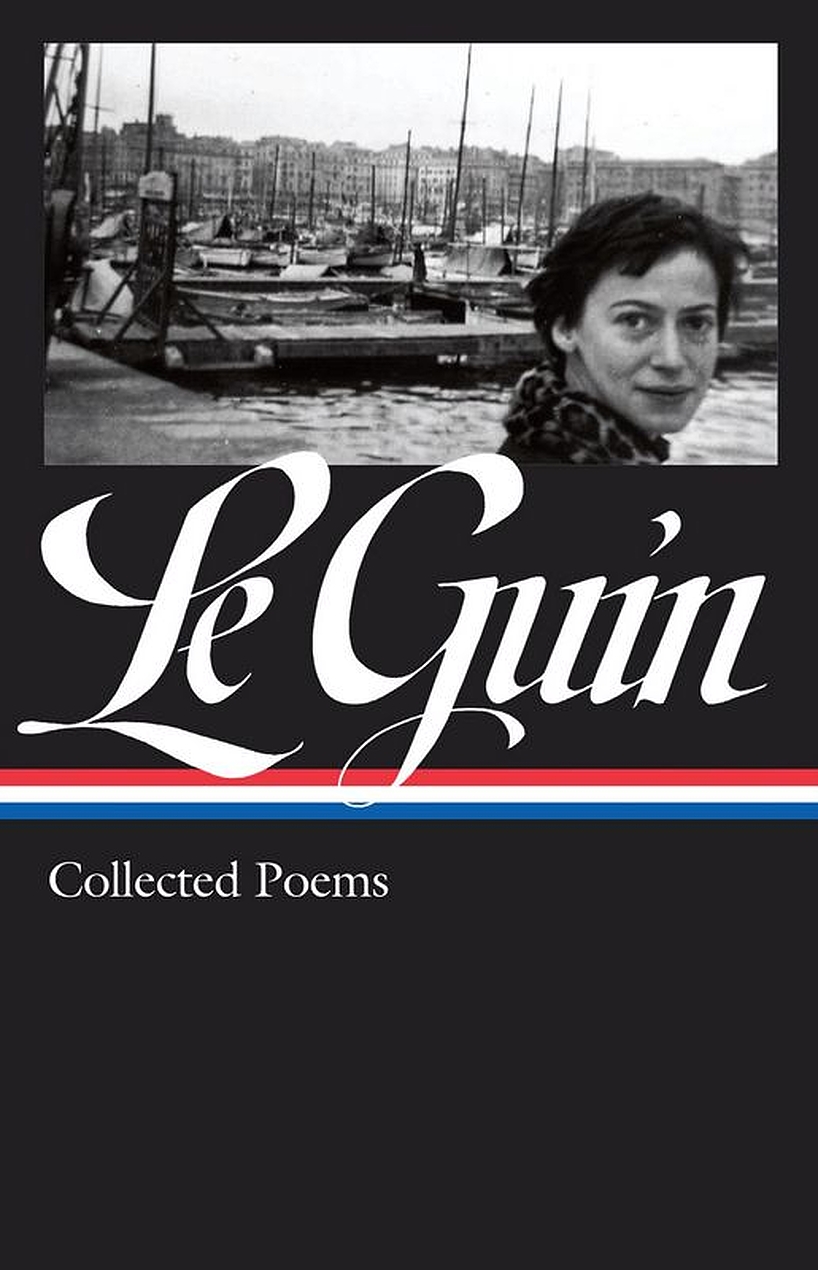
Library of America: The Collected Poems of Ursula K. Le Guin

Collected Poems by Ursula K. Le Guin
edited by Harold Bloom

It's one of my goals to own and have read everything Ursula K. Le Guin has ever written, but I have never read any of her poetry. Thus, the release of this Library of America edition was a big help; it contains all of her books of poetry, from 1975's Wild Angels to 2018's So Far So Good, as well as a number of previously uncollected poems and some prose writing about poetry (mostly her introductions to her own books, though in classic Library of America fashion, these are placed at the end for some reason, not where they ought to actually go). I don't think poetry benefits from sustainedly reading over seven hundred pages in one go, so for the past couple months I've dipped in and out of this between Hugo finalists.

Collection published: 2023
Contents originally published: 1960-2018
Acquired: December 2023
Read: May–June 2024

I would say I am largely not a poetry person, but I do have my likes, such as Anne Sexton and Christina Rossetti. Alas, Le Guin is not to my taste as much as either of them. Certainly she is not bad, but I just did not like a lot of what I read here—certainly not as much as Harold Bloom, whose praise in the introduction is enthusiastic but largely inscrutable as far as I was concerned

Still, a couple points I can make:

(Normally when reading books of poetry, I mark ones I enjoy and want to come back to later by dog-earing the page. However, I am not going to dog-ear a nice Library of America hardback! So in this case, I used my phone's camera to snap pictures of particularly enjoyable poems. The downside of this approach is that on occasions when reading without my phone nearby, I had no way to note those poems, so there are gaps in my coverage of the book. Also it's a plan that didn't occur to me until I was some way into my reading! In my comments below I will link to the poems I can find online, and excerpt in some cases, usually when I can't.)

Getting to read her poetry in order is interesting in a couple ways. One is that you see her development as a poet; she starts with largely free verse, but seems to experiment with more formal, well, forms as she goes. And maybe it's the Victorianist in me, but I found those much more to my taste.

You also get to see what an increasingly central role poetry played in her literary output. There are seven hundred pages of poems here; when you are on page 350, you might be halfway through her poetry, but she is over sixty years old. She produced more than half of her poetic output in the last two decades of her literary career. That said, this was at least partially because she couldn't write novels anymore as she got older; I remember her announcement that Lavinia (2008) would be her last because it was all she was capable of, even though she didn't die for another decade. She captured her sadness over this in her poem "The Old Novelist's Lament" (2018):

I miss the many that I was,
my lovers, my adventurers,
the women I went with to the Pole.
What was mine and what was theirs?
We were all rich. Now that I share
the cowardice of poverty,
I miss that courage of companionship.

Le Guin writes a lot about nature, which is not particularly to my taste. I get why she does this, there is a very good speech by her included here about the Anthropocene, arguing that attention to nature is a political project in an era where we largely see nature as a resource to be exploited. I agree with this in principle, but in practice, I find nature poems pretty boring. Still, not to be too much of a grump, I did like her cat poems, such as "Black Leonard in Negative Space" (1978):

All that surrounds the cat
is not the cat, is all
that is not the cast, is all,
is everything, except the animal.
It will rejoin without a seam
when he is dead. To know
that no-space is to know
what he does not, that time
is space for love and pain.
He does not need to know it.

As a parent who has read her picture book Cat Dreams aloud many times, I am not surprised she has a good grasp on cats. Though a cat poem is probably not a nature poem now that I think about it!

I was pleasantly surprised by her translation of the Tao Te Ching (1998). To be honest, I had not expected to get much out of this, expecting somewhat woo-woo life advice I guess, which seems a bit of a disservice to an important philosophical tradition now that I write this, but it was true. But there is genuinely good stuff to be found in here, stuff worth holding onto and remember. For example, take this stanza from "Proportion" (scroll down at the link to hear it read aloud):

You can't keep standing on tiptoe
or walk in leaps and bounds.
You can't shine by showing off
or get ahead by pushing.
Self-satisfied people do no good,
self-promoters never grow up.

I wouldn't claim it's groundbreaking, but it resonates. And of course as a literary studies academic, I found a lot to enjoy in Le Guin's accounting of her own method of translation and her footnotes about choices she made.

Le Guin is often at her best when she is angry. There is a lot to be angry about here; like I said above, over half the book comes from (relatively) late in her life, and it seems to me that 9/11 in particular was a key moment for her, with lots of poems from 2001 onwards about peace and war and liberty and injustice. I particularly liked "Peace Vigil, March, 2003" (2006), about a man who wanders into a peace vigil the speaker is attending:

Spring night in time of war. A big man
with a big ragged backpack
wandered into the circle and stood
looking around, till somebody
spoke to him, somebody gave him
a candle, somebody lighted the candle.
Then he sat down on the wet pavement
right in the empty center of the circle.
He sat huddled up over the candle,
holding it in one hand, and holding
the other hand over it to get warm, and then
he would change hands. . . .

Some of her translations of the Tao Te Ching capture the antiwar sentiment well, too, actually, even though they precede 9/11. Take this stanza from "Against war":

It is right that the murder of many people
is mourned and lamented.
It is right that a victor in war
be received with funeral ceremonies.

Additionally, I once read an interview with Le Guin where she said to the interviewer, "Thank you for noticing that some of my stories are funny. A great many critics never have." She can write funny poems, and those are often her best. There is a particularly goofy one, "On David Hensel's Submission to the Royal Academy of Art" (2006), about a real situation where an artist sent his sculpture of a human head and its plinth in for display separately—and the museum rejected the sculpture but mistook the plinth for a work of art and put it on display! Her "Found Poem" (1986) is funny enough that I read it aloud to my wife and she laughed too. But it's also kind of sublime and beautiful, a really clever moment captured in a few lines.

Perhaps her very best, then, are the ones where she is both funny and angry, combining absurdity and injustice into powerful statements. At its best, the book embodies Le Guin's own poem, "Read at the Award Dinner, May 1996" (1999):

Above all beware of honoring women artists.
For the housewife will fill the house with lions
and in with the grandmother
come bears, wild horses, great horned owls, coyotes.

I think if they were all like this, I would have loved this book. As it was, I liked it, but it certainly had many moment worth loving. But of course, seven hundred pages of poetry are never going to be one hundred percent to one person's taste, I imagine, least of all mine.

02 July 2024

Hugos 2024: The Adventures of Amina al-Sirafi by Shannon Chakraborty

The Adventures of Amina al-Sirafi by Shannon Chakraborty

This is an historical fantasy novel, set in the medieval Indian Ocean, starring a female Muslim pirate captain who is pulled out of retirement for one last job. She has to reunite her old crew, which has been scattered all over the seas, and then journey into a magical realm in order to rescue a young woman, defeat an evil sorcerer, and possibly prevent a magical apocalypse.

Originally published: 2023
Acquired: April 2024
Read: June 2024

I had a lot of good fun with it, particularly the first half or so. The main character is a fun narrator, with a strong sense of voice, and there are lots of laugh-out-loud hijinks as she outwits her enemies, moving from place to place, and tries to come to terms with a past that she's attempting to put behind her.

I also really appreciated how the book forces a western reader to reorient their perspective. I'm used to thinking of the world and its history in terms of landmasses: European history, North American history, African history, Asian history, and so on. But Adventures centers the ocean: if you think of the key geographic area as being the Indian Ocean, then Madagascar, Aden, India, and China are all part of the same, incredibly cosmopolitan, region. It's a real place but I for one got to explore it like it was a new realm.

That said, I found the ending of the book kind of disappointing. It seemed to me that surely the climax would revolve around some daring sailing, some nautical cleverness from Amina and her crew... but things go in a different direction. Not bad, but I think a book that had stuck the landing more could have really won me over. That said, this is evidently the first of three planned books, and I would happily pick up further installments.

01 July 2024

Staring by Rosemarie Garland-Thomson

Staring: How We Look
by Rosemarie Garland-Thomson

I am working on finishing up my book this summer, and part of that process is looking through some stuff I've long intended to read but never actually got around to. My book is about the epistemology of science as a visual practice in Victorian literature, and at some point I must have encountered a reference to this monograph by a disability theorist about staring.

Published: 2009
Acquired: December 2017
Read: June 2024

The subtitle made me think it was going to be about looking in a broad sense, but it's actually specifically about staring as the main title indicates. For Garland-Thomas, staring is distinct from the gaze, which she calls "an oppressive act of disciplinary looking that subordinates its victim" (9). By contrast, staring is a physiological response we can't control (13, 17), focused on seeking and attempting to subordinate novelty (18-19). While attention confers mastery on spectator, the starer is a befuddled spectator (21-2). Paying attention is good, staring is bad (23). She particularly highlights the concept of baroque staring, which is "unconcerned with rationality, mastery, or coherence" and "overrides reason" (49).

Having laid out what staring is, the book then examines how we attempt to regulate staring and what the relationship between starers and starees is. The second half of the book then highlights different things one might stare at: faces, hands, breasts, bodies. The book is an easy read, broken down into six parts and twelve chapters with lots of sections that chunk out topics and ideas very clearly.

The test of any theory, though, is in its explanatory power—and this is of course contextual. What I need explained is probably quite different from what someone else needs explained. For my own work on scientific vision, I found there was a lot of good material in the first half of the book, in how Garland-Thomason highlights the distinction between staring and the scientific/medical gaze, but also how she points out ways in which these often slip into one another. For example, the relationship between base curiosity and elite curiosity (48), which we might think of as gossip versus science. She distinguishes baroque staring from the scientific gaze (57-9), but I see a lot of connections between the issues raised by baroque staring and those raised by scientific vision. There are a lots of bits and bobs I can imagine working into my book, especially into my introduction where I try to lay out what scientific vision is, and I think it will also be useful for my discussion of dilettantism.

Less useful to me was the book's second half; there is some good stuff in the face chapter that I can use in my explorations of physiognomy and eugenics: "physiognomic thought universalized people by offering a generalizable taxonomy by which all could intuitively judge the value of our fellow human beings" and "reading human bodies as a means of evaluating them logically extended into using that evaluation to produce the kinds of bodies that the social order values" (99). But I did not get much out of the discussions of hands, breasts, and bodies. (Perhaps, as a heterosexual man, there is nothing about staring at women's breasts that I need to be told!) I don't think this is a failure of the book, just an indication of what it's doing is not what I am looking for. Like I said earlier, Garland-Thomson is a disability theorist, and I imagine these parts would be very useful for someone working in that field, that's just not me!

28 June 2024

Reading The Hidden Valley of Oz Aloud to My Kid

The Hidden Valley of Oz by Rachel R. Cosgrove
illustrated by Dirk

The Hidden Valley of Oz is a landmark book for me: though not the last book in the "Famous Forty" (there is one more to go), it is the last that I had not read before, as I owned the fortieth and final one, Merry Go Round in Oz, when I was a kid. So my reading it aloud to my five-year-old kid was the first time I had ever read it, and the last time I will ever discover a new "canonical" Oz novel.

Originally published: 1951
Acquired: July 2022
Read aloud:
May–June 2024

Like Jack Snow, it seems like Rachel Cosgrove was very consciously aping L. Frank Baum in her contribution to the Famous Forty; more specifically, she was definitely aping The Wonderful Wizard of Oz. In Wonderful Wizard, an American child is whisked through the air to Oz where grateful locals think they are a witch or wizard and send them on a quest for a distant ruler with animal companions in tow. In Hidden Valley, an American child is whisked through the air to Oz where grateful locals think they are a witch or wizard and send them on a quest for a distant ruler with animal companions in tow. While the Munchkins were grateful to Dorothy for killing the Wicked Witch of the East and send her off to see the Wizard of Oz, Jonathan "Jam" Manley lands in the Gillikin country. He doesn't kill anyone for the Gillikins, but they send Jam off to find the Emperor of the Winkies, because they believe his axe is the key to liberating them from the tyranny of a giant named Terp the Terrible.

This "back to basics" approach also manifests in who Jam meets, and how the story is told. When Jam meets the Emperor of the Winkies, he is of course the Tin Woodman, and they are joined on their journey by Dorothy and the Scarecrow (plus also the Hungry Tiger). So we get a classic formula for an Oz story, told with a set of classic characters. The way it is told is also very Baum: unlike in a Ruth Plumly Thompson or John R. Neill novel, where the characters plunge from encounter to encounter, for the first time in a long while, we have an Oz story where they amble from encounter to encounter, slowly walking from point A to point B and back again, encountering various obstacles on the way. And like in one of Baum's better novels (e.g., Dorothy and the Wizard, Patchwork Girl), those encounters are ones that require clever thinking on the part of our protagonists to escape danger. That said, the dangers are very Thompsonian: two of the three irrelevant enclaves that Jam and company meet are ones that want to convert the protagonists into their own weird way of living (as books and snowmen). The original animal characters here, Percy the White Rat and the Leopard with Changing Spots especially, are fun additions.

So far so good. But I found the book weak in a couple key areas. One is that there are simply too many characters in the adventuring party: across the course of the book we have Jam, Percy, Pinny and Gig (two guinea pigs), Jam's sentient kite, Dorothy, the Tin Woodman, the Scarecrow, the Cowardly Lion, Spots, and the Rhyming Dictionary. Though there's no point where all eleven characters are in the party at once, Cosgrove clearly struggles to give them all something to do, and twice resorts to characters just leaving the group for sort of flimsy reasons. And among the ones who don't leave, it's really only Percy, the Scarecrow, and the Tin Woodman who consistently contribute; Jam feels like an also-ran in his own book, Dorothy might as well not be there, and the Cowardly Lion and the Hungry Tiger are wasted. I like the emphasis on clever problem solving, something sorely missing from many of the recent Oz novels, but it would have been nice for Jam to do something in the book. The climactic fight against Terp seems like the place for that, but it's actually the previously hapless Gillikins who do most of the heavy lifting for some reason! The party comes up with a clever plan, but I wish the party had been the ones to put it into action.

The book is also let down by the illustrations, probably the worst to ever appear in an canonical Oz novel. Sketchy and utterly lacking in whimsy or charm or imagination. And so few of them too! ("The food at this place is really terrible." "Yeah, I know; and such small portions!")

My kid seemed to enjoy it; they were particularly fascinated by the fact that the Scarecrow and the Tin Woodman used hypnotism to defeat the monster guarding the magic muffin tree that made Terp the Terrible into a giant. I think they particularly liked the new animal characters. But I don't think it's one they loved either. Which, I think, is a fair assessment. I am hoping Cosgrove's other Oz novel is more involving.

Next up in sequence: The Wicked Witch of Oz