Showing posts with label creator: elizabeth gaskell. Show all posts

13 May 2016

Text and Paratext: Student Responses

I have ambitions for writing a larger, longer post (about a taxation metaphor in Middlemarch), but time has kind of gotten away from me, so instead I want to post a little bit about the wrapup of my teaching this semester. I taught a new-to-me course, "Honors I: Literary Study through Reading and Research," which basically is first-year writing for Honors students. It's kind of a mini-graduate seminar: we studied one topic in depth, and the students produced research projects at the end of the course on topics that they selected within the course's area of inquiry.

My section (along with two others; this course is always taught in "pods") had the theme of "book history": how are books used by readers, how do the elements that are not the text of the book (i.e., the paratext) affect the way it is received? In class, we explored this through two case studies: Elizabeth Gaskell's Cranford and H. G. Wells's The War of the Worlds. We read Cranford as a novel, but then explored its magazine serialization, its various early editions, its illustrations, its deployment as a school text in America in the early twentieth century, a stage adaptation, and its two television versions. After reading The War of the Worlds as a novel, we looked at its original magazine serialization, its unauthorized American newspaper publication, the Orson Welles radio drama, different covers, comic adaptations, and the Steven Spielberg film version. We did this to model the kind of work they could do with their final projects.

These final projects were the really impressive part of the course for me, and I felt the students did a great job producing a diverse range of approaches to a diverse range of texts. Here is the complete gamut of titles: (I've added a comment in brackets in some cases where specificity could be added)
  • 400 Years of Favor: The Origin and Sustainability of the King James Version of the Bible
  • Analysis of the Alternate Endings in A Clockwork Orange
  • The Art of Adaptation: From Coming-of-Age Story to Racial Courtroom Drama [in To Kill a Mockingbird]
  • Creating Sympathy for Criminals: Inevitable Subjectivity of a Holocaust Narrative in The Storyteller
  • Cuckoo’s Nest Book vs. Film
  • The Different Societal Notions Presented Through The Land of Oz
  • The Effect of Tyranny on an Author and the People [in 1984]
  • Examining the Author-Reader Relationship in Modern Romance: An Investigation
  • How Interactions Between Author and Reader Function as Promotion [in Maggie Stiefvater's The Raven Cycle]
  • The Impact of Society on the Conversion of Fairy Tales by the Brothers Grimm into Disney Movies
  • The Impact of the Preface in The Picture of Dorian Gray
  • “I Open at the Close”: An Evolution of Harry Potter Cover Art
  • The Influence of Race on One’s Reaction to Adventures of Huckleberry Finn
  • Liberation, Vulnerability, and Contentment in Covers of Their Eyes Were Watching God
  • The Reality of 1984 [the use of "Orwellian" as a term in contemporary journalism]
  • Research on George Orwell’s 1984 [as Prophecy]
  • Shifting Political Interpretations of Nineteen Eighty-Four
  • The Will of One: How Bill Watterson Made Calvin and Hobbes a Legend
  • The Young Adult Genre: The Power of Publicity in Bubble Gum Books
As you can see, most (though not all) even paid attention during my mini-lecture on the writing of good paper titles!

I really enjoyed teaching this class; there are things I'd do differently, but I was really impressed with the research my students did and (especially) the conclusions they drew about it. Shame they all want to be doctors, because some of them would make good humanists!

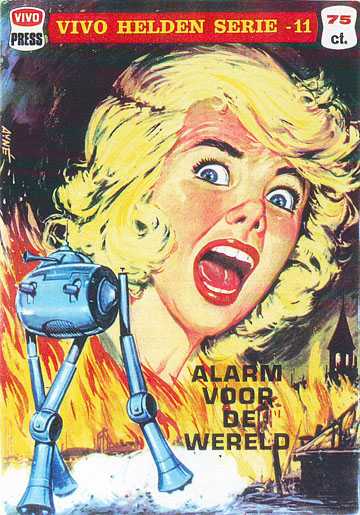
I've illustrated this entry with some of the more baffling War of the Worlds covers my students examined in class. These scans are courtesy Dr. Zeus's excellent The War of the Worlds Book Cover Collection.

15 August 2013

Review: Cousin Phillis and Other Stories by Elizabeth Gaskell

Trade paperback, 267 pages
Published 2010 (contents: 1850-64)
Acquired January 2012
Read November 2012
Cousin Phillis and Other Stories
by Elizabeth Gaskell

Five short stories/novellas by Elizabeth Gaskell, my first venture into her non-novelistic work. Pretty typical stuff for Gaskell: a lot of industrial towns, lone women, nostalgia, &c. Like a lot of famous Victorian writers, I don't think she's quite at home in the short story format; the one that works the best here is the longest one, the eponymous "Cousin Phillis," about an engineer's problematic romance.

14 June 2012

Victorian Industry: Return to Milton-Northern

Trade paperback, 480 pages
Published 1996 (content: 1854-55)
Acquired January 2009

Previously read February 2009
Reread April 2012
North and South
by Elizabeth Gaskell

Every time I read an Elizabeth Gaskell novel, I fall in love with its protagonist, and declare that she is the best protagonist in all Gaskell.  So, as I read several Gaskell novels in succession this spring, Mary Barton was quickly dethroned by Molly Gibson, who was in turn supplanted by Margaret Hale.

What I love about Margaret (and thus North and South) is how Gaskell shows that inaction is actually an incredibly difficult action to perform.  Margaret is often put into situations where she must not say or do anything, and yet she wants to so much.  Us enlightened twenty-first century folks are quick to criticized the Victorian concept of the "angel in house" because women can do more things than manage a kitchen, but Gaskell takes a different tack here, showing how awful and unfair it is to put someone into the position of being the emotional support for an entire family.  Yet Margaret bears it with as little complaint as possible, managing to be successful in most cases.  It's hard work, but she manages to do it, and we love her for it.

I find that I enjoy Gaskell's implicit social commentary.  Rarely does any Gaskell character come out and say something like, "I think the strictures against female action are wrong," but instead she has a series of awful complications ensue from those strictures.  When you sit down and think about it, you realize that if women were allowed to express themselves more readily, much of this novel would never have happened.  (Good for the characters, I suppose, even if it is bad for me.)  Margaret may be in an unenviable position, but we're never tempted to dismiss her as whiny or lazy thanks to the way Gaskell sets it up.  We're also kept well aware that there are worse positions in life to be in than Margaret's.

I also have to say that this is without a doubt the sexiest of Gaskell's novels.  Margaret's arms-- oh my!  And let us not forget that delicious silence...

13 June 2012

Victorian Memory: Return to Cranford

For my classes last year, there were three Victorian novels I skipped because I'd read them before, but as always, I've finally gone and read them anyway, just for fun instead of for notetaking...

Trade paperback, 213 pages
Published 2008 (content: 1851-53)
Acquired and read January 2009

Reread June 2012
Cranford
by Elizabeth Gaskell

I first read Cranford over three years ago now, and in the intervening time, I've seen about half of the TV show and thought about a lot of the novel (Dr. Thomas Recchio, author of Elizabeth Gaskell's Cranford: A Publishing History, is my dissertation advisor).  When I went into it, having since read North and South (twice), Mary Barton (twice), and Wives and Daughters, I was expecting/remembering a light piece of fluff that wouldn't be as good as those more serious novels.

I see that in my original review, I commented on the novel's made-up-as-it-went-along nature (indeed, it wasn't supposed to be a novel at all when it started), but it was much more striking this time through.   The first two chapters form a self-contained story about the coming of Captain Brown to the town of Cranford, where "all the holders of houses, above a certain rent, are women" (5).  He runs afoul of the genteel women, especially the Jenkyns sisters, Miss Deborah and Miss Matty.  Captain Brown dies, then one of his daughters, making for a depressing tale of female community in the face of hardship.  At the end of the second chapter, we learn in passing that Miss Deborah too has died by the writing of the story.

Then, the third and fourth chapters form another self-contained story of their own, about Miss Matty and a long ago love she let slip through her fingers coming back, but still not happening.  And then it ends with him dying, too, giving us four character deaths in the first four chapters, and two stories that aren't altogether cheerful.

In the midst of all this, sadness, though, are of lot of humorous details about how the ladies of Cranford live, and it must have been this that readers wanted more of, because chapters 5-10 have much more of this.  Not that there's no sadness, because there's definitely some, but the emphasis flips.  It makes for an odd structure: had Gaskell planned it as a novel from the beginning, I would imagine we'd start with the fluffy stuff about what to call people with titles and possible foreigners and the panic over the alleged robberies, and after we'd gained some connection to the characters, it would be time for the heavy emotional stuff.  As it is, it feels very odd.

I think that it's around chapter 11 where Gaskell decided she was writing a novel, because that's where we get out first clues about the potential return of the Jenkyns's brother, Peter.  More than that, though, we get what is surely one of the saddest and most moving passages in literature, where Miss Matty recounts how she and her sister used to plan for their futures, and Miss Matty always wanted to have children, and now they don't even express interest in her, and she dreams sometimes that she has one!  How depressing is that!

From there to the end (chapter 16), we get an abbreviated novel about the financial crisis that threatens to ruin Miss Matty's life and how everyone comes together to deal with it; just as the part where she tells of her lost dreams is so depressing, the parts where the community bands together to help her are so triumphant, feel-good in a way that is actually earned by the text.  There's a lot of emotional power in Miss Matty helping out the man with the bad bank certificates, and in her creation of a tea shop, and in the events of the last two chapters. (I'll try to hold something back, spoiler-wise.)

"We all love Miss Matty, and I somehow think we are all of us better when she is near us."  From its quick, depressing beginning, to its humorous middle, to its quite touching ending, this "accidental novel" turns out to be better than I remembered and expected, and I'm now sorry I consigned it to a second tier of Gaskell's works.

04 April 2012

Victorian Controversies, 1864-66: Rationality

Trade paperback, 679 pages
Published 2003 (originally 1864-66)
Acquired January 2012

Read March 2012
Wives and Daughters
by Elizabeth Gaskell

Wives and Daughters is surely unique among Victorian novels featuring scientists, in that the scientist turns out to be an excellent romantic choice. (I'm actually working on verifying this.) And it's because he's a scientist that he's an excellent romantic choice.  What woman wouldn't want to marry Roger Hamley?  His scientific powers of perception carry straight over into his personal life, where he knows what you're thinking and what you're worried about and how to take care of it.  Of course, he can't tell that you are the one he is meant to be in love with and not your flashy stepsister, but I suppose we can't have everything.  

I was struck by the contrast between the two scientific characters, Roger and Mr. Gibson, and Mrs. Gibson.  Mrs. Gibson is no scientist, just a woman, but her self-interest is far stronger than either of theirs-- as is her rationality.  She does things not because they are morally right, but because they will help her, or because she is socially obligated to.  Mr. Gibson, a surgeon, spends his time with dying patients, but she criticizes him, pointing out that he doesn't help them at all, it just makes the family feel better.  "Rational self-interest," as we might call this attitude, is then not aligned with scientists, but with people who are not scientists: a scientist's perception of others is too acute for him to behave this way.  Similarly, the poet Osborne Hamley is constantly described as "sensitive," and normally we'd expect an author to like a poet more than a scientist, but Osborne is sensitive to no one other than himself.

Wives and Daughters is a cute romance, though by no means is it little; it's Gaskell's longest book, and she died before finishing it!  Had she finished it, I am confident it would be her best book, filled with a level of psychological insight that only George Eliot exceeded her at, but also plenty of charm and humor.  The book's opening chapter, where young Molly Gibson spends a fairy-tale night at "the Towers," is probably the best bit, but it is all good.  Sometimes wishes Molly might do a bit more, but she is as well-realized internally as any of Gaskell's uniformly excellent heroines.

01 February 2012

Victorian Controversies, 1848: Industrialization

My "Victorian Controversies" seminar is over, but there's still books to read, both ones from that class that I never got around to, as well as ones from my next Victorian class...

Trade paperback, 649 pages
Published 2008 (originally 1848)
Acquired August 2009
Previously read September 2009 

Reread January 2012
Mary Barton
by Elizabeth Gaskell

On rereading Mary Barton, I was struck by its similarities to some of Dickens's work, especially Oliver Twist and Hard Times.  Like both of those novels, Mary Barton seeks to dramatize the lives of the poor so that the middle-class reader will have some sympathy-- sympathy seemingly being the key to solving this social problem.  But for all that Dickens is Dickens, Gaskell's work in this regard is clearly superior.  Dickens's characters are typically caricatures, either negative or positive.  It's impossible to feel any sympathy for Oliver because he's obnoxiously virtuous and completely devoid of personality.  I can't even remember the names of any of the characters in Hard Times.  But Gaskell draws a number of sharp portraits here in the factory town of Victorian Manchester, on both sides of the class divide.  We spend the most time with John and Mary Barton, of course, but everyone is developed, and they are developed in ways that show how they respond to their social circumstances.  Mary Barton is unarguably a "social problem" novel, but it works without that framework: it's also a novel about a group of people responding to, well, hard times.

Related to this is that I think the novel's plot is more firmly integrated into its project than in Dickens's works.  Oliver Twist is ostensibly about the perils of being poor, but there's rather a lot of faffing about with inheritance or something.  Mary Barton might take a turn about halfway through to be about a murder, but Gaskell makes this a natural extension of the first half of the novel's depiction of poverty.  It helps, too, that Mary's journey to the docks and beyond is completely gripping, Gaskell ably exploiting the way that a girl of Mary's background would be vulnerable in such circumstances.  Her emotional journey is also very neat, as she moves from unable to speak her feelings to making the kind of intimate communications that marriage requires, with the court case forcing her into the open for once-- and for the best.

Lastly, I was struck this time through by how many people die in this book.  Especially in the first half, it feels like a never-ending stream.  Despite this, Gaskell somehow manages to keep the book from descending into Thomas Hardyism.  Thankfully.  I mean, I like Thomas Hardy, but I don't need that all the time.

(I was interested to note on reading the preface, that Professor Recchio mentions a stage version of Mary Barton written by Rona Munro, who of course previously penned the last-ever Doctor Who serial, Survival.  It's nice to know that there are people out there who have exactly the overlapping interests that I do.)