Showing posts with label creator: jacqueline rayner. Show all posts

02 December 2024

Monstrous Beauty (From Stockbridge to Beyond Segonus: A Doctor Who Magazine Comics Marathon, Part 55)

Monstrous Beauty: Collected comic strips from the pages of Doctor Who Magazine
by Dan Abnett, Colin Andrew, Martin Geraghty, Scott Gray, Russ Leach, Paul Peart, Jacqueline Rayner, Gareth Roberts, John Ross, and Brian Williamson

Collection published: 2024
Contents originally published: 1991-2022
Acquired and read: November 2024

Like the final Peter Capaldi volume, the final Jodie Whittaker one is a weird catch-all one that has the "Collected Multi-Doctor Comic Strips" branding, with its Doctor's last two stories combined with a miscellany of material from previous Doctors: the first, third, fourth, seventh, and ninth, plus Dr. Who. As I usually do, I read the book's stories in original publication order, not internal order.

This book is a landmark volume, though! In plugging in the two gaps of uncollected strips (one during The White Dragon, the other between The White Dragon and Liberation of the Daleks), it means that every Doctor Who Magazine strip from issue #1 to issue #597, from 1979 to 2023, has been collected! In a mere thirty-four volumes! What an achievement—but more on that in a future post.

The Man in the Ion Mask, from Doctor Who Magazine Winter Special 1991
script by Dan Abnett, art by Brian Williamson, letters by Helen Stone

This is a slight-but-charming story of the Doctor visiting the Master in prison after the events of The Dæmons; the Master claims to have reformed, but the Doctor of course is wary, and rightly so. There's not much action (in a good way), and artist Brian Williamson is quite good at handling the dialogue and characterization the story requires.
Are You Listening? / Younger & Wiser, from Doctor Who Magazine Summer Special 1994
written by Warwick Gray, art by Colin Andrew, lettered by Amer Anwar
A linked first Doctor story and seventh Doctor story; the first visits a mysterious city with Vicki and Steven and runs off, while the seventh returns with Benny, finally understanding what's going on. They have their moments, but there's not a lot of conflict in Younger & Wiser, which is basically the Doctor and Benny just chatting.
from Doctor Who Magazine Winter Special 1994
Plastic Millennium / The Seventh Segment, from Doctor Who Magazine Winter Special 1994 & Summer Special 1995
stories by Gareth Roberts, art by Martin Geraghty and Paul Peart, letters by Elitta Fell
The first of these is fun, a stylish Martin Geraghty–drawn story about the seventh Doctor and Mel (in her DWM debut, I think) taking down some Autons. It's not very complicated, but the art really sells it. The second is also carried by the art—or rather, the art is the best part, because I found this noir pastiche featuring the fourth Doctor and the first Romana utterly impenetrable.
from Doctor Who Magazine #557
Monstrous Beauty, from Doctor Who Magazine #556-58 (Nov.-Winter 2020)
story by Scott Gray, artwork by John Ross, colouring by James Offredi, lettering by Roger Langridge
This Time Lord Victorious tie-in brings back the ninth Doctor and Rose, and plunges them into the "Dark Times" of the ancient Time Lords' war against the vampires (see State of Decay). Scott Gray is usually good value, and John Ross a strong artist, for sure, but something about this didn't sing. I think the stakes are ultimately too abstract. There's not a lot of sympathetic characters here, so ultimately it's kind of hard to care about any of this. Looks great, though (Ross does very well by Christopher Eccleston; actually, so does Gray), and I appreciated the very obscure (but footnoted!) callback to Tooth and Claw from the End Game collection. The DWM universe gets its tentacles everywhere!
Dr. Who & the Mechonoids, from Doctor Who Magazine #578 (July 2022)
story by Jacqueline Rayner, art by Russ Leach, colour by Mike Summers, lettering by Roger Langridge
Maybe this would have been funny if I had more than a dim memory of one Cushing film, or if I got the reference to the actor "cast" as the one-off male companion here. But I didn't and it wasn't.
from Doctor Who Magazine #579
Fear of the Future / The Everlasting Summer, from Doctor Who Magazine #579-83 (Summer-Nov. 2022)
story by Jacqueline Rayner, art by Russ Leach, colour by Mike Summers, lettering by Roger Langridge
Unfortunately, I don't think Jac Rayner (or, perhaps, her editors) ever got to grips with the format of the six-page DWM strip, especially with the reduced panel count. The first story here is too slight even at six pages: Dan sees vaguely bad things, the Doctor realizes why, the end. The second story, on the other hand, like Rayner's last attempt at a thirteenth Doctor epic (Hydra's Gate), attempts to squeeze in too much and thus is basically impossible to follow. Which is a shame, because all the thematic ideas she gives in the backmatter sound great... but what's on the page is a confusing jumble of ideas, too many of them. Russ Leach will never go down as one of the DWM greats, with a strong tendency toward confusing panel transitions and weak storytelling skills. I get that COVID was at fault in very real ways, but #570-83 is surely the weakest run of the strip in the history of the mag since... well, I was going to say the early McCoy strips, but skimming back over my reviews, those were at least inconsistently enjoyable, whereas these are consistently unenjoyable. Maybe since the mid–Colin Baker run (#100-19)? But even those had John Ridgway!
Stray Observations:
  • Alas, the original idea Scott Gray recounts in the notes for Are You Listening? and Younger & Wiser, that they'd be told in different orders from the perspective of the Doctor and the alien city Xenith, is better than what we got. Similarly, it's hard to read the notes on Monstrous Beauty and not wish that Scott Gray had got to write the eighth Doctor and Destrii story he'd originally pitched.
  • Reading Plastic Millennium only a day or two after Business as Usual, I couldn't help but thinking the Auton and plastic factory here ought to have been the same one as in that story.
  • I've charted the DWM strip's influence on Russell T Davies in the past; the line from Plastic Millennium to "Rose" seems pretty obvious!

This post is the fifty-fifth in a series about the Doctor Who Magazine comic strip and Marvel UK. The next installment covers statistics about the history of the strip. Previous installments are listed below:

15 May 2024

The White Dragon (From Stockbridge to Beyond Segonus: A Doctor Who Magazine Comics Marathon, Part 52)

The White Dragon: Collected comic strips from the pages of Doctor Who Magazine
by Martin Geraghty, Scott Gray, Russ Leach, Jacqueline Rayner, and David A Roach

Collection published: 2024
Contents originally published: 2020-22
Acquired and read: March 2024

It's finally here... but one can't help being disappointed. While The Mistress of Chaos gave us eighteen months' worth of comics, which came out to eighteen strips, The White Dragon is over two years of comics... yet only fifteen strips. The factors involved are no one's fault, of course, but it's disappointing that Jodie Whittaker was the incumbent Doctor for four years yet received the smallest run of strips since Eccleston; it's also disappointing that these volumes have been getting progressively slimmer since The Crimson Hand and that this one couldn't extend to collecting all of Jodie's run.

I have read all of this before, but distribution of DWM in America was particularly erratic during this era, and I read many of these stories stretched out over months or even out of sequence; I think I got one of the later issues of Hydra's Gate before the first. In particular, I was pleased to get to read The White Dragon in one go.

The Piggybackers, from Doctor Who Magazine #549-552 (Apr.-July 2020)
story by Scott Gray, pencil art by Martin Geraghty, inks by David A Roach, colours by James Offredi, lettering by Roger Langridge
The Doctor and the fam land in America during the Cuban Missile Crisis; aliens are of course afoot. You can always count on Scott Gray for a decently put together story with interesting visuals and nice moments, and marry him to Martin Geraghty, and of course it's a recipe for success. I enjoyed this story, particularly the titular piggybackers and how they looked. Geraghty does some great work throughout (right from the first page, with the "Duck and Cover" riff), but I did feel like it didn't totally come together; there's an attempt to subvert expectations that kind of left it fizzling out at the end when it ought to have been exploding. The climax is over very quickly. I do like how careful Gray is to give everyone something to do; not to spend all my time ragging on the show, but it was rarely so deliberate during this era.
from Doctor Who Magazine #560
The White Dragon, from Doctor Who Magazine #559-62 (Jan.-Apr. 2021)
story & art by Scott Gray, colour art by James Offredi, lettering by Roger Langridge
Scott Gray bows out of DWM with the third story that he both wrote and illustrated; I enjoyed both of his previous goes, but this is the best of them, and it's a good way to bow out. No big torturous epic involving the history of Gallifrey; just a sharply done celebrity historical in an interesting location with a cool guest star and a bunch of nice moments for Ryan. (Ryan spent a lot of The Piggybackers mute, so it's good to see him get a meaty part here to balance things out.) This to me is pure DWM, one of those stories I find it hard to comment on because it doesn't do anything flashy but it does everything right. A story of kung fu is perfect for Gray's cartoony dynamism, and this story has a lot of great visuals and good beats. If the tv show ever did a Bruce Lee episode, we would be lucky if it was half this good.
from Doctor Who Magazine #571
The Forest Bride / It's Behind You!, from Doctor Who Magazine #570-72 (Dec. 2021–Jan. 2022)
story by Jacqueline Rayner, art by Russ Leach, coloring by Pippa Bowland and Mike Summers, lettering by Roger Langridge
I get that the strip is working under constraints here. As Rayner spells out in the extras, there had to be fewer pages, fewer panels per page, and even fewer words per panel! (The last one surprised me; does that let them pay Roger Langridge less?) But whatever the reason, I found these weird, unenjoyable stories. The writing clearly struggles with the space alloted; in The Forest Bride, the Doctor knows all about someone's daughter, but going over and back over the strip, I can't figure out where she actually learned this. The conclusion is too cursory and quick to work. Similarly, I didn't really get what It's Behind You! was going for; there's just a bunch of scrambling about and then the story's over. Even though it's a premise clearly tailor-made for jokes about pantomime, there are almost no jokes about pantomime, just fairly pointless action. And if you've heard Oh No It Isn't!, you'll know this isn't because Jac Rayner doesn't know how to makes jokes about panto.

I don't think Russ Leach's art is quite supporting what Rayner's writing is doing. In the notes, Rayner talks about the creepy vibe she wanted for The Forest Bride, but I didn't think the art gave it that, especially the coloring, which is all too bright and cheerful. (On part two, the coloring is credited to Pippa Bowland, but there is no credited colorist for part one.)
from Doctor Who Magazine #575
Hydra's Gate, from Doctor Who Magazine #574-77 (Mar.-June 2022)
story by Jacqueline Rayner, art by Russ Leach, colour by Mike Summers, lettering by Roger Langridge
Unfortunately, giving Rayner and Leach a bigger canvas doesn't result in better work. This four-part story is a bit of a jumpy struggle; I think they're trying to make it all work with economic storytelling, but too often it's just confusing. "Yaz has found the Legionary!" Hang on, was she looking for one? Since when? It's not just the writing, but also the art; I had to reread a sequence on the last page of part one several times to figure who was speaking and where a kid had come from, and in part four there's a bit where a robot loses its head but the Doctor catches it in a net I kept going back over to puzzle out. Again, things seemed terribly underexplained, and the climax rushed, introducing a new jeopardy only to resolve it instantly more than once. Reading Rayner's notes in the back, I think there's a good story here, but it probably needed eight pages per installment and a lot more panels per page to tell it.
Stray Observations:
  • Liberation of the Daleks didn't say "Doctor Who Magazine Graphic Novel" in its indicia, and that this is #32 to The Age of Chaos's #31 indicates Liberation doesn't count. But in this era of triple dipping (the Abslom Daak strips have appeared in Nemesis of the Daleks, Daleks: The Ultimate Comic Strip Collection, and soon Return of the Daleks), I can't help but worry this means someday we're going to get a "Doctor Who Magazine Graphic Novel" that does have Liberation in it...
  • For some reason, part two of The Piggybackers is six pages instead of the usual eight. I don't think we can blame COVID for this, based on the dates.
  • We'll never know (well, hopefully we will someday, but I imagine not in the short term) what plans Gray might have had had he stayed on the strip: who was Mother G? Rereading The Piggybackers, I feel like he was setting up some stuff here too. The US's Brideport is compared to the UK's Stockbridge, and the story ends with the Doctor making a comment about how Abner Endicott was going to keep watch over the town, which felt unusually significant. Was this all going somewhere? Anyway, my bonkers theory is that Mother G was Mother Goose!
  • If you read the extras hoping for some insight into Gray's departure from the strip, you won't find it here. But I suppose we've got one more graphic novel with his content forthcoming, whenever Monstrous Beauty ends up being reprinted, so he's not done yet.
  • The departure of Ryan and Graham (between The White Dragon and The Forest Bride) gives them 26 strips as main companions, which ties them with Peri and Fey for eighth-longest run. (Yaz's run, which will top out at forty when she finally leaves after The Everlasting Summer, puts her in third, behind only Izzy and Clara!)
  • Russ Leach's comments on Hydra's Gate actually cover his entire run on the strip, so I imagine we won't be hearing from him in future volumes.
  • Martin Geraghty mentions in his notes that it's January 2024 as he writes them, which seems like an astonishingly quick turnaround for a book that was shipped by the end of February!
  • This volume gives almost every contributor cover credit, even the inker and two colourists. Interestingly, it does so in alphabetical order, as opposed to the usual precedence/prominence technique used on previous volumes. This makes it one of few DWM graphic novels to give first billing to a non-writer on the cover, and the first to do so in a very long time. (The others, fact fans: The Iron Legion, Dragon's Claw, The Tides of Time [all Dave Gibbons], Voyager, The World Shapers [both John Ridgway], and End Game [Martin Geraghty]).
  • I didn't notice until I shelved it, but even though this collection doesn't have the cover design the graphic novels have used since 2012, it does (unlike Liberation) maintain the spine design.

This post is the fifty-second in a series about the Doctor Who Magazine comic strip and Marvel UK. The next installment covers The Return of the Daleks. Previous installments are listed below:

22 March 2023

The Highgate Horror (From Stockbridge to Segonus: A Doctor Who Magazine Comics Marathon, Part 39)

The Highgate Horror: Collected Comic Strips from the pages of Doctor Who Magazine
by Mark Wright, David A Roach, Mike Collins, Jacqueline Rayner, Martin Geraghty, et al.

Collection published: 2016
Contents originally published: 2015-16
Acquired: January 2017
Read: December 2022

The strip continues its use of rotating creative teams throughout the twelfth Doctor and Clara era. Since The Crimson Hand, the strip has always tried to do an ongoing strand when the show is off the air for protracted periods of time, but it is less consistent about if it tries to do this when the show is on. Yes, ongoing stories for the Eleven/Amy and Eleven/Clara runs, no ongoing stories for the Twelve/Clara run. I wonder what determines this? Well, presumably Scott Gray knows how to make the magic...

Space Invaders! / Spirits of the Jungle, from Doctor Who Magazine #484 & 489-91 (Apr., Sept.-Nov. 2015)
stories by Mark Wright and Jonathan Morris, art by Mike Collins & David A Roach and John Ross, colour by James Offredi, lettering by Roger Langridge
These two stories perhaps exemplify the fault with the rotating creative team approach. This isn't to say that the stories are awful or anything—I feel a bit bad picking on them, to be honest—but they are also not up to much. Space Invaders! has a fun premise of the Doctor and Clara being in a gigantic space storage facility, but I don't feel like it does anything fun with it, as it basically becomes a fight between them and a giant monster. Similarly, Spirits of the Jungle is crammed with ideas and action, but the ideas are mostly just there; the story doesn't really do anything of note with the idea of a living jungle, or Clara encountering a Danny Pink simulation, or what have you. The fakeout ending is all too obvious: this is an area where the regular page length of a DWM strips lets the twist down. Clearly the story isn't going to wrap up on page three! It would be more effective to trick the reader into thinking it's a two-parter, and then having a cliffhanger at the end of part two.
from Doctor Who Magazine #492
The Highgate Horror, from Doctor Who Magazine #492-93 (Dec. 2015–Winter 2015/16)
story by Mark Wright, art by David A Roach with Mike Collins, colour by James Offredi, lettering by Roger Langridge
This is a solid enough story. Lots of atmosphere as the Doctor and Clara battle vampires in a spooky cemetery, aided by future companion Jess. But the ending—as I feel like is often the case with these two-part stories by inexperienced comics writers—seems to come out of nowhere. Like, it's ten pages of solid horror, and then the Doctor's like, "oh this previously unmentioned time thingummy can fix all out problems." But David A Roach really nails it, of course.
The Dragon Lord, from Doctor Who Magazine #494-95 (Jan.-Feb. 2016)
story by Steve Lyons, art & colour by Adrian Salmon, lettering by Roger Langridge
"Adrian Salmon, draw dragons." Well, of course it looks great. But to be honest I found the story a bit of a muddle, and got lost, especially as the Doctor seemed very angry for reasons that I never really grasped.
from Doctor Who Magazine #496
Theatre of the Mind, from Doctor Who Magazine #496 (Mar. 2016)
master of ceremonies: Roger Langridge, lighting by James Offredi
Roger Langridge has been a recurring artist on DWM since Happy Deathday in 1998, and the main letterer of the strip since TV Action! in 1999. But Langridge is also an accomplished writer of comics, something I know from his short, lamented, but very good 2010-11 run on Thor. Here for the first time in seventeen years at DWM, he writes as well as draws... and the the result is excellent, the first strong strip in what was shaping up to be a bit of a lackluster volume. The Doctor meets old friend Harry Houdini... and of course battles aliens. Langridge has a great grasp of character voice, some good gags and imagery, and real economy of storytelling. Everything here shines in both writing and art. His caricatured style is good for capturing Peter Capaldi, of course, but I was also surprised to realize that he probably does the best Jenna Coleman of all the DWM artists?
Witch Hunt, from Doctor Who Magazine #497-99 (Apr.-June 2016)
story by Jacqueline Rayner, pencil art by Martin Geraghty, inks by David A Roach, colours by James Offredi, lettering by Roger Langridge
This story I had a dim memory of reading as it came out (which was not true for the other stories here, most of which I had completely forgotten)... and I was surprised to find Clara's last DWM adventure an absolute delight. A Halloween-themed fundraiser at Coal Hill School goes horribly wrong when Clara—dressed as a witch—is sent back to the era of the witch hunts and hunted by the real Witchfinder General! It looks great of course (Clara in a simple black witch outfit is perfect) and is packed with lots of great moments: "curses" start working... but the Doctor is able to use that to his advantage by picking up a penny and giving himself luck. Clara in prison is a tour-de-force of illustration from Martin Geraghty and David Roach. There's lots of whimsy here mixed with real peril, especially when the Doctor must face down Miss Chief, a seemingly omnipotent entity who just really really gets on his nerves, the kind of enemy that Peter Capaldi's Doctor sparkles facing down. Lots of good gags, strong character moments. Jac Rayner is rapidly emerging as a new talent on the DWM strip.
from Doctor Who Magazine #500
The Stockbridge Showdown, from Doctor Who Magazine #500 (July 2016)
story by Scott Gray; art by Dave Gibbons, Roger Langridge, Adrian Salmon, Dan McDaid, John Ross, and John Ridgway; pencil art by Mike Collins and Martin Geraghty; art & inks by David A Roach; colours by James Offredi; lettering by Dave Gibbons and Roger Langridge
Five hundred issues of DWM... commemorated by a twenty-page strip featuring Sharon, Max Edison, Izzy, Frobisher, Destrii, Majenta Pryce, (kind of) Chiyoko, Dogbolter, and Hob! With art by all the most prominent current members of the DWM art team, but also bringing back Dave Gibbons and John Ridgway! Like, what can you say against or even for such a celebratory jam? It also gets in references to DWM's two dead companions, Sir Justin and Gus... and the Gus moment is the emotional heart of the strip. "No one ever remembers Gus. Except me." This is what I think elevates it, not just using the strip's history as a source of continuity, but delivering a surprise character moment. "You see, I'm not on your list, Dogbolter... you were on mine." Finally, 413 issues later, the Doctor brings Dogbolter to justice.
from Doctor Who Magazine #500
It's got lots of nice moments beyond that. It's great to see a sure-of-herself Izzy, and the bit where she points out that of course she's reconciled with her parents is great; it's nice to see her and Destrii getting along; it's good to see Destrii at all (though we don't know what she's been up to) and Majenta Pryce using her powers for good. Max gets his moment in the spotlight, and we even get to visit DWM's other mainstay of a setting, Cornucopia. The way each artist is assigned their own two-page spread is very well done; we finally get to see Dan McDaid draw Majenta again, for example.

A well-earned and well-done celebration of five hundred issues. I mean, c'mon... they got Dave Gibbons to come back!
Stray Observations:
  • I think I'm getting good at pegging when David Roach is collaborating with Mike Collins and when he's not. Their styles are very sympathetic, but there's some slight differences when Roach isn't inking over Collins's pencils.
  • from Doctor Who Magazine #497
  • At thirty-eight issues, Clara has the third-longest run of any comic strip companion, behind only Izzy and Frobisher, and just edging out Amy. Not sure I would have guessed she had the longest run of any tv companion! But it kind of makes sense; there were some big hiatuses in Clara's tv tenure. (Note that this doesn't mean she appeared in all thirty-eight issues of the era, just that she was the companion for that period.)
  • Scott Gray totally ignores the fact that Dogbolter was seemingly killed off in Death's Head #8. Look, I know, but it was written and illustrated by Dogbolter's creator! And he ignores that Hob became a vengeful killing machine in The Incomplete Death's Head #6-12. I can't imagine why!
  • Maybe it would have been overegging the pudding, but I could have done with a couple more cameos at the last-page celebration of Max's birthday on Cornucopia. C'mon, throw in Horatio Lynk and Amy Johnson!
  • Okay, it feels a bit churlish to complain about this, but whenever the strip celebrates its own history, it feels to me like what it celebrates is not the entirety of that history, but just 1979-87 and 1996-present. Sure, 1987-95 was not the best era of the strip, but it often seems like Ground Zero didn't just erase the New Adventures strips, but everything involving Sylvester McCoy's Doctor at all. I'm not saying that Olla the Heat Vampire needed to pop up here... but, I dunno, give us a Muriel Frost or House on Allen Road appearance? The strip continued to introduce original characters and concepts during that run, and surely someone out there is nostalgic for them! And it's not like this period is one Scott Gray is unfamiliar with... he debuted on DWM then!
  • from Doctor Who Magazine #500
  • Say it again. Dave Gibbons! John Ridgway! Wow! They both have still got it.
  • "JUST A TRACER" WATCH: Second billing! Of course, he's not "just a tracer" in this one...

This post is the thirty-ninth in a series about the Doctor Who Magazine comic strip and Marvel UK. The next installment covers Doorway to Hell. Previous installments are listed below:

  1. The Iron Legion
  2. Dragon's Claw 
  3. The Transformers Classics UK, Volume One
  4. The Tides of Time
  5. The Transformers Classics UK, Volume Two
  6. Voyager
  7. The Transformers Classics UK, Volume Three
  8. The World Shapers
  9. The Transformers Classics UK, Volume Four
  10. The Age of Chaos
  11. The Transformers Classics UK, Volume Five
  12. A Cold Day in Hell!
  13. Death's Head: Freelance Peacekeeping Agent (part 1)
  14. Nemesis of the Daleks
  15. Death's Head: Freelance Peacekeeping Agent (part 2)
  16. The Good Soldier
  17. The Incomplete Death's Head
  18. Evening's Empire
  19. The Daleks
  20. Emperor of the Daleks
  21. The Sleeze Brothers File
  22. The Age of Chaos
  23. Land of the Blind
  24. Ground Zero
  25. End Game
  26. The Glorious Dead
  27. Oblivion
  28. Transformers: Time Wars and Other Stories
  29. The Flood
  30. The Cruel Sea 
  31. The Betrothal of Sontar
  32. The Widow's Curse
  33. The Crimson Hand
  34. The Child of Time
  35. The Chains of Olympus
  36. Hunters of the Burning Stone
  37. The Blood of Azrael
  38. The Eye of Torment

08 March 2023

The Eye of Torment (From Stockbridge to Segonus: A Doctor Who Magazine Comics Marathon, Part 38)

The Eye of Torment: Collected Comic Strips from the pages of Doctor Who Magazine
by Scott Gray, Martin Geraghty, Mike Collins, Jacqueline Rayner, and David A Roach

Collection published: 2015
Contents originally published: 2014-15
Acquired: December 2015
Read: December 2022

This is an era of the strip I actually remember fairly well from reading it in the magazine as it originally came out. Three of the four stories here I could have told you the premise of before cracking the book open, and the fourth (The Instruments of War) came back to me as soon as I got to the last page of Part One. I guess I was receiving and reading the magazine fairly regularly. We're into Peter Capaldi now, and as always the strip just keeps on trucking along; there's no attempt at anything like a story arc yet, just a series of individual stories as the new Doctor beds in. I will say that Capaldi's face seems a bit easier for the artists to capture than Matt Smith's was.

The Crystal Throne, from Doctor Who Magazine #475-76 (Aug.-Sept. 2014)
story by Scott Gray, layouts by Mike Collins, finished art by David A Roach, colour by James Offredi, lettering by Roger Langridge
In the gap between Matt Smith and Peter Capaldi on screen, the strip gave us this story featuring the so-called "Paternoster Gang." We've had a few Doctor-less main strips in our time (Darkness, Falling in #167, Conflict of Interests in #183, Unnatural Born Killers in #277, Character Assassin in #311, Me and My Shadow in #318, most recently Imaginary Enemies in #455), but this is the first time that one ever goes multiple installments, I believe. The Paternoster Gang does their thing in defeating a plot to replace the Queen with an insect Queen; shenanigans at the Crystal Palace are included. It's not high art, but it's good fun; Scott Gray of course has a good handle on the character voices, especially Strax. He manages to thread the needle of making Strax funny without making him dumb. I also appreciated the first-person narration from Madame Vastra.

Instead of pencils, Mike Collins supplies just layouts for David A Roach to ink over, and on some pages Roach does the layouts himself. (And he's not credited, but according to the backmatter, Scott Gray did the layouts on one page, too.) The story of how this one came together is perhaps more interesting than the actual story! I had a feeling photographs were traced for some of the Vastra images, and I was right, but all those scales sure would be pretty fiddly to draw!
from Doctor Who Magazine #480
The Eye of Torment, from Doctor Who Magazine #477-80 (Oct. 2014–Winter 2014/15)
story by Scott Gray, pencil art by Martin Geraghty, inks by David A Roach, colour by James Offredi, lettering by Roger Langridge
The twelfth Doctor makes his DWM debut in a very enjoyable story about a spaceship exploring the sun being attacked by creepy aliens. As is often the case with Gray/Geraghty/Roach stories it's not so much that the story does anything spectacularly innovative as that the story does everything spectacularly well. Great visuals (get a load of those panels of the sun, and there's an amazing one of the Doctor outside the ship in the final part), good dialogue especially for the Doctor, sharp guest characters, creepy aliens, fun wrinkles and complications, even the narration captions are perfect. The icing on the cake is that Scott Gray is always so good at characterization that he picks up on stuff only nascent in the show: the bit where Clara manipulates Rudy Zoom into going what could be his death is totally in keeping with where Clara goes in late series eight and series nine, but was just barely hinted at at this point in the show. Both writer and pencil artist express reservations about their capturing of Capaldi in the notes, but I didn't notice any issues at all.
from Doctor Who Magazine #483
The Instruments of War, from Doctor Who Magazine #481-83 (Jan.-Mar. 2015)
writing and art by Mike Collins, inks by David A Roach, colours by James Offredi, lettering by Roger Langridge
The Doctor and Clara team up with Rommel (!) and the Sontarans (!!) to stop the Rutans from destroying Earth with a Sontaran weapon; Mike Collins writes and draws, as he sometimes does. Not as good as last time he did this (The Futurists, also about fascists, strangely), but good stuff. Captures the voice of the Sontarans well. Kirby-style technological sublime on the North African front is a great visual juxtaposition. The musical motif (so to speak) is a good one.
Blood and Ice, from Doctor Who Magazine #485-88 (May-Aug. 2015)
story by Jacqueline Rayner, pencil art by Martin Geraghty, inks by David A Roach, colours by James Offredi, lettering by Roger Langridge
One thing I have found interesting about the Moffat era of the strip is how it picks up loose character threads from the show; this is something the strip had not previously really done when the show is on. That trend is continued here, with a story that actually looks at the idea of Clara's splinters, which was a mystery in series seven, but promptly forgotten about once it had been explained. What was it like for there to be thousands of you born across time and space for the purpose of saving one man? Jacqueline Rayner finally lets us find out as Clara bumps into one of her splinters in Antarctica. It's all very well done in terms of art, story, and character. So well done, in fact, that one wishes Jenna Coleman could have played this on screen. On the page, it's obvious that Winnie is only pretending to betray the Doctor and Clara... on screen, I reckon Coleman could have made us believe it for a moment!
Stray Observations:
  • Way back when reading stories collected in The Flood graphic novel, I complained that both the Doctor and Destrii make racist comments that they don't actually get called out on, the effect of this being pretty uncomfortable. Haha... racism? That happened again in Crystal Throne, where Strax makes fun of a Sikh's headgear. But in 2014 this kind of thing is seen differently than in 2004-5, and DWM got a letter complaining about it, and the offending dialogue was changed for the graphic novel.
  • The backmatter is always such good value. I enjoyed Gray's comments on the decline of third-person captions in comics, and his exploration of how to introduce a new Doctor. When he read the debut scripts for David Tennant and Matt Smith before actually seeing them in the role, he could only hear the voices of their predecessors... not so with Capaldi! Geraghty says he didn't like how the aliens in Eye of Torment weren't colored at first, but he came around to it in the end.
  • Gray and Geraghty "cast" Lenny Henry as self-aggrandizing amoral tech mogul Rudy Zero; Gray bemoans that he hadn't been used in the show yet. Lenny Henry eventually did turn up on the show in Jodie Whittaker's era... as a self-aggrandizing amoral tech mogul!
  • Capaldi's Doctor doesn't appear until the very last page of Part One of The Eye of Torment, in a really great moment. I guess this was because of release date constraints (the issue came out just before "Deep Breath," and they didn't want twelve pages of the twelfth Doctor running around before he had had a real adventure on screen), but it works very well on its own terms as a way to debut a new Doctor in the strip. It would be a good surprise for our hypothetical reader who doesn't follow the show!
  • With The Eye of Torment, Scott Gray brings an end to an astounding 39-strip run as the writer of the comic, beating out Steve Parkhouse's previous record of 32.
  • No, the strip didn't skip issue #484. That was a single-part story that was a last-minute add when Blood and Ice ran late, and I guess these new collections must be thirteen issues at all costs, so it got bumped to the next collection.
  • from Doctor Who Magazine #486
  • Blood and Ice was designed to work as a strip exit for Clara, since no one involved knew if "Last Christmas" was going to be her exit or not.
  • Revisiting the events of The Tenth Planet with Peter Capaldi's Doctor? As always, DWM beats the tv show to it.
  • In The Eye of Torment, the Doctor and Clara go to a frozen spaceship; in Instruments of War, they go to a frost fair; in Blood and Ice, they go to Antarctica. It's a very cold collection! Good December reading, I guess.
  • "JUST A TRACER" WATCH: Our man David A Roach gets cover credit yet again! Of course, this is again a volume where he is more than a "mere inker."

This post is the thirty-eighth in a series about the Doctor Who Magazine comic strip and Marvel UK. The next installment covers The Highgate Horror. Previous installments are listed below:

  1. The Iron Legion
  2. Dragon's Claw 
  3. The Transformers Classics UK, Volume One
  4. The Tides of Time
  5. The Transformers Classics UK, Volume Two
  6. Voyager
  7. The Transformers Classics UK, Volume Three
  8. The World Shapers
  9. The Transformers Classics UK, Volume Four
  10. The Age of Chaos
  11. The Transformers Classics UK, Volume Five
  12. A Cold Day in Hell!
  13. Death's Head: Freelance Peacekeeping Agent (part 1)
  14. Nemesis of the Daleks
  15. Death's Head: Freelance Peacekeeping Agent (part 2)
  16. The Good Soldier
  17. The Incomplete Death's Head
  18. Evening's Empire
  19. The Daleks
  20. Emperor of the Daleks
  21. The Sleeze Brothers File
  22. The Age of Chaos
  23. Land of the Blind
  24. Ground Zero
  25. End Game
  26. The Glorious Dead
  27. Oblivion
  28. Transformers: Time Wars and Other Stories
  29. The Flood
  30. The Cruel Sea 
  31. The Betrothal of Sontar
  32. The Widow's Curse
  33. The Crimson Hand
  34. The Child of Time
  35. The Chains of Olympus
  36. Hunters of the Burning Stone
  37. The Blood of Azrael

29 December 2021

Review: Doctor Who: EarthWorld by Jacqueline Rayner

Originally published: 2001
Acquired: July 2021
Read: August 2021

Doctor Who: EarthWorld
by Jacqueline Rayner
 
This was a delight. EarthWorld is the first proper adventure for the new TARDIS team of the (amnesiac) Doctor, Fitz, and Anji following the trapped-on-Earth arc; Anji was introduced in the previous book, Escape Velocity (which I read back around the time it came out, in 2001), but this was her first trip in the TARDIS. I don't have much memory of Anji despite reading five novels featuring her back in the day, but she is great here. Rayner has an exceptional handle on her, much the same way she does Bernice Summerfield. She is real, funny, and inventive, and her internal monologue utterly convinces; much of the novel is told from her perspective, and the book works all the better for it. I liked the e-mails she writes her (dead) boyfriend sprinkled throughout the text; I liked her interactions with the three would-be rebels; I liked her solutions to the situations she ends up in. I have three more Eighth Doctor Adventures featuring Anji that I am slated to read in the coming year; I can only hope those writers measure up to Rayner.

At one point, I started to wonder if Fitz was a bit flanderized-- he seemed pretty pathetic. But I think Fitz actually kind of is pathetic, it's just that he's normally written by male authors who sympathize with his patheticness. And if he feels flanderized, well, that's because (as the novel delves into a bit) he was literally flanderized in the novel Interference. His existential crisis was well handled, and I liked his resolution at the novel's end.

The one weak point of characterization is the Doctor himself. I liked the slightly off-kilter Doctor we got in the Earth arc novels The Turing Test and Father Time, and here it seems that he knows a little too much about how he is "supposed" to act on an adventure considered it's his first one. But there is a neat moment at the end, where he does some stuff no other Doctor would do, and Rayner captures Paul McGann's performance as well.

All this, plus it's that rarest of things: a media tie-in with thematic depth! This is a story about memory, and the gap between what we remember and what actually was. The Doctor has lost him memories, Fitz is made up of memories, Anji struggles over her memories of Dave, the planet New Jupiter is in a war over to what extent their cultural memory of Earth should dominate them, the EarthWorld theme park is entirely made up of misremembered Earth history, the president of New Jupiter struggles with false memories he's invented. It all comes together quite nicely, without being ham-handed. Definitely one of the best EDAs, and a worthy choice for BBC Books's fiftieth anniversary reprint line.

I read an Eighth Doctor Adventure every three months. Next up in sequence: The Year of Intelligent Tigers

09 January 2018

Doctor Who at Christmas: Twelve Doctors of Christmas

Hardcover, 318 pages
Published 2016

Acquired and read December 2017
Doctor Who: Twelve Doctors of Christmas
by Jacqueline Rayner, Colin Brake, Richard Dungworth, Mike Tucker, Gary Russell, and Scott Handcock

This set of twelve Doctor Who Christmas tales, a worthy successor to the old Big Finish Christmas Short Trips collections, was my Doctor Who Christmas read for the season, though it slipped in a little late (I think I finished it up December 30th). With twelve Doctor and twelve days of Christmas, things lined up quite nicely.

The stories are an odd assortment, which is kind of always true of these Doctor Who Christmas anthologies. Some are genuinely Christmassy; others just happen to be set on Christmas, but are pretty much standard Doctor Who runarounds. The most Christmassy is definitely the first, Jacqueline Rayner's "All I Want for Christmas," where the first Doctor, Ian, Barbara, and Vicki end up in a perfect 1963 Christmas: it beautifully captures the wistfulness and nostalgia of Christmas, of a yearning for a time that's slipped away. Rayner has always demonstrated a sympathy for the first Doctor era, and Ian and Barbara are exceptionally written here. I also really enjoyed Rayner's other story, "The Christmas Inversion," where the third Doctor, Jo Grant, and Mike Yates pick up a distress call from the future and end up in the middle of the events of "The Christmas Invasion"; it's as hilarious as "All I Want" is touching. Jackie Tyler meets the third Doctor! Brilliant.

Many of the others are fine, but not particularly noteworthy, and sometimes the Christmas links are tenuous at best. I didn't really get the point of Richard Dungworth's "Three Wise Men," where the fourth Doctor meets the Apollo astronauts (nothing happens), and Gary Russell's "Fairy Tale of New New York," where the sixth Doctor and Mel meet the Catkind, seemed to have potential, but there's no plot. I did enjoy "Ghost of Christmas Past" by Scott Handcock, where a Time War-era eighth Doctor is trapped in the minute before Christmas and ends up finding a mysterious message in the TARDIS. (It is a little weird from a continuity standpoint, though; it's consistent with the Big Finish stories in giving the Doctor a great-grandson named Alex, but given what happened to Alex in To the Death, it's hard to believe the Doctor would find comfort in thinking about him!)

Sort of weirdly, the tenth, eleventh, and twelfth Doctor tales all feature the Doctor teaming up with kids. I wonder why that approach was taken up for three of the four new series Doctors? Each would probably work on its own, or even in a different sequence, but since the stories come back-to-back-to-back, it's a bit repetitive. ("Loose Wire" by Richard Dungworth, the story for the tenth, was the best of them, because Dungworth captures the Doctor exceptionally well here.)

There are a lot of unexpected continuity nuggets, with the Catkind of New Earth, the Master, the Meddling Monk, Rose's red bicycle, the Slitheen, Jackie Tyler, and the Wire (from "The Idiot's Lantern") all popping up-- plus one really unexpected but fun reference in the last story. Even in the weaker stories, the Doctor's voice(s) is well captured, and the whole package is great looking; the cover looks gorgeous in person, and there's a full-page color illustration for each story. This is one of those anthologies whose theme makes it greater than the sum of its parts. Read it on a cold winter night under thick blankets and time travel to your own Christmases past and future.

Next Week: Back to Oz, to discover the debut of a new Royal Historian in The Royal Book of Oz!

21 May 2012

Audio Catchup: Professor Bernice Summerfield Season 5

written by Jacqueline Rayner
directed by Gary Russell
released July 2004

starring
Lisa Bowerman as Bernice Summerfield
Stephen Fewell as Jason Kane
Steven Wickham as Joseph the Porter
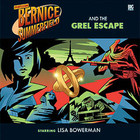
Professor Bernice Summerfield and the Grel Escape (#5.1)

After the harrowing events of Life During Wartime and Death and the Daleks, it’s apparently time for some lighthearted events in the life of Bernice Summerfield. And so Jacqueline Rayner makes a welcome return to the range, having previously penned most of the (almost) uniformly excellent adaptations in the first season, not to mention the novels The Squire’s Crystal and The Mirror Effect. And even better, it brings back the Grel!

The Grel originally appeared in Paul Cornell’s New Adventures novel Oh No It Isn’t!, but truly obtained life in Rayner’s audio adaptation of that novel. They’ve been chronically underused since, though they are the only (I am pretty sure) monster to originate in a spin-off and make it into the parent series, having fought the Doctor and Charley in The Doomwood Curse. They’re simply a delight to listen to (so good choices for audio, then) as they travel the universe looking for facts. “Find facts! Find facts! Find facts!” It’s a nice change of pace to the run of four “monster stories” that preceded this one; we have a monster from Bernice’s own history, rather than an attempt to boost sales by pulling in something from the parent show.

( Read more... )


written by Simon A. Forward
directed by Edward Salt
released August 2004

starring
Lisa Bowerman as Bernice Summerfield
Professor Bernice Summerfield and the Bone of Contention (#5.2)

Professor Bernice Summerfield and the Bone of Contention is the sixth Bernice Summerfield audio drama in a row to feature a “monster,” but like The Grel Escape before it, Bone of Contention switches things up by not featuring a monster that appeared in the classic Doctor Who television series. Rather, The Bone of Contention features one of the alien races Big Finish created itself: the Galyari, who previously appeared in The Sandman with the Sixth Doctor and Evelyn. Bone of Contention is even written by Simon A. Forward, who created the Galyari for The Sandman.

Bone of Conention sees Bernice hired by the Perlorans to visit the Clutch, a convoy of ships traversing interstellar space, on their behalf to recover a precious artefact from the Galyari. Of course, the Galyari claim to not have the artefact, and Bernice soon ends up sidetracked by Griko, the deformed son of Commander Korschal of the Security Directorate. In a move that surprises no one that has ever experienced another Bernice Summerfield story, the plight of Griko turns out to be related to the artefact, and Bernice is quickly brought into conflict with the Galyari.

( Read more... )


written by Stephen Cole
directed by Edward Salt
released November 2004

starring
Lisa Bowerman as Bernice Summerfield
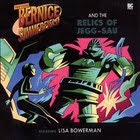
Professor Bernice Summerfield and the Relics of Jegg-Sau (#5.3)

Okay, so this season, Benny has faced two monsters from the spin-off media: the Grel and the Galyari. For the third release of the fifth season, it’s a monster from the parent show, but perhaps not one you’d expect: K-1, a.k.a. the Giant Robot. Appearing in just Tom Baker’s debut Robot, the titular character was not one of a race of evil conquerors, but a lone and lonely creation, destroyed at the story’s end. Nevertheless, Stephen Cole brought back the Robot for Professor Bernice Summerfield and the Relics of Jegg-Sau, where she runs afoul of one after crash-landing on an alien planet.

Despite its seemingly-goofy premise — the Robot’s limp wrists and skinny legs didn’t exactly put it at the top of the monster pantheon — The Relics of Jegg-Sau is actually a fairly grim story. It opens with Bernice imprisoned by the Robot, as she tells the story through flashbacks. And those flashbacks begin with her crashing on an alien planet, rescued by two very strange people: the explorer Kalwell and his daughter Elise. Despite have been trapped on the planet for years, neither is in a hurry to be rescued.


written by Stewart Sheargold
directed by John Ainsworth
released March 2005

starring
Lisa Bowerman as Bernice Summerfield
Harry Myers as Adrian Wall
Professor Bernice Summerfield in the Masquerade of Death (#5.4)

“You can’t have a good climax without some effective shouting!”

Bernice and Adrian are in Spring, where there’s been a murder. Only the Queen of Spring can’t quite tell who’s been murdered. Also Bernice and Adrian are sleeping together. And a mysterious Player has decided to dissect Bernice to prove to everyone that’s she’s fictional. And the dialogue is strange.

The last instalment of Professor Bernice Summerfield’s fifth season, Professor Bernice Summerfield in the Masquerade of Death by Stewart Sheargold, includes not a single returning monster and makes up for it by being one of the most original releases in the series ever. Unfortunately, “original” seems to largely translate into “completely baffling”. I mean, you eventually find out what’s going on on a macro level, but there are lines of dialogue and whole scenes even that still don’t seem to mean anything by the time you get to the end. I don’t mind working to enjoy something, but I do want to know why I’m working, and I don’t think The Masquerade of Death ever gives me a reason.