Showing posts with label creator: keith champagne. Show all posts

02 February 2026

Black Panther: Wakanda by Evan Narcisse et al.

Wakanda

Collection published: 2023
Contents originally published: 2022-23
Read: November 2025
Writers: Stephanie Williams, Evan Narcisse, Adam Serwer, Ho Che Anderson, John Ridley, Brandon Thomas
Pencillers: Paco Medina, Ibraim Roberson, Sean Hill, Julian Shaw, José Luís, Natacha Bustos
Inkers: Walden Wong & Elisabetta D'Amico, Ibraim Roberson, Le Beau
 with Keith Champagne, Julian Shaw, José Luís, Natacha Bustos
Color Artists: Bryan Valenza, Andrew Dalhouse, Jordie Bellaire
Letterer: Joe Sabino

During John Ridley's run on Black Panther, Marvel also published Wakanda, a five-issue miniseries of stories focusing on various non-T'Challa Wakandan characters; they seem to mostly be set between volumes two and three, while T'Challa is in exile.

The first is a Shuri-focused story (creatively titled "Shuri"), where she battles Spider-Man foe Rhino, who's been smuggled into Wakanda to take advantage of T'Challa's absence. The story itself is fine; I always like a bit of Shuri, and writer Stephanie Williams does a good job with her relationship with her mother. I also liked the vibrant, expressive art of Paco Medina (who I recollect from a good Young Avengers Presents story).

The second story focuses on M'Baku, the former rebel who is now the regent of the Intergalactic Empire of Wakanda. I really enjoyed the previous M'Baku-focused story from co-writer Evan Narcisse, so I was pretty disappointed in this tale, which clearly suffers from trying to cram way too much into a single issue. Too much dialogue, too many characters, too much backstory, too many turns in the plot. The art struggles to get it all in. That said, Narcisse is always up to something interesting, and I really hope someday he gets to cook with a space-based Wakanda ongoing, because I think he could do some strong stuff with M'Baku and company.

Why does he think a whole country is going to be vulnerable because one guy is missing?
from Wakanda #1 (script by Stephanie Williams, art by Paco Medina and Walden Wong & Elisabetta D'Amico)

The worst story in the book is certainly the Killmonger-focused one, the only one to be set outside the timeframe of Ridley's ongoing; it covers a trial when Killmonger was a young member of Ulysses Klaw's criminal organization, where a bunch of recruits were made to climb a mountain together and also secretly kill each other off. Even in the realm of supervillainy, I'm not convinced this is a good way to create a secret organization, I don't think the story is very consistent with other depictions of Killmonger's youth (most recently the miniseries named after him, though admittedly, I thought that miniseries wasn't very good either), and the story has way too many characters who are hard to tell apart.

Was all of this backstory in Tosin's previous spotlight story? I don't remember it.
from Wakanda #4 (script by John Ridley, art by Julian Shaw)

There's then two stories, one about Tosin the angry young Wakandan from Ridley's run, and one about Okoye, the one remaining member of the Dora Milaje. These are both fine but not up to much; I didn't care for the art in the Tosin one, and while I appreciate the attempt to flesh out him and his world, it didn't really resonate with what we have already seen of him.

Like, who are these guys?
from Wakanda #3 (script by Evan Narcisse, art by Natacha Bustos)

Lastly, the end of the book collects a bunch of back-ups that originally ran in each issue, about the history of the Black Panthers. These are probably more interesting if you're more au fait with the continuity of the wider Marvel universe than I am. I did note that Jack Kirby's run has been retconned as happening to T'Challa's father, T'Chaka, when he was Black Panther. Boo! Why can't we have whimsy? I did really like Natacha Bustos's art, though.

ACCESS AN INDEX OF ALL POSTS IN THIS SERIES HERE

14 May 2025

Black Panther: Wakanda Forever by Nnedi Okorafor, Alberto Alburquerque, et al.

Today, I'm reviewing two comics that both feature elements of Black Panther crossing over with the wider Marvel universe. The first is an issue of Marvel Super Hero Adventures where Spider-Man meets Black Panther, "Spider-Man and the Stolen Vibranium." This is a kid-focused comic that begins with a frame: here a regular-looking Spider-Man captures a diamond thief, who Spider-Man tells the story to, which is rendered in a less naturalistic style.

from Marvel Super Hero Adventures:
Spider-Man and the Stolen Vibranium
#1
In this story, the Black Panther—who doesn't seem to have met Spider-Man before—whisks Spider-Man away to Wakanda to obtain his help when Doctor Octopus invades the country seeking vibranium to incorporate into his technology. It's pretty simple stuff; Black Panther originally wants a divide-and-conquer approach, but Spider-Man points out that each brings their own knowledge to the table—Spider-Man knows how the Octobots work, Black Panther understands vibranium—and thus they need to work together. It's perfectly fine. 

Probably the high point was when my four-year-old, who's currently obsessed with Spidey and His Amazing Friends on Disney Plus, saw me reading it, and I explained what was going on to him. Black Panther is a recurring character on that show, but Kid Two didn't know that he was a king and was pretty excited to learn this.

from Avengers: Wakanda Forever #1
Similarly, the next storyline, Wakanda Forever, begins with Spider-Man. Wakanda Forever is a three-part storyline focusing on the Dora Milaje, who need to chase down one of their own, Malice, who went bad during Priest's run and who popped up in New York City in Black Panther Annual #1. In the first issue, Spider-Man helps the Dora Milaje deal with Malice and recovering some Wakandan technology from the Titanic; in the second, the Dora Milaje team up with the X-Man when Malice attacks Storm at a grocery story; and in the third, some of the Avengers turn up to a big battle with Malice in New York City.

I felt like this series was a big missed opportunity. The Dora Milaje—in the comics anyway—are a fascinating institution. In theory, they're all potential wives for T'Challa, but he chose to have them trained as warriors to serve him. But even still, they were not allowed to talk to people other than him. The whole reason Malice went bad is that she loved T'Challa but would never actually be allowed to marry him. But by the present day of the comic, the Dora Milaje are very different; they have the freedom to speak to anyone, and even be involved in romantic relationships. How might someone who devoted her life to a set of strictures that were ultimately lifted feel about that? How do the new-era Dora Milaje feel about this woman who came up through a much different system than them?

from X-Men: Wakanda Forever #1
None of this is explored; Malice is a pretty generic villain who went bad for pretty vague reasons in this story. What's gained and lost as traditions are modernized is something the story doesn't do anything with. We don't really learn anything about the three main Dora Milaje here, Okoye, Aneka, and Ayo, who may as well be anybody for all they demonstrate in terms of distinctive personalities.

The first chapter and some of the second are illustrated by Alberto Alburquerque, who does reasonably good work, as does Ray Anthony-Height, also on the second. But I thought Oleg Okuney's work on chapter 3 was pretty ugly.

Marvel Super Hero Adventures: Spider-Man and the Stolen Vibranium originally appeared in one issue (June 2018). The story was written by Jim McCann, illustrated by Dario Brizuela, lettered by Joe Caramagna, and edited by Sarah Brunstad. It was reprinted in Marvel Super Hero Adventures: To Wakanda and Beyond (2018), which was edited by Jennifer Grünwald.

Wakanda Forever originally appeared in Amazing Spider-Man: Wakanda Forever #1, X-Men: Wakanda Forever #1, and Avengers: Wakanda Forever #1 (Aug.-Oct. 2018). The story was written by Nnedi Okorafor; penciled by Alberto Alburquerque (chapters 1-2), Ray Anthony-Height (2), and Oleg Okunev (3); inked by Anthony-Height (chapter 2), Alburquerque (1-2), Juan Vlasco (2), Keith Champagne (2), and Oleg Okunev (3); colored by Erick Arciniega; lettered by Joe Sabino; and edited by Wil Moss.

ACCESS AN INDEX OF ALL POSTS IN THIS SERIES HERE

07 May 2025

Rise of the Black Panther by Evan Narcisse, Javier Pina, et al.

The "Coates era" of Black Panther comics has seen a lot of a releases so far: twenty-five issues of the main series, plus three six-issue miniseries and assorted other stories. And, as I have chronicled here in detail, most of it has done little for me. I found Ta-Nehisi Coates's main series overly long and dull; I have found most of the miniseries fairly pointless.

from Rise of the Black Panther #2
So it was nice to find myself enjoying Rise of the Black Panther. This was an origin retelling for T'Challa, somewhat surprisingly the first one of them we've ever gotten since the character debuted way back in the day. Coates is credited as "consultant"; I am not sure what that means, nor why he should get first billing on the covers of a series he did not actually write. (Based on reading his Black Panther work so far, he's the one who needs a consultant on how to write comics!) The series is scripted by a new-to-me author, Evan Narcisse, and largely illustrated by Javier Pina, who did some good work for DC on Manhunter and Birds of Prey in the late 2000s and early 2010s. Of particular note are the beautiful colors of Stéphane Paitreau.

Narcisse does what a good retroactive origin story does in my opinion, which is take a lot of existing disparate threads and weave them all together into something coherent—something that works on its own even if you haven't read the stories that are being referenced. Over the years, we've learned a lot about T'Challa's youth, and Narcisse unites it all: we see T'Challa's birth mother (for the first time, I think), we see how his adoptive mother Ramonda (from McGregor's run) came into his life, we get bits of backstory from Captain America / Black Panther, we have Shuri (from Hudlin's run) woven into the texture of T'Challa's youth. Various comics have other the years given us a lot of different pieces of T'Challa's family; here we get to see T'Challa's Uncle S'Yan (from Hudlin's run) incorporated alongside T'Challa's half-brother Jakarra—a character from Kirby's run I had forgotten about and would have guessed most writers had too!

from Rise of the Black Panther #1
Perhaps because it had a lot of ground to cover, there's a lot more going on in these six issues than has been standard in the overly decompressed comics of this era. If the series has a downside, it's that the first issue is the very best one, leaving the later parts of the series feeling a little disappointing. Not that they're bad, but there's just not as much going on as in the first. The first mostly focuses on T'Challa's father, T'Chaka, and his relationship with the legacy of his father, as well as the son who sees him die. The issue is narrated by T'Challa's mothers; using a first-person narrator isn't something any of the series's later issues do, but it adds a lot of depth to what's going on, and I wish Narcisse had used this device more later on; imagine S'Yan or Shuri as the narrator of T'Challa's life, I think it could have been very effective.

But that shouldn't be taken as a strike against this comic. Unlike some other material of the "Coates era," I found that this series maintained a strong character focus. This is the story of how T'Challa chose in involve both himself and Wakanda in the outside world, and Narcisse effectively follows that thread through T'Challa's interactions with Namor, with S.H.I.E.L.D., with Killmonger. Plus, Javier Pina is a strong artist, with clear action and good character work; I found he blended fairly well with Paul Renaud, who also draws a couple issues. And, like I said above, Paitreau does some beautiful coloring here that really adds to the atmosphere and coherence of the story.

from Rise of the Black Panther #3
Overall, this works really well as an introduction to T'Challa and his world, as well as a standalone Black Panther comic. I'd imagine Marvel made it to make sure there was an origin on the shelves at the time the film came out, but I suspect it's likely to be an evergreen one. Solid work from a good creative team, and I'd particularly be interested in seeing more from Narcisse in the future.

Rise of the Black Panther originally appeared in six issues (Mar.-Aug. 2018). The story was written by Evan Narcisse, with consultant Ta-Nehisi Coates; illustrated by Paul Renaud (#1, 3), Javier Pina (#2, 4-6), and Edgar Salazar & Keith Champagne (#5); colored by Stéphane Paitreau (#1-6), with Morry Hollowell (#6); lettered by Joe Sabino; and edited by Wil Moss.

ACCESS AN INDEX OF ALL POSTS IN THIS SERIES HERE

14 December 2022

“During the days of World War II, a group of costumed mystery men gathered together to form the first and greatest super-hero team of all time. Now, fighting alongside the surviving original members, a new generation of heroes has been born.... Today, the JUSTICE SOCIETY OF AMERICA lives again!”

DC's JSA by Geoff Johns collections stalled out after four volumes, going up to issue #45. But JSA ran for another forty-two issues beyond that. I ended up deciding the best way to read issues #46-87 (May 2003–Sept. 2006) was through DC's digital comic service, DC Universe Infinite, where for a monthly fee you can access a vast collection of back issues. It doesn't have a Kindle app, but it worked perfectly fine in the browser on my tablet. Some of this run I had read before; specifically, I had read #56-67 and 76-81 as part of my Sandman spin-offs project, as those issues had significant developments for Lyta Hall, mother of the second Dream.

I think there are clearly two big influences on this run of JSA, which is mostly, but not entirely, written by Geoff Johns. (David Goyer departs after five issues; Keith Champagne writes some fill-ins around the time of Infinite Crisis; the series is closed out in a five-issue arc by Paul Levitz.) The first is Paul Levitz's All-Star Comics, which was the first ongoing run to do the thing Johns does here (as signalled in the first-page blurb I've used in my post title): mix original JSA heroes with a new generation. Levitz's series co-starred WWII-era JSA members like Wildcat and Green Lantern with descendants and legatees like Huntress and Power Girl. Johns very much takes that approach; Jay Garrick co-exists with Jakeem Thunder. The other influence is Roy Thomas's Infinity, Inc. That comic wasn't a JSA one, but focused on the JSA's legacy. Thomas's comic evolved the status quo of many JSA characters, giving them children and marriages and new life developments. Put both of these approaches together and, I would argue, you have the major influences on Geoff Johns's approach to JSA.

JSA even features a variety of one-time Infinc stars: Al "Nuklon" Rothstein is now the JSA's Atom-Smasher. Rick Tyler, son of the original Hourman, is one of three different Hourmen to serve during this run. Alan Scott's daughter Jade puts in a few appearances, his son Obsidian does so as well. Hector "Silver Scarab" Hall is the new Doctor Fate, and his wife Lyta "Fury" Hall is brought out of the Vertigo universe. Northwind and Brainwave Jr. show up, as well, and though Yolanda "Wildcat" Martinez is dead, her cousin is a recurring character. Power Girl wasn't a big Infinc player outside of its opening arc, but she's here too. The Star-Spangled Kid is dead, but of course JSA member Stargirl inherits his legacy, and his sidekick. Basically the only Infinity, Inc. members to not show up or influence JSA are Helena "Huntress" Wayne, who was eradicated from continuity, and Beth "Doctor Midnight" Chapel, who was dead (and is never even mentioned because she was replaced by a white man).

But if you are an Infinity, Inc. fan there is little to enjoy in the callbacks. Of the original Infinity, Inc. members, Atom-Smasher, Obsidian, Northwind, and Brainwave all become villains during JSA. So does Wildcat's cousin. One or two could be interesting, but when it happens to four-or-five of them, it begins to feel repetitive and obnoxious. Part of the joy of superhero comic universes is to see characters you like again and again... but it brings me no joy for Northwind to be reduced to a snarling animal without any dialogue and turn evil for no readily apparent reason. (And let's not linger on the optics of this happening to a character coded as Native American.) Same goes for Obsidian, for Brainwave, for Atom-Smasher. I liked these characters in Infinity, Inc.; my reward for that is to see Brainwave assaulting people. Rick Tyler is killed off so his father can be brought back. Hector and Lyta do okay, at least.

As an undergraduate, I read a little bit of—or, to be honest, maybe just about—the "anxiety of influence" in a class on performativity in Victorian drama. That was twenty years ago, so I cannot claim to be au fait with the ideas of Harold Bloom. But I seem to recall that the later writer is anxious about the influence of the earlier writer, and thus in many cases seeks to destroy or undermine him. Does Geoff Johns destroy Roy Thomas's characters as a way of attempting to eradicate Roy Thomas's influence on him? I don't know enough about Bloom to say... but it was a pretty obnoxious pattern to see play out in this title again and again.

When JSA isn't involved in multi-part storylines about mass murder, which is unfortunately most of the time, it's a pretty good comic book. I usually liked the done-in-ones the best; there's a fun Thanksgiving issue, and a great Christmas issue about the JSA protecting Santa Claus. There's a nice Stargirl story about what she's up to during Infinite Crisis. But I found much of this run an unappealing slog, with little of the sense of fun or brightness or character that makes me enjoy a superhero comic. The basic premise here is good—a multigenerational superhero team where the characters can evolve and change—but little about the execution was ever enjoyable.

This post is thirty-seventh in a series about the Justice Society and Earth-Two. The next installment covers JSA: Strange Adventures. Previous installments are listed below:
  1. All Star Comics: Only Legends Live Forever (1976-79)
  2. The Huntress: Origins (1977-82)
  3. All-Star Squadron (1981-87)
  4. Infinity, Inc.: The Generations Saga, Volume One (1983-84)
  5. Infinity, Inc.: The Generations Saga, Volume Two (1984-85)
  6. Showcase Presents... Power Girl (1978)
  7. America vs. the Justice Society (1985)
  8. Jonni Thunder, a.k.a. Thunderbolt (1985)
  9. Crisis on Multiple Earths, Volume 7 (1983-85)
  10. Infinity, Inc. #11-53 (1985-88) [reading order]
  11. Last Days of the Justice Society of America (1986-88)
  12. All-Star Comics 80-Page Giant (1999)
  13. Steel, the Indestructible Man (1978)
  14. Superman vs. Wonder Woman: An Untold Epic of World War Two (1977)
  15. Secret Origins of the Golden Age (1986-89)
  16. The Young All-Stars (1987-89)
  17. Gladiator (1930) ["Man-God!" (1976)]
  18. The Crimson Avenger: The Dark Cross Conspiracy (1981-88)
  19. The Immortal Doctor Fate (1940-82)
  20. Justice Society of America: The Demise of Justice (1951-91)
  21. Armageddon: Inferno (1992)
  22. Justice Society of America vol. 2 (1992-93)
  23. The Adventures of Alan Scott--Green Lantern (1992-93)
  24. Damage (1994-96)
  25. The Justice Society Returns! (1999-2001)
  26. Chase (1998-2002)
  27. Stargirl by Geoff Johns (1999-2003)
  28. The Sandman Presents: The Furies (2002)
  29. JSA by Geoff Johns, Book One (1999-2000)
  30. Wonder Woman: The 18th Letter: A Love Story (2000)
  31. Two Thousand (2000)
  32. JSA by Geoff Johns, Book Two (1999-2003)
  33. Golden Age Secret Files & Origins (2001)
  34. JSA by Geoff Johns, Book Three (1999-2003)
  35. JSA by Geoff Johns, Book Four (2002-03)
  36. JSA Presents Green Lantern (2002-08)

05 October 2022

JSA, Book Four by Geoff Johns, David S. Goyer, Leonard Kirk, Keith Champagne, et al.

JSA by Geoff Johns, Book Four

Collection published: 2020
Contents published: 2002-03
Read: July 2022

Writers: Geoff Johns, David S. Goyer
Pencillers: Leonard Kirk, Peter Snejbjerg, Keith Giffen, Stephen Sadowski, Patrick Gleason
Inkers: Keith Champagne, Peter Snejbjerg, Al Milgrom, Andrew Pepoy, Christian Alamy
Colorist: John Kalisz
Letterer: Ken Lopez

The fourth (and final) volume of JSA by Geoff Johns finally catches events up to what was collected back in book two; in that book, Captain Marvel and the Rick Tyler Hourman were members of the team, and we finally see them join here! If you're making a definitive series of collections, I feel like you could make a much better effort at getting the order right.

Collecting issues aside, the series finally hit its groove for me in this collection. I've struggled with it up until now, but I enjoyed most every storyline in this volume. It opens with "Stealing Thunder," where the Ultra-Humanite has put his brain into Johnny Thunder's body in order to access the power of the Thunderbolt. First there's a pretty decent character-focused prologue (which nicely wrongfoots you about what has happened to Johnny), and the story itself does a good job of focusing on the personalities of individual JSA members. It jumps ahead several months, to when the Earth is an Ultra-Humanite-controlled dystopia, and a small group of heroes remains free of his control. So we follow the members of this group, and it's all handled pretty well. We even get an issue that focuses on former Injustice Society member Icicle, a villain who's immune to the Ultra-Humanite's control and becomes an uneasy ally of the JSA. It's nice to see Rick Tyler (formerly of Infinity, Inc.) again, and the thing about him being able to spend one last hour with his dad, the original Hourman, is pretty neat.

I appreciate all the Infinc callbacks, of course... especially since I actually forgot about this one!
from JSA #34 (art by Leonard Kirk & Keith Champagne)

After this, we get some character-focused one-offs. A Father's Day story parallels Rick meeting with his father, and Jakeem Thunder trying to track down his. I enjoyed this one. Then there's a story about a villain lusting after Power Girl, and it's as bad as all Geoff Johns–penned Power Girl stories. But then there's a decent story about an old Dr. Mid-Nite villain getting his grandson to commit crimes, and the JSA working together to stop him.

Don't trust him!
from JSA #32 (art by Peter Snejbjerg)

Finally, there's a multi-part story about time travel. Some characters go back to the 1940s and meet the original Mr. Terrific; this I really liked, especially the way Mr. Terrific immediately cottoned on to what was happening. Some other characters end up in Ancient Egypt with the original Hawkman and Black Adam, and this I found much less interesting. It does seem like the series is moving back in the direction of having Hawkgirl hook up with Hawkman, which I find profoundly dull and kind of creepy. The stuff about Black Adam's tortured past I don't really care for, because I know it goes pretty unpleasant places in stories like World War III.

Poor Johnny Thunder... or maybe not?
from JSA #36 (art by Leonard Kirk & Keith Champagne)

Also the Hector-Hall-looking-for-Lyta subplot continues to be dead dull. It's a succession of plot beats, not a story about characters.

Ouch.
from JSA #38 (art by Stephen Sadowski & Andrew Pepoy)

But overall, this is an effective team comic at this point. It helps that Leonard Kirk is an absolutely solid artist. Not "flashy," but good personality and good storytelling and good action, the exact kind of artist a nuts-and-bolts team title like this needs. I've liked him ever since his Captain Britain and MI13 days for Marvel. The real shame is that this series of collections ended with this volume; even though DC did collect all of JSA and Justice Society of America vol. 3 in a set of three JSA by Geoff Johns Omnibuses, their "re-cutting" of the run as a series of trade paperbacks ended here, only partway through the contents of what had been JSA by Geoff Johns Omnibus, Volume Two. So having read issues #1-45 of this series via Hoopla, I am going to need to track down #46-87 some other way! (Also it seems clearly criminal that this series was called JSA by Geoff Johns when in the end, David Goyer wrote as many of the collected issues as Johns did... if not more!)

This post is thirty-fifth in a series about the Justice Society and Earth-Two. The next installment covers JSA Presents Green Lantern. Previous installments are listed below:
  1. All Star Comics: Only Legends Live Forever (1976-79)
  2. The Huntress: Origins (1977-82)
  3. All-Star Squadron (1981-87)
  4. Infinity, Inc.: The Generations Saga, Volume One (1983-84)
  5. Infinity, Inc.: The Generations Saga, Volume Two (1984-85)
  6. Showcase Presents... Power Girl (1978)
  7. America vs. the Justice Society (1985)
  8. Jonni Thunder, a.k.a. Thunderbolt (1985)
  9. Crisis on Multiple Earths, Volume 7 (1983-85)
  10. Infinity, Inc. #11-53 (1985-88) [reading order]
  11. Last Days of the Justice Society of America (1986-88)
  12. All-Star Comics 80-Page Giant (1999)
  13. Steel, the Indestructible Man (1978)
  14. Superman vs. Wonder Woman: An Untold Epic of World War Two (1977)
  15. Secret Origins of the Golden Age (1986-89)
  16. The Young All-Stars (1987-89)
  17. Gladiator (1930) ["Man-God!" (1976)]
  18. The Crimson Avenger: The Dark Cross Conspiracy (1981-88)
  19. The Immortal Doctor Fate (1940-82)
  20. Justice Society of America: The Demise of Justice (1951-91)
  21. Armageddon: Inferno (1992)
  22. Justice Society of America vol. 2 (1992-93)
  23. The Adventures of Alan Scott--Green Lantern (1992-93)
  24. Damage (1994-96)
  25. The Justice Society Returns! (1999-2001)
  26. Chase (1998-2002)
  27. Stargirl by Geoff Johns (1999-2003)
  28. The Sandman Presents: The Furies (2002)
  29. JSA by Geoff Johns, Book One (1999-2000)
  30. Wonder Woman: The 18th Letter: A Love Story (2000)
  31. Two Thousand (2000)
  32. JSA by Geoff Johns, Book Two (1999-2003)
  33. Golden Age Secret Files & Origins (2001)
  34. JSA by Geoff Johns, Book Three (1999-2003)

04 January 2017

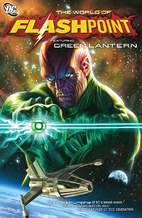
Faster than a DC Bullet: Project Crisis!, Part LVIII: The World of Flashpoint featuring Green Lantern

Comic trade paperback, n.pag.
Published 2012 (contents: 2011)
Borrowed from the library
Read August 2016
The World of Flashpoint featuring Green Lantern

Writers: Adam Schlagman, Jeff Lemire, Pornsak Pichetshote
Artists: Felipe Massafera, Robson Rocha, Joe Prado, Ibraim Roberson, Alex Massacci, Andy Smith, Keith Champagne, Ig Guara, Marco Castiello, Ruy José, Vincenzo Acunzo, Cliff Richards, Ben Oliver
Colorists: Rod Reis, Pete Pantazis, Stefani Rennee, Allen Passalaqua
Letterers: Dave Sharpe, Pat Brosseau, Travis Lanham, Carlos M. Mangual, Wes Abbott

Like I said when talking about the Batman World of Flashpoint volume, despite thinking these books were kind of dumb at first, I'm coming to enjoy them. The World of Flashpoint featuring Green Lantern is another solidly enjoyable volume-- I liked all four stories here. The key ones are definitely the first and last stories, both written by Adam Schlagman: "Abin Sur: The Green Lantern" and "Hal Jordan." These stories essentially run in parallel, depicting the lives of their two main characters. In this timeline, Abin Sur still crashlands on Earth and is found by hotshot test pilot Hal Jordan, but Abin doesn't die, meaning he doesn't pass his Green Lantern ring on to Hal.

Why are the Guardians of the Universe jerks in every timeline?
from Flashpoint: Abin Sur: The Green Lantern #1 (script by Adam Schlagman, art by Felipe Massafera)

Abin's story is about him holding onto the Green Lantern determination to protect life in a universe increasingly hostile to it. We see his youth, we see his friendship with fellow Green Lantern Thaal Sinestro (I had no idea Sinestro had a first name), we see Sinestro's turn to evil when he's told their timeline is an aberration and can be rewritten, and we see Abin sent on a mission to Earth by the Guardians of Oa, who want him to recover the White Entity, the essence of life, from its hiding place. Only once Abin finds out about the Amazon-Atlantis war consuming Earth, he wants to stop that instead. This isn't anything deep, but it is a solid, enjoyable tale, with larger-than-life characters doing big things and making tough choices. The art of Felipe Massafera and his collaborators (Robson Rocha and Joe Prado) is some of the best art on a World of Flashpoint story I've seen yet, communicating character and strength. There's some real tragedy, and real emotion here. As always, I'm curious to see if these events will play into the main Flashpoint title. It seems like they ought to, but Flashpoint is only five issues long and so many things have been set up in The World of Flashpoint by this point!

13 January 2016

Faster than a DC Bullet: Project Crisis!, Part XXXVIII: Countdown: Arena

Comic trade paperback, n.pag.
Published 2008 (contents: 2008)
Borrowed from the library
Read May 2015
Countdown: Arena

Writer: Keith Champagne
Penciller: Scott McDaniel
Inker: Andy Owens
Colorist: Guy Major
Letterers: Nick J. Napolitano, John J. Hill

On paper, this seems like it could be a good book: the heroes of various worlds in the multiverse are gathered together to fight it out. Like, Communist Superman from Red Son battles two other alternate Supermen to find out which one is best. But Monarch is in this, and he is terrible, and so is the whole book. Poorly characterized nonentities hit each other and "banter" in the trademark detail-free, ugly drawing style of Scott McDaniel. Save your money, save yourself, never read this book, it has literally no redeeming value. I can't think of a single thing I enjoyed about it; it's pointless and stupid. Thankfully time seems to be dulling my memories of it.

Next Week: Back to the main event in volume 3 of Countdown to Final Crisis!

29 August 2014

Faster than a DC Bullet: Project Crisis!, Part XXX: World War III

Comic trade paperback, n.pag.
Published 2007 (contents: 2007)
Acquired March 2013

Read August 2014
World War III

Writers: Keith Champagne, John Ostrander, Geoff Johns, Grant Morrison, Greg Rucka, Mark Waid
Pencillers: Pat Olliffe, Andy Smith, Tom Derenick, Jack Jadson, Keith Giffen, Justiniano
Inkers: Drew Geraci, Ray Snyder, Norm Rapmund, Rodney Ramos, Walden Wong
Letterers: Ken Lopez, Travis Lanham, Pat Brosseau
Colorist: Alex Sinclair

World War III expands on week 50 of 52, giving details of Black Adam's war on the world, and in the meantime answering question no one ever cared about, like how did Cyborg get restored to normal, when did Supergirl return from the 31st century, why did (not-Martian) Manhunter quit her job, where did Booster Gold get a different device than the one he turned up with in week 52, and... uh... well, I'm sure it answered some other questions. Really, this is just pointless: Black Adam smashes things (people, mostly), Martian Manhunter ponders whether or not to get involved (I thought he was a hero? isn't this obvious?). Focalizing this through Martian Manhunter is supposed to make it more meaningful, I guess, but aside from the scene where he bumps into his coworkers from his old police detective days, it literally did nothing of interest. A completist might think you need to read this as part of 52, but really, omitting it from the Omnibus was the right call. (I do like what ultimately happens to Black Adam, but that's an event that happens in 52 proper, even though it's reprinted here alongside World War III.)

There's some focus on the Teen Titans here, which results in a couple of them getting punched so hard they die. Why anyone involved thinks that stories about teenagers being brutally killed is something I read I have no idea. Oh geeze, was a comic book about a group of teens who live together and fight crime on their own with superpowers somehow in need of gritty realism? Thanks, Geoff Johns. (Actually, John Ostrander writes the issue in question, but I'm willing to bet the action is Johns's fault.)

31 December 2013

Review: The Starman Omnibus, Volume Five by James Robinson with David S. Goyer and Geoff Johns

Comic hardcover, n.pag.
Published 2010 (contents: 1998-2003)
Acquired October 2010
Read November 2013
The Starman Omnibus, Volume Five

Writer: James Robinson
Co-Story on "Stars My Destination": David S. Goyer
Penciller: Peter Snejbjerg
Inker: Keith Champagne
Co-writer on Stars & S.T.R.I.P.E. #0: Geoff Johns
Additional Pencillers: Steve Yeowell, Craig Hamilton, Chris Weston, Lee Moder, Steve Sadowski, David Ross, Tony Harris, John McCrea
Additional Inkers: Wade von Grawbadger, Steve Yeowell, Ray Snyder, Dan Davis, John Stokes, Andrew Hennessy, Tony Harris, Chris Weston, John McCrea
Colorists: Gregory Wright, John Kalisz, Craig Hamilton, Tom McCraw, Carla Feeny, Tony Harris
Letterers: Bill Oakley, Craig Hamilton, Kurt Hathaway, Ken Lopez

Volume Five returns the narrative energy to Starman; having launched into space, it's one zippy adventure after another. It's a very different tone to previous Starman stories: despite now being set in space, it's a much lighter set of stories, especially at first, as Robinson and Goyer use the new setup to revisit a neverending series of classic DC space characters. Which I love, of course, as the only thing better than sci-fi or superheroes is sci-fi and superheroes. I love Jack and Mikaal's visit to the future, and especially the three tales of Starman related by the Space Cabbie and his buddies, each of them more ludicrous than the last.

I also really enjoyed the final story arc, set on Throneworld and tying together a number of diffuse strands of the Starman mythos into a single story: Prince Gavyn, Will Payton, Mikaal, and Jack, all together in one story. (Gavyn returns in Rann-Thanagar Holy War and Strange Adventures, but I don't think those acknowledged his dual identity as Will.) Jack's complicity but attempt to abstain from revolutionary violence makes for an interest subcurrent in what might otherwise be a fairly simple space opera.

Meanwhile, on Earth, there are some interesting goings-on with the Starman of the 853rd century, not to mention an appearance by one of my favorites, the Elongated Man! A pleasant surprise, to be sure. (As was the appearance of the Dee Tyler Phantom Lady; I didn't realize she'd ever appeared again after her debut in Action Comics Weekly.)

Peter Snejbjerg didn't click for me at first as the artist in this volume, but as it went on, he got better, I think. His dark illustrations for the Throneworld issues in particular really shine. This isn't the best of the Starman volumes, but I think it succeeds perfectly at what it sets out to do.

25 October 2012

Faster than a DC Bullet: The Sandman Spin-Offs, Part XXIII: JSA: Mixed Signals

Comic trade paperback, 136 pages
Published 2006 (contents: 2005-06)
Borrowed from the library
Read October 2012
JSA: Mixed Signals

Writers: Geoff Johns, Keith Champagne
Pencillers: Don Kramer, Dale Eaglesham, Jim Fern, David Lopez
Inkers: Keith Champagne, Art Thibert, Mick Gray, Fernando Blanco
Colorist: John Kalisz
Letterer: Rob Leigh

This is the last JSA collection with a Sandman connection, taking place amidst the chaos of the Infinite Crisis. Apparently, in the previous volume (Black Vengeance, which I skipped) my favorites Hector and Lyta Hall, parents of the second Dream of the Endless, were transported into Hell for defying Nabu, the Lord of Order.

I didn't understand much of what was happening in this book; heroes and locations are thrown at you like mad, and no one takes the time to explain who they are. Hal Jordan and Alan Scott chase Air Wave (a superhero who is apparently Hal's cousin), being driven mad by strange transmissions, into space, and end up at the source of the signals. "New Cronus," exclaims Air Wave upon seeing a planet, as though it explains everything. But what's New Cronus? Then Wonder Girl appears, and takes Air Wave with her. Why? Much of the book is just as confusing.

But since I was there for just Hector and Lyta, that was all right: they had no more idea what was going on than I did. Every chapter of Mixed Signals gives a couple more pages to them, as they travel through a desolate mountain range, under assault by demons for reasons they don't understand. In the end, Lyta has a dream that she's talked to their son, and they travel through a portal into the Dreaming, finally safe.

Awww. It's a great moment, and a great ending for these long-suffering characters, though to my knowledge they don't pop up in the Dreaming in any later stories. Their corpses lie on the ground after they travel through the portal-- was it all just a dream of Lyta's? But even if it was, would that matter in the Dreaming? From the Silver Scarab to Brute and Glob to the Furies to Nabu, Hector and Lyta have always lost control of their lives to supernatural entities, and it's fantastic for them to finally get some peace. Thanks, Keith Champagne.

03 October 2012

Faster than a DC Bullet: The Sandman Spin-Offs, XXI: JSA: Lost

Comic trade paperback, 199 pages
Published 2005 (contents: 2004-05)
Borrowed from the library
Read September 2012
JSA: Lost

Writer: Geoff Johns
Pencillers: Dave Gibbons, Don Kramer, Tom Mandrake, Jerry Ordway, Sean Phillips
Inkers: Keith Champagne, Wayne Faucher, James Hodgkins, Tom Mandrake, Sean Phillips, Prentis Rollins
Colorist: John Kalisz
Letterers: Jared K. Fletcher, Rob Leigh, Ken Lopez

There are a couple Sandman elements in this volume of JSA, mostly stemming from the presence of Hector Hall (a.k.a. Doctor Fate f.k.a. the Sandman f.k.a. the Silver Scarab) and Lyta Hall (a.k.a. Fury) on the team. First off is a brief cameo from their son Daniel, the new Dream, who intervenes to keep the JSA's nemesis Per Degaton (what kind of name is that!?) off their back with a quiet word of warning. You don't actually get to see Daniel, which is okay, but what is not okay is that letterer Jared K. Fletcher completely fails to carry over the distinctive lettering style that usually accompanies Dream's dialogue. Without it, his words just lack... gravitas. (So does Ken Lopez, in a later sequence.)

The more involved Sandman-related subplot is about Sanderson Hawkins, former sidekick to Wesley Dodds. Just as the former minions of Dream, Brute and Glob, once tried to turn Hector into a replacement Dream in a replacement Dreaming while Dream was captured, they attempt to do the same here with poor Sanderson. While some members of the Justice Society track down his physical body, others must travel into his mind, including Hector and Lyta. This gives the two of them a chance to figure out what Brute and Glob did to them back in the day (apparently their memories are rather fuzzy) and get their own back. Go Lyta! I was excited to see her back in fighting form as Fury; she deserves it after the long series of traumas she received at the hands of Roy Thomas, Neil Gaiman, and Mike Carey.

I was even amused when Geoff Johns explains why Lyta never interacted with the superhero community while she was in Vertigo titles: Nabu "cast a blinding spell so that [she] might not ever see the world of costumed heroes around [her]." This is either grossly stupid or utter genius, and I'm not sure which. But other than seeming to not even know they have a son, much less that he is Dream, Lyta and Hector seem to have finally got the happy ending they deserve, and Geoff Johns deserves plenty of kudos for that.
"The last few years, I barely remember anything. It was like a nightmare. Images of strange creatures, beings I couldn't understand. I always see myself running. My whole life started that way. When I was first adopted, I used to run away at least once a week. I'd race to the beach. Looking out over the water. Wondering if I could swim to Themyscira. If I could find it on my own. I spent my summers training under Hippolyta. Learning how to use my strength and speed. Learning how to fight. How to run. But I'm tired of running."

02 October 2012

Faster than a DC Bullet: The Sandman Spin-Offs, Part XX: JSA: Black Reign

Comic trade paperback, n.pag.
Published 2005 (contents: 2003-04)
Borrowed from the library
Read September 2012
JSA: Black Reign

Writer: Geoff Johns
Pencillers: Rags Morales, Don Kramer
Inkers: Michael Bair, Keith Champagne
Colorist: John Kalisz
Letterer: Ken Lopez

This is surely stretching the definition of The Sandman spin-off, but here I am. When we last saw Lyta "Fury" Hall, she was deciding to move on with her life-- since her run-in with the Furies in Greece, she seems to have been captured by a Lord of Order named Nabu. Her husband, the former Sandman, now Dr. Fate, Hector Hall has been looking for her, and he finally finds her, trapped inside his own mind (or something I didn't really understand completely). Lyta is my third-favorite Sandman character, and it's great to see her back in action... but we see here lasts for only a moment. Hopefully there's more of her in JSA going forward.