Showing posts with label creator: david s. goyer. Show all posts

14 December 2022

“During the days of World War II, a group of costumed mystery men gathered together to form the first and greatest super-hero team of all time. Now, fighting alongside the surviving original members, a new generation of heroes has been born.... Today, the JUSTICE SOCIETY OF AMERICA lives again!”

DC's JSA by Geoff Johns collections stalled out after four volumes, going up to issue #45. But JSA ran for another forty-two issues beyond that. I ended up deciding the best way to read issues #46-87 (May 2003–Sept. 2006) was through DC's digital comic service, DC Universe Infinite, where for a monthly fee you can access a vast collection of back issues. It doesn't have a Kindle app, but it worked perfectly fine in the browser on my tablet. Some of this run I had read before; specifically, I had read #56-67 and 76-81 as part of my Sandman spin-offs project, as those issues had significant developments for Lyta Hall, mother of the second Dream.

I think there are clearly two big influences on this run of JSA, which is mostly, but not entirely, written by Geoff Johns. (David Goyer departs after five issues; Keith Champagne writes some fill-ins around the time of Infinite Crisis; the series is closed out in a five-issue arc by Paul Levitz.) The first is Paul Levitz's All-Star Comics, which was the first ongoing run to do the thing Johns does here (as signalled in the first-page blurb I've used in my post title): mix original JSA heroes with a new generation. Levitz's series co-starred WWII-era JSA members like Wildcat and Green Lantern with descendants and legatees like Huntress and Power Girl. Johns very much takes that approach; Jay Garrick co-exists with Jakeem Thunder. The other influence is Roy Thomas's Infinity, Inc. That comic wasn't a JSA one, but focused on the JSA's legacy. Thomas's comic evolved the status quo of many JSA characters, giving them children and marriages and new life developments. Put both of these approaches together and, I would argue, you have the major influences on Geoff Johns's approach to JSA.

JSA even features a variety of one-time Infinc stars: Al "Nuklon" Rothstein is now the JSA's Atom-Smasher. Rick Tyler, son of the original Hourman, is one of three different Hourmen to serve during this run. Alan Scott's daughter Jade puts in a few appearances, his son Obsidian does so as well. Hector "Silver Scarab" Hall is the new Doctor Fate, and his wife Lyta "Fury" Hall is brought out of the Vertigo universe. Northwind and Brainwave Jr. show up, as well, and though Yolanda "Wildcat" Martinez is dead, her cousin is a recurring character. Power Girl wasn't a big Infinc player outside of its opening arc, but she's here too. The Star-Spangled Kid is dead, but of course JSA member Stargirl inherits his legacy, and his sidekick. Basically the only Infinity, Inc. members to not show up or influence JSA are Helena "Huntress" Wayne, who was eradicated from continuity, and Beth "Doctor Midnight" Chapel, who was dead (and is never even mentioned because she was replaced by a white man).

But if you are an Infinity, Inc. fan there is little to enjoy in the callbacks. Of the original Infinity, Inc. members, Atom-Smasher, Obsidian, Northwind, and Brainwave all become villains during JSA. So does Wildcat's cousin. One or two could be interesting, but when it happens to four-or-five of them, it begins to feel repetitive and obnoxious. Part of the joy of superhero comic universes is to see characters you like again and again... but it brings me no joy for Northwind to be reduced to a snarling animal without any dialogue and turn evil for no readily apparent reason. (And let's not linger on the optics of this happening to a character coded as Native American.) Same goes for Obsidian, for Brainwave, for Atom-Smasher. I liked these characters in Infinity, Inc.; my reward for that is to see Brainwave assaulting people. Rick Tyler is killed off so his father can be brought back. Hector and Lyta do okay, at least.

As an undergraduate, I read a little bit of—or, to be honest, maybe just about—the "anxiety of influence" in a class on performativity in Victorian drama. That was twenty years ago, so I cannot claim to be au fait with the ideas of Harold Bloom. But I seem to recall that the later writer is anxious about the influence of the earlier writer, and thus in many cases seeks to destroy or undermine him. Does Geoff Johns destroy Roy Thomas's characters as a way of attempting to eradicate Roy Thomas's influence on him? I don't know enough about Bloom to say... but it was a pretty obnoxious pattern to see play out in this title again and again.

When JSA isn't involved in multi-part storylines about mass murder, which is unfortunately most of the time, it's a pretty good comic book. I usually liked the done-in-ones the best; there's a fun Thanksgiving issue, and a great Christmas issue about the JSA protecting Santa Claus. There's a nice Stargirl story about what she's up to during Infinite Crisis. But I found much of this run an unappealing slog, with little of the sense of fun or brightness or character that makes me enjoy a superhero comic. The basic premise here is good—a multigenerational superhero team where the characters can evolve and change—but little about the execution was ever enjoyable.

This post is thirty-seventh in a series about the Justice Society and Earth-Two. The next installment covers JSA: Strange Adventures. Previous installments are listed below:
  1. All Star Comics: Only Legends Live Forever (1976-79)
  2. The Huntress: Origins (1977-82)
  3. All-Star Squadron (1981-87)
  4. Infinity, Inc.: The Generations Saga, Volume One (1983-84)
  5. Infinity, Inc.: The Generations Saga, Volume Two (1984-85)
  6. Showcase Presents... Power Girl (1978)
  7. America vs. the Justice Society (1985)
  8. Jonni Thunder, a.k.a. Thunderbolt (1985)
  9. Crisis on Multiple Earths, Volume 7 (1983-85)
  10. Infinity, Inc. #11-53 (1985-88) [reading order]
  11. Last Days of the Justice Society of America (1986-88)
  12. All-Star Comics 80-Page Giant (1999)
  13. Steel, the Indestructible Man (1978)
  14. Superman vs. Wonder Woman: An Untold Epic of World War Two (1977)
  15. Secret Origins of the Golden Age (1986-89)
  16. The Young All-Stars (1987-89)
  17. Gladiator (1930) ["Man-God!" (1976)]
  18. The Crimson Avenger: The Dark Cross Conspiracy (1981-88)
  19. The Immortal Doctor Fate (1940-82)
  20. Justice Society of America: The Demise of Justice (1951-91)
  21. Armageddon: Inferno (1992)
  22. Justice Society of America vol. 2 (1992-93)
  23. The Adventures of Alan Scott--Green Lantern (1992-93)
  24. Damage (1994-96)
  25. The Justice Society Returns! (1999-2001)
  26. Chase (1998-2002)
  27. Stargirl by Geoff Johns (1999-2003)
  28. The Sandman Presents: The Furies (2002)
  29. JSA by Geoff Johns, Book One (1999-2000)
  30. Wonder Woman: The 18th Letter: A Love Story (2000)
  31. Two Thousand (2000)
  32. JSA by Geoff Johns, Book Two (1999-2003)
  33. Golden Age Secret Files & Origins (2001)
  34. JSA by Geoff Johns, Book Three (1999-2003)
  35. JSA by Geoff Johns, Book Four (2002-03)
  36. JSA Presents Green Lantern (2002-08)

05 October 2022

JSA, Book Four by Geoff Johns, David S. Goyer, Leonard Kirk, Keith Champagne, et al.

JSA by Geoff Johns, Book Four

Collection published: 2020
Contents published: 2002-03
Read: July 2022

Writers: Geoff Johns, David S. Goyer
Pencillers: Leonard Kirk, Peter Snejbjerg, Keith Giffen, Stephen Sadowski, Patrick Gleason
Inkers: Keith Champagne, Peter Snejbjerg, Al Milgrom, Andrew Pepoy, Christian Alamy
Colorist: John Kalisz
Letterer: Ken Lopez

The fourth (and final) volume of JSA by Geoff Johns finally catches events up to what was collected back in book two; in that book, Captain Marvel and the Rick Tyler Hourman were members of the team, and we finally see them join here! If you're making a definitive series of collections, I feel like you could make a much better effort at getting the order right.

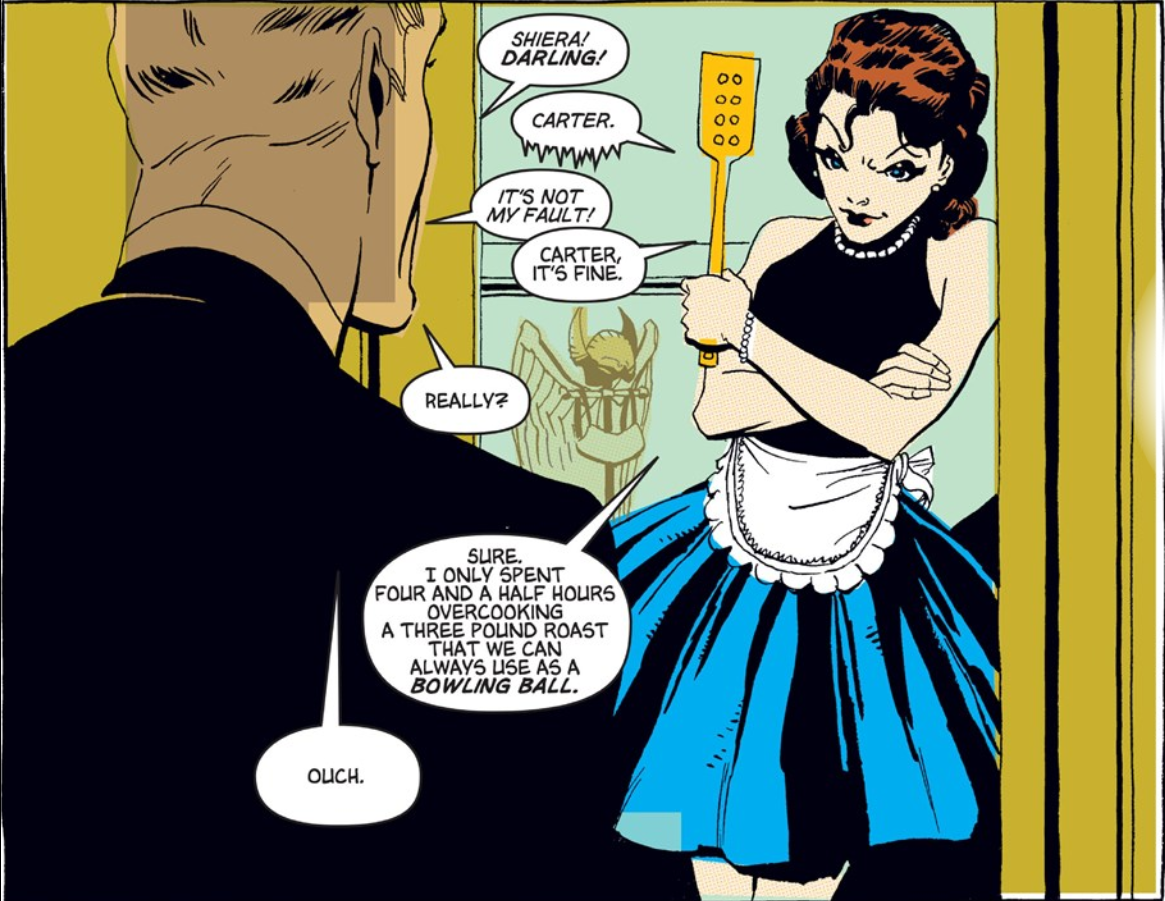
Collecting issues aside, the series finally hit its groove for me in this collection. I've struggled with it up until now, but I enjoyed most every storyline in this volume. It opens with "Stealing Thunder," where the Ultra-Humanite has put his brain into Johnny Thunder's body in order to access the power of the Thunderbolt. First there's a pretty decent character-focused prologue (which nicely wrongfoots you about what has happened to Johnny), and the story itself does a good job of focusing on the personalities of individual JSA members. It jumps ahead several months, to when the Earth is an Ultra-Humanite-controlled dystopia, and a small group of heroes remains free of his control. So we follow the members of this group, and it's all handled pretty well. We even get an issue that focuses on former Injustice Society member Icicle, a villain who's immune to the Ultra-Humanite's control and becomes an uneasy ally of the JSA. It's nice to see Rick Tyler (formerly of Infinity, Inc.) again, and the thing about him being able to spend one last hour with his dad, the original Hourman, is pretty neat.

I appreciate all the Infinc callbacks, of course... especially since I actually forgot about this one!
from JSA #34 (art by Leonard Kirk & Keith Champagne)

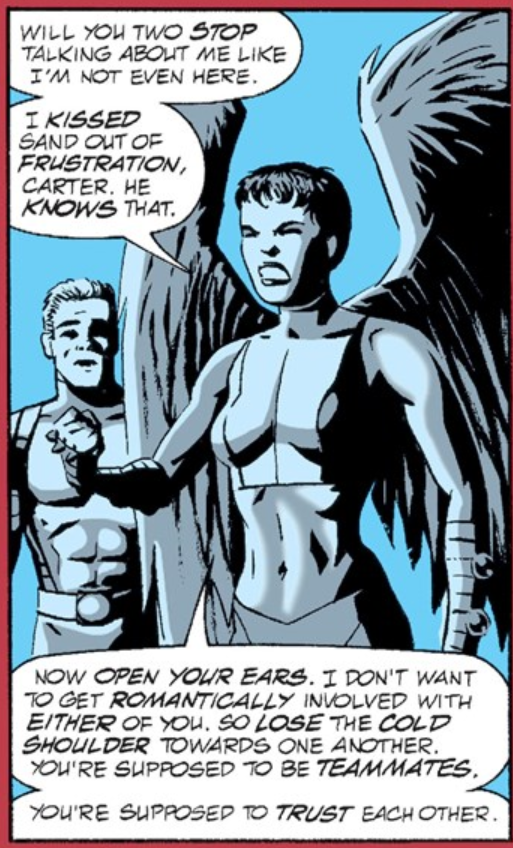
After this, we get some character-focused one-offs. A Father's Day story parallels Rick meeting with his father, and Jakeem Thunder trying to track down his. I enjoyed this one. Then there's a story about a villain lusting after Power Girl, and it's as bad as all Geoff Johns–penned Power Girl stories. But then there's a decent story about an old Dr. Mid-Nite villain getting his grandson to commit crimes, and the JSA working together to stop him.

Don't trust him!
from JSA #32 (art by Peter Snejbjerg)

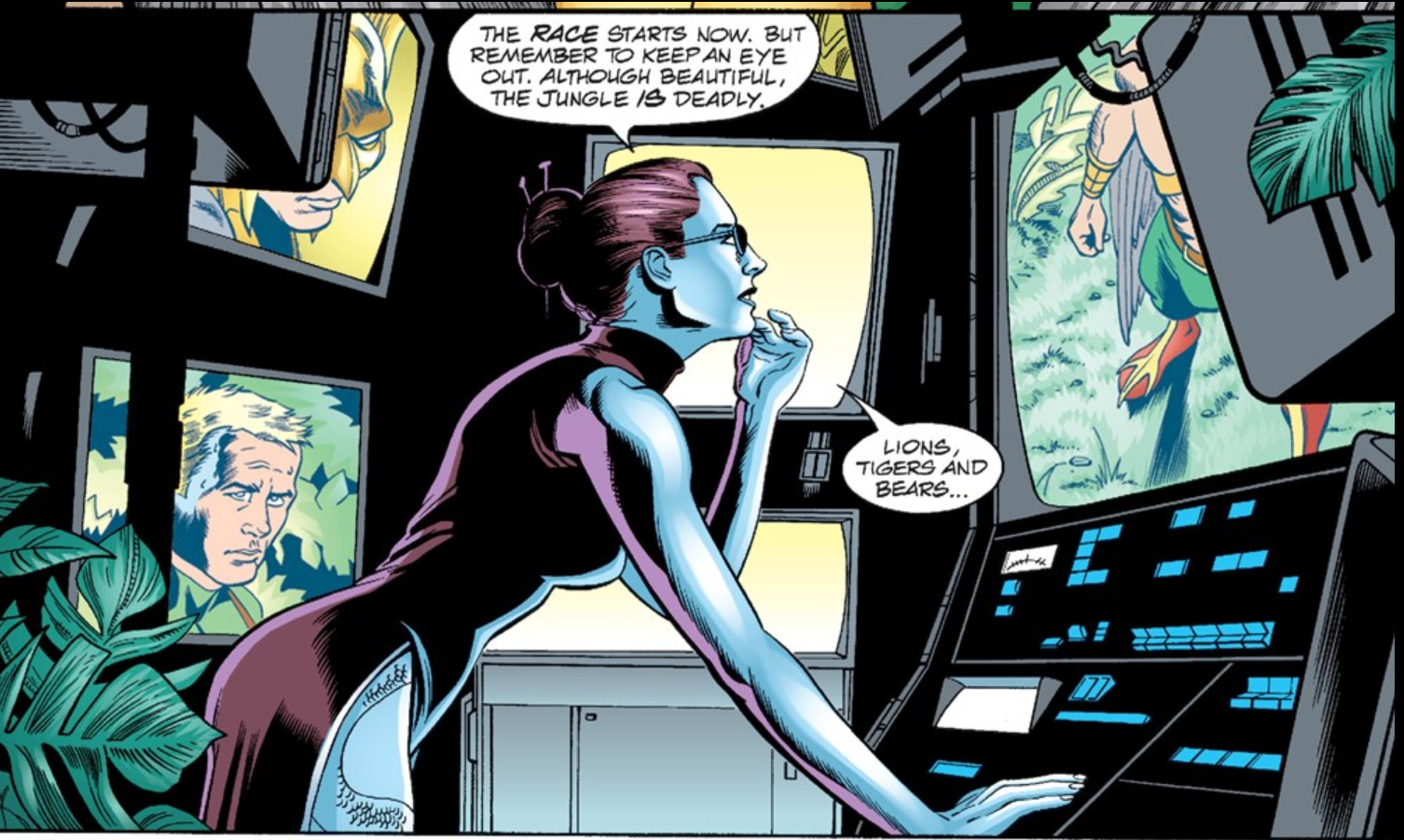
Finally, there's a multi-part story about time travel. Some characters go back to the 1940s and meet the original Mr. Terrific; this I really liked, especially the way Mr. Terrific immediately cottoned on to what was happening. Some other characters end up in Ancient Egypt with the original Hawkman and Black Adam, and this I found much less interesting. It does seem like the series is moving back in the direction of having Hawkgirl hook up with Hawkman, which I find profoundly dull and kind of creepy. The stuff about Black Adam's tortured past I don't really care for, because I know it goes pretty unpleasant places in stories like World War III.

Poor Johnny Thunder... or maybe not?
from JSA #36 (art by Leonard Kirk & Keith Champagne)

Also the Hector-Hall-looking-for-Lyta subplot continues to be dead dull. It's a succession of plot beats, not a story about characters.

Ouch.
from JSA #38 (art by Stephen Sadowski & Andrew Pepoy)

But overall, this is an effective team comic at this point. It helps that Leonard Kirk is an absolutely solid artist. Not "flashy," but good personality and good storytelling and good action, the exact kind of artist a nuts-and-bolts team title like this needs. I've liked him ever since his Captain Britain and MI13 days for Marvel. The real shame is that this series of collections ended with this volume; even though DC did collect all of JSA and Justice Society of America vol. 3 in a set of three JSA by Geoff Johns Omnibuses, their "re-cutting" of the run as a series of trade paperbacks ended here, only partway through the contents of what had been JSA by Geoff Johns Omnibus, Volume Two. So having read issues #1-45 of this series via Hoopla, I am going to need to track down #46-87 some other way! (Also it seems clearly criminal that this series was called JSA by Geoff Johns when in the end, David Goyer wrote as many of the collected issues as Johns did... if not more!)

This post is thirty-fifth in a series about the Justice Society and Earth-Two. The next installment covers JSA Presents Green Lantern. Previous installments are listed below:
  1. All Star Comics: Only Legends Live Forever (1976-79)
  2. The Huntress: Origins (1977-82)
  3. All-Star Squadron (1981-87)
  4. Infinity, Inc.: The Generations Saga, Volume One (1983-84)
  5. Infinity, Inc.: The Generations Saga, Volume Two (1984-85)
  6. Showcase Presents... Power Girl (1978)
  7. America vs. the Justice Society (1985)
  8. Jonni Thunder, a.k.a. Thunderbolt (1985)
  9. Crisis on Multiple Earths, Volume 7 (1983-85)
  10. Infinity, Inc. #11-53 (1985-88) [reading order]
  11. Last Days of the Justice Society of America (1986-88)
  12. All-Star Comics 80-Page Giant (1999)
  13. Steel, the Indestructible Man (1978)
  14. Superman vs. Wonder Woman: An Untold Epic of World War Two (1977)
  15. Secret Origins of the Golden Age (1986-89)
  16. The Young All-Stars (1987-89)
  17. Gladiator (1930) ["Man-God!" (1976)]
  18. The Crimson Avenger: The Dark Cross Conspiracy (1981-88)
  19. The Immortal Doctor Fate (1940-82)
  20. Justice Society of America: The Demise of Justice (1951-91)
  21. Armageddon: Inferno (1992)
  22. Justice Society of America vol. 2 (1992-93)
  23. The Adventures of Alan Scott--Green Lantern (1992-93)
  24. Damage (1994-96)
  25. The Justice Society Returns! (1999-2001)
  26. Chase (1998-2002)
  27. Stargirl by Geoff Johns (1999-2003)
  28. The Sandman Presents: The Furies (2002)
  29. JSA by Geoff Johns, Book One (1999-2000)
  30. Wonder Woman: The 18th Letter: A Love Story (2000)
  31. Two Thousand (2000)
  32. JSA by Geoff Johns, Book Two (1999-2003)
  33. Golden Age Secret Files & Origins (2001)
  34. JSA by Geoff Johns, Book Three (1999-2003)

26 September 2022

JSA, Book Three: The Power of Legacy! by Geoff Johns, David S. Goyer, Stephen Sadowski, Rags Morales, Peter Snejbjerg, et al.

JSA by Geoff Johns, Book Three

Collection published: 2019
Contents published: 1999-2003
Read: July 2022

Writers: Geoff Johns, David S. Goyer, Michael Chabon, Dan Curtis Johnson, James Robinson, J. H. Williams III, Brian Azzarello, Howard Chaykin, Darwyn Cooke, Jeph Loeb, Ron Marz
Pencillers: Stephen Sadowski, Rags Morales, Peter Snejbjerg, Sal Velluto, Buzz, Javier Saltares, Adam DeKraker, Barry Kitson, Michael Lark, Mike McKone, Dave Ross, Phil Winslade, Uriel Caton, Derec Aucoin, Rick Burchett, Tony Harris, Howard Chaykin, Darwyn Cooke, Eduardo Risso, Tim Sale, Chris Weston
Inkers: Bob Almond, Michael Bair, Peter Snejbjerg, Wade Von Grawbadger, Jim Royal, Ray Kryssing, Keith Champagne, Wayne Faucher, Barry Kitson, Michael Lark, Prentis Rollins, Phil Winslade, Anibal Rodriguez, Christian Alamy, Dave Meikis, Derec Aucoin, Rick Burchett, Howard Chaykin, Darwyn Cooke, Eduardo Risso, Tim Sale, Chris Weston
Colorists: John Kalisz, Tom McCraw, Carla Feeny, Mark Chiarello, Tony Harris
Letterers: Ken Lopez, Kurt Hathaway, Michael Lark, Patricia Prentice, Richard Starkings, Darwyn Cooke, Janice Chiang

I complained when reading book two of this series that it seemed like the stories were being collected out of order; book three (called The Power of Legacy! on the cover but subtitle-free on the title page) makes that particularly clear, with later issues collected here introducing things that had already happened in book two, like the transfer of the JSA chairship to Mr. Terrific. But anyway: let's take this part by part as it's presented.

Women, amirite?
from JSA All Stars vol. 1 #2 (script by Jeph Loeb, art by Tim Sale)

The book begins with JSA All Stars vol. 1, an eight-issue miniseries about the various "legacy" characters in the JSA, those who are successors to older heroes: Hawkgirl, Dr. Fate, Stargirl, Hourman, Dr. Mid-Nite, and Mr. Terrific. The middle six issues all follow the same format. First, there's a sixteen-page story about the modern hero written by Geoff Johns and David Goyer, usually delving into character points for them, like Hourman's addiction (this is the Rick Tyler version from Infinity, Inc.) or Stargirl's relationship with her biological father. Then, there's a six-page story about their Golden Age predecessor, written and drawn by high-profile guest artists, like Howard Chaykin, James Robinson and Tony Harris, or Darwyn Cooke. Overall, I enjoyed these; the present-day stories actually give us some solid character work, especially for characters who haven't really had much meaningful focus in the present-day stories, like Hourman, Dr. Mid-Nite, and Mr. Terrific. The flashback stories are good fun stuff: if you take a great writer and artist (or writer/artist) and tell them to do what they want in a six-page Golden Age adventure, they will deliver.

Learning that the new Dr. Mid-Nite also did a residency with the original makes me wonder even more what happened to Beth Chapel. Ah, well, gotta replace those black legacy characters with white ones.
from JSA All Stars vol. 1 #6 (story by David S. Goyer & Geoff Johns, script by Geoff Johns, art by Stephen Sadowski & Wade Von Grawbadger)

The only thing I didn't like was the frame, which I have a sneaking suspicion was added after the middle six issues were completed, because of it how it contorts to not be mentioned in them. A villain turns up, but disguises himself as the Spectre and tells the characters to take time off to think about their histories but also that they shouldn't think about the events of the frame. It's pretty pointless, to be honest, and the six issues would have stood up on their own just fine. But overall, JSA All Stars is my favorite thing I've read thus far in this title... though technically, it's not part of it!

I often find Dr. Fate thaumababble tedious, but I would have read the hell out of a Darwyn Cooke Fate ongoing.
from JSA All Stars vol. 1 #3 (script & art by Darwyn Cooke)

Then come three stories about a character named Nemesis, two from JSA Annual #1 and JSA Secret Files & Origins #2. She's raised by the Council (the same organization responsible for some of DC's various Manhunters), and I felt like a lot of time was spent on her for reasons that weren't clear to me. But maybe this will come in during book four more? The Ultra-Humanite seems to be part of the Council storyline, and he's in book four. (There are some other stories from that Secret Files issue, too; one I already read in the Chase collection, and the other is to foreshadow an upcoming storyline.)

I will never care about Sand, especially his self-doubt, but this was a neat moment.
from JSA Secret Files & Origins #2 (story by Geoff Johns & David S. Goyer, script by Geoff Johns, art by Javier Saltares & Ray Kryssing)

After this, we finally get back to the main JSA series. First we have one of those standalone stories where nothing in particular is going on and we check in on various character that team books like to do—and that I like them to do. After the icky stuff in book two where everyone was expecting teenage Hawkgirl to hook up with octagenarian Hawkman because it was her "destiny," this volume thankfully pushes back against that, with her telling everyone she's going to do what she wants to do. I hope the series sticks to this, and that it's not a set-up for her coming around and getting together with Hawkman anyway. We also have some interrogation of the idea that Black Adam can be part of the team; I liked that Captain Marvel turned up, though was Atom Smasher (then called Nuklon) this hot-headed back in Infinc? Thankfully Sand, the team's most boring nonentity of a character, finally steps down as team leader.

My favorite part of this is that like two panels later, Captain Marvel goes on to use the word "legit." Such grace!
from JSA #27 (script by Geoff Johns, art by Rags Morales & Michael Bair)

This book also introduces Alex, a new character who was a cousin to Yolanda Montez, the Wildcat of Infinity, Inc. He was inspired by her JSA enthusiasm, and now he manages the JSA museum in the JSA's HQ. Fun idea... but he never actually appeared in Infinc! Didn't Yolanda have a younger brother? Why not use him? 

This lady's power is to always pose like a man is watching her.
from JSA #28 (script by Geoff Johns, art by Stephen Sadowski and Christian Alamy & Dave Meikis)

Lastly, we have a storyline where villains kidnap a number of JSA members and force them to fight each other as part of a gambling operation. This I thought was pretty good, probably the best actual storyline thus far, with lots of good moments of characterization, something sorely lacking from the series up to this point. I've been complaining about Geoff Johns, but this is actually the first story not co-written with David Goyer, so maybe it's him who's the problem. My favorite issue here was one where Stargirl and Jakeem Thunder (modern-day inheritor of Johnny Thunder's Thunderbolt) are the only two heroes left in HQ during the events of the Joker: Last Laugh crossover and have to protect New York City from a Joker-venom infected Solomon Grundy. Just two principal characters gives the characterization and the action time to shine, aided by some excellent moody art from Peter Snejbjerg. There's also a decent story about the JSA working with Batman. So... after three 400-page books things are finally looking up?

Finally!
from JSA #31 (script by Geoff Johns, art by Peter Snejbjerg)

The last story in the collection is "History 101," which the back cover proudly declares has never before been reprinted... but in fact it was already reprinted in The Justice Society Returns! way back in 2003! There are also lots of profiles and such from various issues of Secret Files & Origins, which is nice to have if you like that kind of thing; I did enjoy the diagram of JSA HQ.

This post is thirty-fourth in a series about the Justice Society and Earth-Two. The next installment covers JSA by Geoff Johns, Book Four. Previous installments are listed below:
  1. All Star Comics: Only Legends Live Forever (1976-79)
  2. The Huntress: Origins (1977-82)
  3. All-Star Squadron (1981-87)
  4. Infinity, Inc.: The Generations Saga, Volume One (1983-84)
  5. Infinity, Inc.: The Generations Saga, Volume Two (1984-85)
  6. Showcase Presents... Power Girl (1978)
  7. America vs. the Justice Society (1985)
  8. Jonni Thunder, a.k.a. Thunderbolt (1985)
  9. Crisis on Multiple Earths, Volume 7 (1983-85)
  10. Infinity, Inc. #11-53 (1985-88) [reading order]
  11. Last Days of the Justice Society of America (1986-88)
  12. All-Star Comics 80-Page Giant (1999)
  13. Steel, the Indestructible Man (1978)
  14. Superman vs. Wonder Woman: An Untold Epic of World War Two (1977)
  15. Secret Origins of the Golden Age (1986-89)
  16. The Young All-Stars (1987-89)
  17. Gladiator (1930) ["Man-God!" (1976)]
  18. The Crimson Avenger: The Dark Cross Conspiracy (1981-88)
  19. The Immortal Doctor Fate (1940-82)
  20. Justice Society of America: The Demise of Justice (1951-91)
  21. Armageddon: Inferno (1992)
  22. Justice Society of America vol. 2 (1992-93)
  23. The Adventures of Alan Scott--Green Lantern (1992-93)
  24. Damage (1994-96)
  25. The Justice Society Returns! (1999-2001)
  26. Chase (1998-2002)
  27. Stargirl by Geoff Johns (1999-2003)
  28. The Sandman Presents: The Furies (2002)
  29. JSA by Geoff Johns, Book One (1999-2000)
  30. Wonder Woman: The 18th Letter: A Love Story (2000)
  31. Two Thousand (2000)
  32. JSA by Geoff Johns, Book Two (1999-2003)
  33. Golden Age Secret Files & Origins (2001)

07 September 2022

JSA, Book Two by Geoff Johns, David Goyer, Stephen Sadowski, Michael Bair, Carlos Pacheco, Jesus Merino, et al.

JSA by Geoff Johns, Book Two

Collection published: 2018
Contents published: 1999-2003
Read: June 2022

Writers: Geoff Johns, David Goyer
Artists: Stephen Sadowski, Michael Bair, Carlos Pacheco, Jesus Merino, Phil Winslade, Mike Perkins, Steve Yeowell, Keith Champagne, Buzz, Rags Morales, Dave Meikis, Paul Neary, Rob Leigh, Javier Saltares, Ray Kryssing, Andrew Pepoy
Colorists: John Kalisz, Tom McCraw
Letterers: Ken Lopez, Pat Prentice, Kurt Hathaway

This volume of JSA by Geoff Johns (where every story is co-written by David Goyer, but I guess he doesn't rate) collects two story arcs from the main JSA comic and also the graphic novel JLA/JSA: Virtue and Vice and then some other stuff. What I am realizing is that I don't really care for Johns's approach to this book. First we have the seemingly obligatory storyline about a new Injustice Society, which like a lot of Geoff Johns stuff, is full of seemingly gratuitous violence in order to prove the situation is serious: he invents a whole Chicago superteam just to torture and brutally murder them, there's an evil Flash who runs through kids so fast they explode. It's just like... it's juvenile, and I don't read superhero comics to read about kids being murdered. I found it very hard to care.

The second big storyline is about a trip to Thanagar to resurrect Hawkman. I did really like Hawkworld, but Johns ignores any of its interesting complexities in favor of a melodramatic sub-Darkseid villain and a subplot about how a teenage girl just needs to give in and be romanced by an eighty-year-old man for the good of the universe.

Why does everyone assume she wants to be with him? (Also I spent some time wondering which Phantom Lady this was. The Action Comics Weekly one? But not so much time that I actually looked it up.)
from JSA: Our Worlds at War #1 (script by Geoff Johns, art by Javier Saltares & Ray Kryssing)

This book isn't totally unlikeable. In between those two storylines, there's a decent done-in-one that gives us some much-needed character focus, and actually the Our Worlds at War tie-in issue was pretty good too. And I also enjoyed the Secret Files & Origins issue that leads into Virtue and Vice, as well as the early parts of Virtue and Vice itself. When Johns (and Goyer) want to write these characters hanging out and talking about things, they do a decent job... but it seems they rarely do. If you compare this to the characterful and deft way that Len Strazewski wrote the last JSA ongoing, this just doesn't compare; I have very little sense of these people as, well, people. Like I said, Virtue and Vice starts good, but it soon becomes Yet Another Apocalyptic Battle with huge masses of people dying violently... which I am sure will promptly never be mentioned again. I also don't care much for stories where heroes are mind-controlled to be evil, especially if they promptly become stupid.

I have never cared for Johns's take on Power Girl.
from JLA/JSA: Virtue and Vice (script by David S. Goyer & Geoff Johns, art by Carlos Pacheco & Jesus Merino)

Some other thoughts: I think Secret Files & Origins and Virtue and Vice are included out of sequence; suddenly Mr. Terrific is JSA chair, and Stargirl is living in Metropolis, and Captain Marvel is a member, and there's a new Hourman who I don't think is the new Hourman from the previous book. None of these things have happened in the actual JSA series yet. It amused me that suddenly Green Arrow is alive again, so he has to contend with the fact that Black Canary has moved on romantically since his death. Virtue and Vice had some good President Luthor stuff. The way the heroes swap places with the statues in the Rock of Eternity is pretty neat.

This post is thirty-second in a series about the Justice Society and Earth-Two. The next installment covers Golden Age Secret Files & Origins. Previous installments are listed below:
  1. All Star Comics: Only Legends Live Forever (1976-79)
  2. The Huntress: Origins (1977-82)
  3. All-Star Squadron (1981-87)
  4. Infinity, Inc.: The Generations Saga, Volume One (1983-84)
  5. Infinity, Inc.: The Generations Saga, Volume Two (1984-85)
  6. Showcase Presents... Power Girl (1978)
  7. America vs. the Justice Society (1985)
  8. Jonni Thunder, a.k.a. Thunderbolt (1985)
  9. Crisis on Multiple Earths, Volume 7 (1983-85)
  10. Infinity, Inc. #11-53 (1985-88) [reading order]
  11. Last Days of the Justice Society of America (1986-88)
  12. All-Star Comics 80-Page Giant (1999)
  13. Steel, the Indestructible Man (1978)
  14. Superman vs. Wonder Woman: An Untold Epic of World War Two (1977)
  15. Secret Origins of the Golden Age (1986-89)
  16. The Young All-Stars (1987-89)
  17. Gladiator (1930) ["Man-God!" (1976)]
  18. The Crimson Avenger: The Dark Cross Conspiracy (1981-88)
  19. The Immortal Doctor Fate (1940-82)
  20. Justice Society of America: The Demise of Justice (1951-91)
  21. Armageddon: Inferno (1992)
  22. Justice Society of America vol. 2 (1992-93)
  23. The Adventures of Alan Scott--Green Lantern (1992-93)
  24. Damage (1994-96)
  25. The Justice Society Returns! (1999-2001)
  26. Chase (1998-2002)
  27. Stargirl by Geoff Johns (1999-2003)
  28. The Sandman Presents: The Furies (2002)
  29. JSA by Geoff Johns, Book One (1999-2000)
  30. Wonder Woman: The 18th Letter: A Love Story (2000)
  31. Two Thousand (2000)

20 July 2022

JSA, Book One by Geoff Johns, David Goyer, Stephen Sadowski, Michael Bair, et al.

JSA by Geoff Johns, Book One

Collection published: 2017
Contents published: 1999-2000
Read: April 2022

Writers: Geoff Johns, David Goyer, James Robinson
Artists: Stephen Sadowski, Michael Bair, Buzz, Scott Benefiel, Derek Aucoin, Marcos Martin, Keith Champagne
Colorist: John Kalisz
Letterer: Ken Lopez

In this series of posts, I've been tracking an impending Justice Society renaissance. After the brief flurry of JSA-related material from 1991 to 1993 or so, the JSA was largely left behind... and then it exploded in 1999. That all culminated in JSA, a new ongoing series, the Justice Society's first in six years, and also its longest; it lasted eighty-seven issues, beating out the original All Star Comics run's fifty-seven. Plus, as we'll see going forward, it led to any number of spin-offs and tie-ins.

It seems weird to me that this series of reprints is branded "JSA by Geoff Johns," as he works on just ten of this collection's fifteen issues, and the five he doesn't work on are the first five, which set up what this new team is and how it works. David Goyer is the only one of this volume's contributors who works on every issue. But, I guess if you're Chief Creative Officer and President of DC Comics, you can make sure your name is displayed prominently wherever you like.

I felt like this series was pushing a Dinah/Jack thing. Am I reading in too much? Kind of weird, if so, because their parents had an affair!
from JSA #12 (script by David Goyer & Geoff Johns, art by Buzz)

Basically, this volume sees the reestablishment of the JSA, and like Paul Levitz and Gerry Conway's 1976-79 revival, it makes it into a multigenerational team, leaning into the idea of heroic legacy that Roy Thomas laid the foundations of over in Infinity, Inc. By now, though, we are up to three generations of heroes: we have members of the original team like Alan Scott (formerly Green Lantern, but still ghettoized as "Sentinel" here), Wildcat, and the Flash (Jay Garrick); immediate descendants and sidekicks like Atom-Smasher (formerly Nuklon of Infinity, Inc.), Sand (formerly Sandy the Golden Boy, sidekick to the Sandman), Doctor Fate (Hector Hall, formerly the Sandman, formerly formerly the Silver Scarab of Infinity, Inc.), and Black Canary (Dinah Lance, daughter of the original, Dinah Drake); and then brand-new heroes like the new Starman (Jack Knight), Stargirl (Courtney Whitmore), and the new Hawkgirl (Kendra Saunders). Plus there's a new new Hourman who is some kind of android, and a new new Doctor Mid-Nite who is a white dude.* It's a neat idea, a team composed of mentors and mentees... but I found the book didn't actually do very much with it.

Always up for a Director Bones appearance, but this was a pretty pro forma one.
from JSA #11 (script by David Goyer & Geoff Johns, art by Michael Bair & Buzz)

Overall, this is an approach to team superheroics that wasn't very much to my liking. The book moves from apocalyptic event to apocalyptic event with no time to breathe; I would have very little sense of any of these people as characters if it wasn't for the fact I know them from other books. There are a lot of shock events—deaths and people going evil and people being plunged into terrible universes—but there is little sense that any of it matters, and I found it difficult to care. Geoff Johns always gets a lot of praise for his handling of history and continuity, but I feel like this is only true if you are a character Johns is nostalgic for from his youth. Obsidian from Infinity, Inc., for example, makes a comeback here just to become a villain so that his father, Alan Scott, can angst about its for a few panels. Hector Hall is resurrected... but I'm not really sure why, as once he comes back to life, he exhibits as much personality as a lamp-post. We do hear a lot from Sand... and I would quite frankly like to never do so again. What a poorly conceived, uninteresting character. Has any Golden-Age-kid-sidekick-turned-lead ever worked out except for Robin?

You can tell me he is connected to much more interesting characters... but you can't make me care.
from JSA #1 (script by James Robinson & David Goyer, art by Stephen Sadowski & Michael Bair)

I recently reread my very first post in this series, where I wrote, "I'm not going into the Geoff Johns era because, really, a little bit of Geoff Johns goes much too far in my experience." Over two years later, I actually don't remember thinking that, nor do I remember when I changed my mind and added all the Geoff Johns stuff to my list. There is quite a lot of it: seventy-two more issues of JSA, the spin-off JSA Classified, and the soft reboot of JSA as Justice Society of America vol. 3, plus myriad miniseries. I feel committed at this point—how can I follow the JSA from 1977 to 1999, but not the one more decade it would take to get me up to the end of the "original" JSA with Flashpoint?—but I can't claim to exactly be excited about it all based on reading this.

* Roy Thomas introduced a new Wildcat and a new Doctor Midnight, both women of color, during Infinity, Inc., but I see they were both killed off to prove the situation was serious in an issue of Eclipso back in 1993, paving the way for white dudes to reclaim the mantles. Of course.
 
This post is twenty-ninth in a series about the Justice Society and Earth-Two. The next installment covers Wonder Woman: The 18th Letter: A Love Story. Previous installments are listed below:
  1. All Star Comics: Only Legends Live Forever (1976-79)
  2. The Huntress: Origins (1977-82)
  3. All-Star Squadron (1981-87)
  4. Infinity, Inc.: The Generations Saga, Volume One (1983-84)
  5. Infinity, Inc.: The Generations Saga, Volume Two (1984-85)
  6. Showcase Presents... Power Girl (1978)
  7. America vs. the Justice Society (1985)
  8. Jonni Thunder, a.k.a. Thunderbolt (1985)
  9. Crisis on Multiple Earths, Volume 7 (1983-85)
  10. Infinity, Inc. #11-53 (1985-88) [reading order]
  11. Last Days of the Justice Society of America (1986-88)
  12. All-Star Comics 80-Page Giant (1999)
  13. Steel, the Indestructible Man (1978)
  14. Superman vs. Wonder Woman: An Untold Epic of World War Two (1977)
  15. Secret Origins of the Golden Age (1986-89)
  16. The Young All-Stars (1987-89)
  17. Gladiator (1930) ["Man-God!" (1976)]
  18. The Crimson Avenger: The Dark Cross Conspiracy (1981-88)
  19. The Immortal Doctor Fate (1940-82)
  20. Justice Society of America: The Demise of Justice (1951-91)
  21. Armageddon: Inferno (1992)
  22. Justice Society of America vol. 2 (1992-93)
  23. The Adventures of Alan Scott--Green Lantern (1992-93)
  24. Damage (1994-96)
  25. The Justice Society Returns! (1999-2001)
  26. Chase (1998-2002)
  27. Stargirl by Geoff Johns (1999-2003)
  28. The Sandman Presents: The Furies (2002)

04 July 2022

Stargirl by Geoff Johns, Lee Moder, Scott Kolins, Dan Davis, et al.

Stargirl by Geoff Johns

Collection published: 2020
Contents originally published: 1999-2003
Read: March 2022

Writers: Geoff Johns, James Robinson, David S. Goyer
Artists: Lee Moder, Scott Kolins, Dan Davis, Chris Weston, John Stokes, Mike McKone, Wayne Faucher
Colorists: Tom McCraw, Carla Feeny, John Kalisz
Letterers: Bill Oakley, Kurt Hathaway

This volume collects the entirety of Stars and S.T.R.I.P.E., a modernized take on the Star-Spangled Kid that began slightly before and ran alongside the Robinson/Goyer/John JSA revival of 1999. Our main character is Courtney Whitmore, a teenager who has recently relocated to Blue Valley, Nebraska because her mother has remarried, to Pat Dugan, who back during World War II was Stripesy, sidekick to the Star-Spangled Kid. She ends up becoming the new Star-Spangled Kid, eventually dubbing herself "Stars" and then "Stargirl," while Pat operates as her sidekick in  a robotic suit called S.T.R.I.P.E. (As the cover of my edition indicates, it eventually became the basis for the CW tv series Stargirl starring Brec Bassinger.)

As a concept, it's great. Definitely a good storytelling engine: you have high school stuff, secret identity stuff, interpersonal stuff, legacy stuff. Courtney is ultimately the inheritor of the Star-Spangled Kid mantle and the Starman mantle. But I ended up feeling like Geoff Johns might not have been the writer to successfully pull off his own idea. The idea here is that Courtney becomes a superhero to annoy her stepfather, and then sort of grows into it... but I felt like this is an idea that we were told more than we actually saw on the page. The interpersonal dynamics were often crowded out by the superhero plots and the crossover storylines; some of Courtney's development as a hero was seemingly happening over in JSA, not here. I never really got a feel for her and Pat's relationship in a meaningful way.... but of course this is Geoff Johns. Great idea, but hand the execution over to, say, a John Rogers or a G. Willow Wilson, and I think this would have soared.

Heck of a kick for a brand-new superhero.
from Stars and S.T.R.I.P.E. #1 (script by Geoff Johns, art by Lee Moder & Dan Davis)

Still, it's entertaining stuff. Johns picks up on the kind of "legacy" work Roy Thomas was doing in Infinity, Inc., and the result is strong. I liked the story about Courtney interacting with Starman, for example, paralleled with a flashback adventure about how the original Star-Spangled Kid became Skyman, and also tying in how Star-Spangled Kid got the cosmic converter belt way back in the very first story I reviewed for this project, Only Legends Live Forever. I don't know if this kind of storytelling is meaningful to people who haven't been reading JSA comics nonstop for over two years now, but I dug it.

Of course I am always up for an Infinc flashback!
from Stars and S.T.R.I.P.E. #4 (script by Geoff Johns, art by Lee Moder & Dan Davis)

The Teen Titan appearances were fun. The story delving into the post-Crisis version of the JLA/JSA/Seven Soldiers of Victory crossover that brought the Star-Spangled Kid and Stripesy into the present day was fun... almost certainly better than the original story, actually! (Although, since when was the Crimson Avenger's sidekick, Wing, a kid? In the Roy Thomas version, he was the chauffeur!) I liked the occasional conversations between Pat and the original Starman, Ted. The villain being an evil cheerleader was good. The only "legacy" element I disliked was learning that Danette Reilly, Firebrand in All-Star Squadron, was fridged off-panel sometime in the decades since WWII in order to give the Shining Knight some angst. She is too good a character to deserve that, but apparently has made no post-A-SS appearances except in the All-Star Comics 80-Page Giant.

Poor Danette.
from Stars and S.T.R.I.P.E. #13 (script by Geoff Johns, art by Lee Moder & Dan Davis)

Overall, this is fun, and I look forward to seeing Courtney shine in JSA. But I can't help feel that somewhere in the multiverse there's a version of this comic that rivals G. Willow Wilson's Ms. Marvel!

This post is twenty-seventh in a series about the Justice Society and Earth-Two. The next installment covers The Sandman Presents: The Furies. Previous installments are listed below:
  1. All Star Comics: Only Legends Live Forever (1976-79)
  2. The Huntress: Origins (1977-82)
  3. All-Star Squadron (1981-87)
  4. Infinity, Inc.: The Generations Saga, Volume One (1983-84)
  5. Infinity, Inc.: The Generations Saga, Volume Two (1984-85)
  6. Showcase Presents... Power Girl (1978)
  7. America vs. the Justice Society (1985)
  8. Jonni Thunder, a.k.a. Thunderbolt (1985)
  9. Crisis on Multiple Earths, Volume 7 (1983-85)
  10. Infinity, Inc. #11-53 (1985-88) [reading order]
  11. Last Days of the Justice Society of America (1986-88)
  12. All-Star Comics 80-Page Giant (1999)
  13. Steel, the Indestructible Man (1978)
  14. Superman vs. Wonder Woman: An Untold Epic of World War Two (1977)
  15. Secret Origins of the Golden Age (1986-89)
  16. The Young All-Stars (1987-89)
  17. Gladiator (1930) ["Man-God!" (1976)]
  18. The Crimson Avenger: The Dark Cross Conspiracy (1981-88)
  19. The Immortal Doctor Fate (1940-82)
  20. Justice Society of America: The Demise of Justice (1951-91)
  21. Armageddon: Inferno (1992)
  22. Justice Society of America vol. 2 (1992-93)
  23. The Adventures of Alan Scott--Green Lantern (1992-93)
  24. Damage (1994-96)
  25. The Justice Society Returns! (1999-2001)
  26. Chase (1998-2002)